
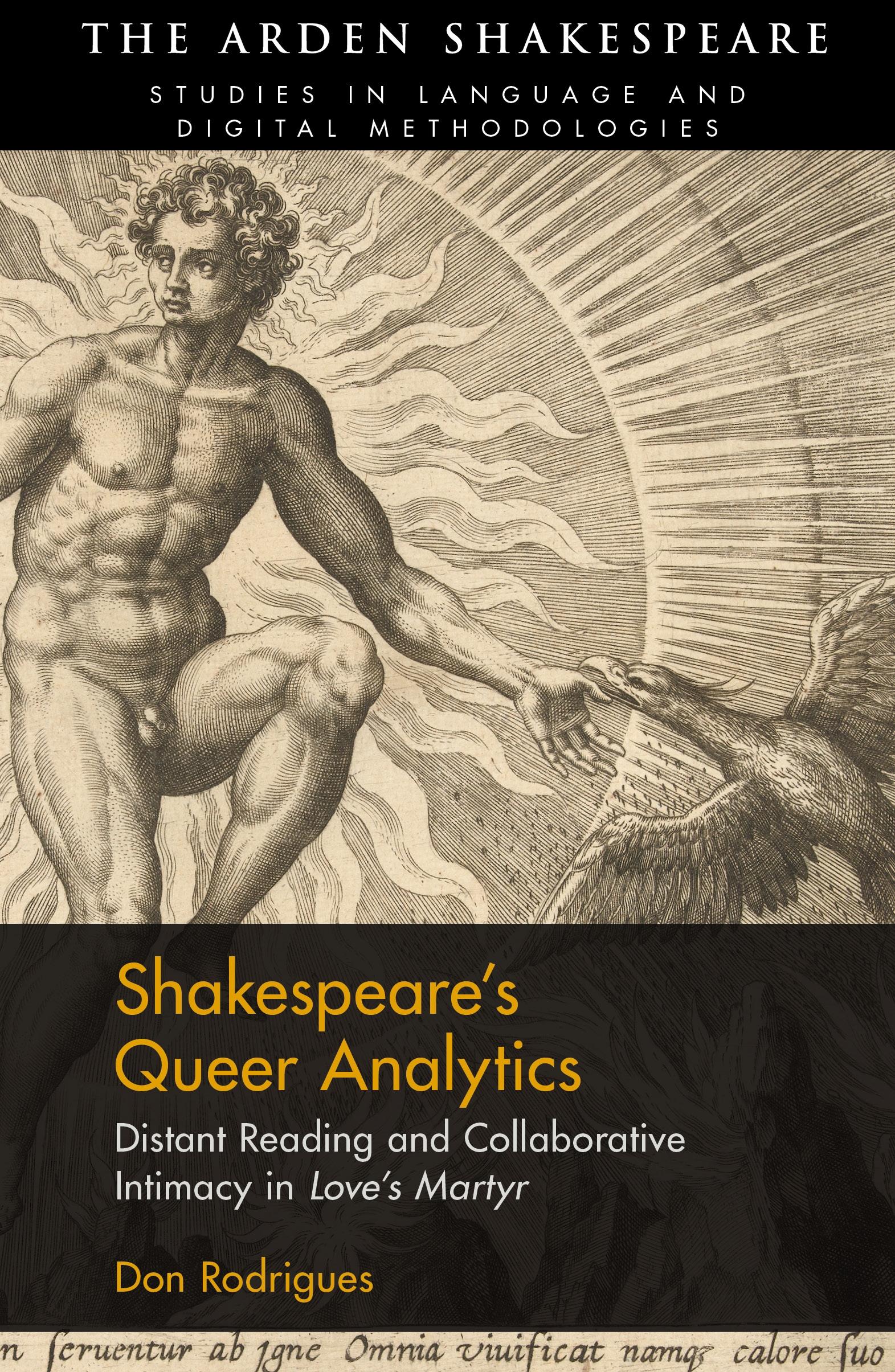
What led Shakespeare to write his most cryptic poem, 'The Phoenix and Turtle'? Could the Phoenix represent Queen Elizabeth, on the verge of death as Shakespeare wrote? Is the Earl of Essex, recently executed for treason, the Turtledove lover of the Phoenix? Questions such as these dominate scholarship of both Shakespeare's poem and the book in which it first appeared: Robert Chester's enigmatic collection of verse, Love's Martyr (1601), where Shakespeare's allegory sits next to erotic love lyrics by Ben Jonson, George Chapman and John Marston, as well as work by the much lesser-known Chester.
Don Rodrigues critiques and revises traditional computational attribution studies by integrating the insights of queer theory to a study of Love's Martyr. A book deeply engaged in current debates in computational literary studies, it is particularly attuned to questions of non-normativity, deviation and departures from style when assessing stylistic patterns. Gathering insights from decades of computational and traditional analyses, it presents, most radically, data that supports the once-outlandish theory that Shakespeare may have had a significant hand in editing works signed by Chester. At the same time, this book insists on the fundamentally collaborative nature of production in Love's Martyr.
Developing a compelling account of how collaborative textual production could work among early modern writers, Shakespeare's Queer Analytics is a much-needed methodological intervention in computational attribution studies. It articulates what Rodrigues describes as 'queer analytics': an approach to literary analysis that joins the non-normative close reading of queer theory to the distant attention of computational literary studies – highlighting patterns that traditional readings often overlook or ignore.
Don Rodrigues critiques and revises traditional computational attribution studies by integrating the insights of queer theory to a study of Love's Martyr. A book deeply engaged in current debates in computational literary studies, it is particularly attuned to questions of non-normativity, deviation and departures from style when assessing stylistic patterns. Gathering insights from decades of computational and traditional analyses, it presents, most radically, data that supports the once-outlandish theory that Shakespeare may have had a significant hand in editing works signed by Chester. At the same time, this book insists on the fundamentally collaborative nature of production in Love's Martyr.
Developing a compelling account of how collaborative textual production could work among early modern writers, Shakespeare's Queer Analytics is a much-needed methodological intervention in computational attribution studies. It articulates what Rodrigues describes as 'queer analytics': an approach to literary analysis that joins the non-normative close reading of queer theory to the distant attention of computational literary studies – highlighting patterns that traditional readings often overlook or ignore.
Páginas: 296
Categoría: Litteraturvetenskap & Teori
e-ISBN: 9781350178830
Peso de envío: 1.2 kg
Envío en: 1-2 días
Paga fácilmente con tarjeta, Klarna, Apple Pay o Google Pay. ¿No estás contento? Siempre tienes 14 días de garantía de devolución. Lee más en nuestros términos. Si tienes preguntas, escríbenos a hello@memmo.org.
Memmo hace que estudiar sea más fácil, estés donde estés. Aquí tienes tus libros de texto y herramientas de estudio inteligentes en un solo lugar: resúmenes, quizzes, podcasts y flashcards. Y también a Ted, tu compañero de estudio que responde a todo lo que te preguntes. Más de 50 000 estudiantes ya estudian aquí. Está hecho para que aprendas más rápido y te estreses menos.