
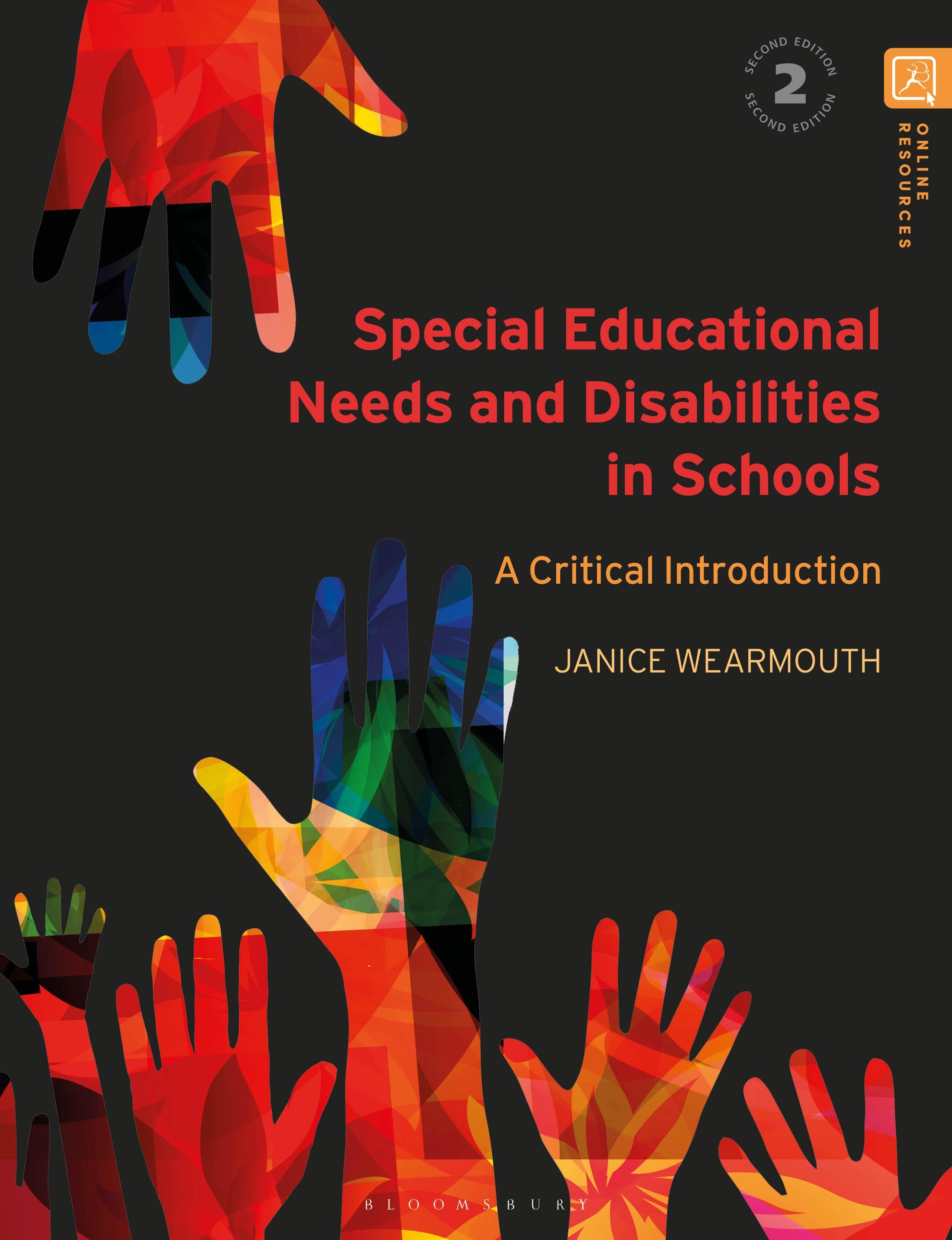
Special Educational Needs and Disabilities in Schools is an essential resource designed to support you during and beyond your teaching training to understand, assess and address special and/or additional educational needs and disabilities (SEND). In addition to the expected updates throughout to the latest research and legislation, new developments include:
- expanded discussions of key topics such as bullying, social, emotional and mental health
- detailed coverage of planning for transition across the age ranges
- suggestions of hardware and software for day-to-day use and use in exam conditions
- increased focus on the importance of positive and supportive relationships
Drawing on her wealth of experience, close contact with schools, families and students as well as relevant research, Janice Wearmouth explores a wide range of approaches to assess and address the most common forms of SEND. These include difficulties in communication and cognition, behavioural concerns related to social, emotional and mental health, sensory and/or physical needs, and literacy and numeracy difficulties.
The author uses key questions to introduce each chapter, and reflective activities to encourage you to consider your own practice to ensure that all young people reach their potential. She illustrates policy and provision for SEND in a highly authentic and engaging way with a range of exemplars, vignettes and personal accounts of young people's and families' experiences within the field, and provides a wealth of additional resources on the companion website.
- expanded discussions of key topics such as bullying, social, emotional and mental health
- detailed coverage of planning for transition across the age ranges
- suggestions of hardware and software for day-to-day use and use in exam conditions
- increased focus on the importance of positive and supportive relationships
Drawing on her wealth of experience, close contact with schools, families and students as well as relevant research, Janice Wearmouth explores a wide range of approaches to assess and address the most common forms of SEND. These include difficulties in communication and cognition, behavioural concerns related to social, emotional and mental health, sensory and/or physical needs, and literacy and numeracy difficulties.
The author uses key questions to introduce each chapter, and reflective activities to encourage you to consider your own practice to ensure that all young people reach their potential. She illustrates policy and provision for SEND in a highly authentic and engaging way with a range of exemplars, vignettes and personal accounts of young people's and families' experiences within the field, and provides a wealth of additional resources on the companion website.
Paga fácilmente con tarjeta, Klarna, Apple Pay o Google Pay. ¿No estás contento? Siempre tienes 14 días de garantía de devolución. Lee más en nuestros términos. Si tienes preguntas, escríbenos a hello@memmo.org.
Memmo hace que estudiar sea más fácil, estés donde estés. Aquí tienes tus libros de texto y herramientas de estudio inteligentes en un solo lugar: resúmenes, quizzes, podcasts y flashcards. Y también a Ted, tu compañero de estudio que responde a todo lo que te preguntes. Más de 50 000 estudiantes ya estudian aquí. Está hecho para que aprendas más rápido y te estreses menos.