
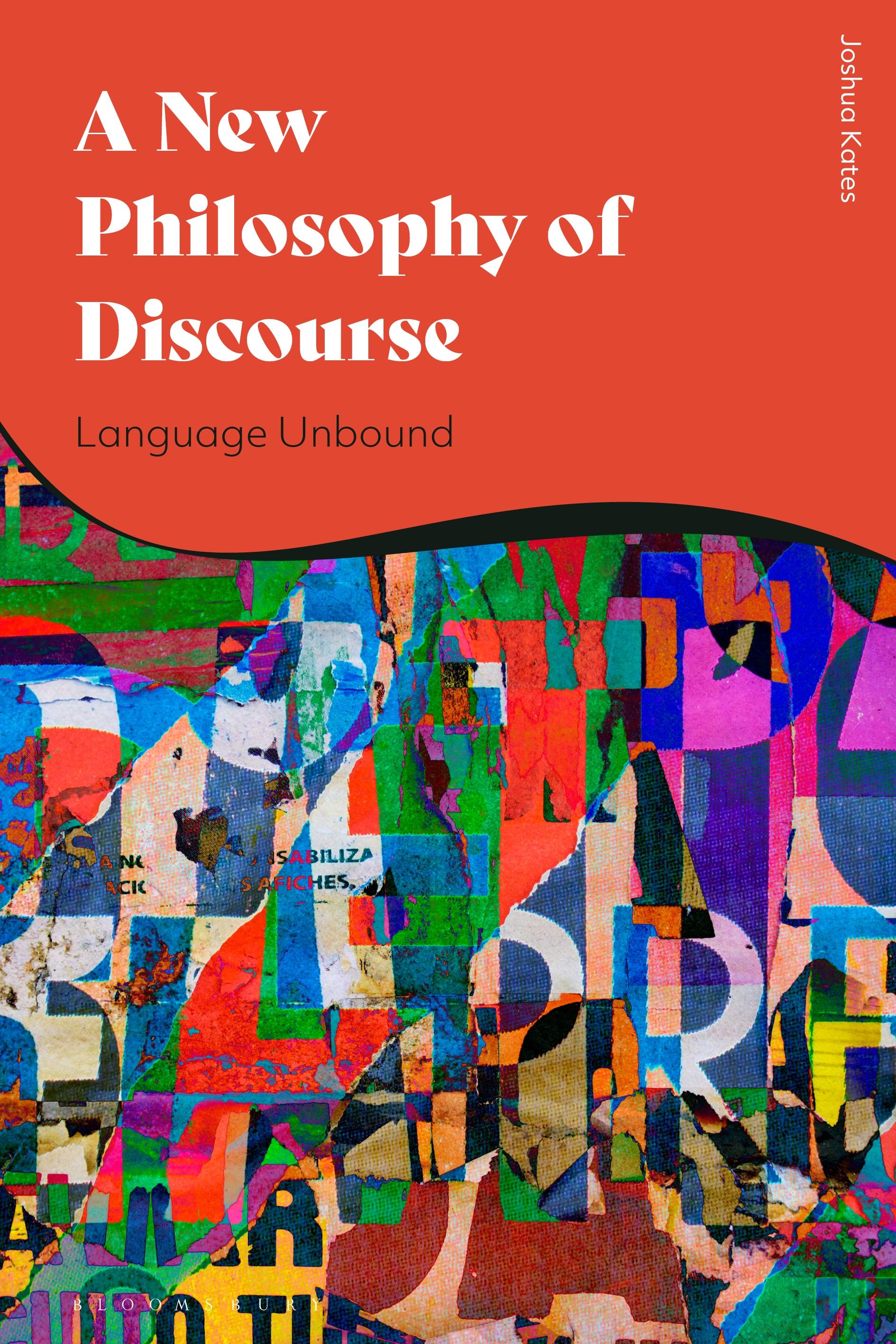
What would happen if structures, forms, and other stand-alone entities thought to comprise our intellectual toolkit-words, meanings, signs-were jettisoned? How would a work written in a purportedly dead language, like The Iliad, or penned in a foreign tongue be approached if deemed legible without structures such as meaning-bearing signs or grammatical rules?
A New Philosophy of Discourse charts a novel course in response to these questions, coining an original concept of discourse, or talk!, that Joshua Kates presents as more fundamental than language. In Kates' conception of discourse, writing and speech take shape entirely as events, situated within histories, contexts, and traditions themselves always in the making. Combining literary theory, literary criticism, and philosophy, to reveal a new perspective on discourse, Kates focuses on literary criticism, literary texts by Charles Bernstein and Stanley Elkin, and the philosophical writings of Stanley Cavell, Hans-Georg Gadamer, Donald Davidson and Martin Heidegger.
This ground-breaking study bridges the analytical/continental divide, by working through concrete problems using novel and extended interpretations with wide-ranging implications for the humanities.
A New Philosophy of Discourse charts a novel course in response to these questions, coining an original concept of discourse, or talk!, that Joshua Kates presents as more fundamental than language. In Kates' conception of discourse, writing and speech take shape entirely as events, situated within histories, contexts, and traditions themselves always in the making. Combining literary theory, literary criticism, and philosophy, to reveal a new perspective on discourse, Kates focuses on literary criticism, literary texts by Charles Bernstein and Stanley Elkin, and the philosophical writings of Stanley Cavell, Hans-Georg Gadamer, Donald Davidson and Martin Heidegger.
This ground-breaking study bridges the analytical/continental divide, by working through concrete problems using novel and extended interpretations with wide-ranging implications for the humanities.
Paga fácilmente con tarjeta, Klarna, Apple Pay o Google Pay. ¿No estás contento? Siempre tienes 14 días de garantía de devolución. Lee más en nuestros términos. Si tienes preguntas, escríbenos a hello@memmo.org.
Memmo hace que estudiar sea más fácil, estés donde estés. Aquí tienes tus libros de texto y herramientas de estudio inteligentes en un solo lugar: resúmenes, quizzes, podcasts y flashcards. Y también a Ted, tu compañero de estudio que responde a todo lo que te preguntes. Más de 50 000 estudiantes ya estudian aquí. Está hecho para que aprendas más rápido y te estreses menos.