
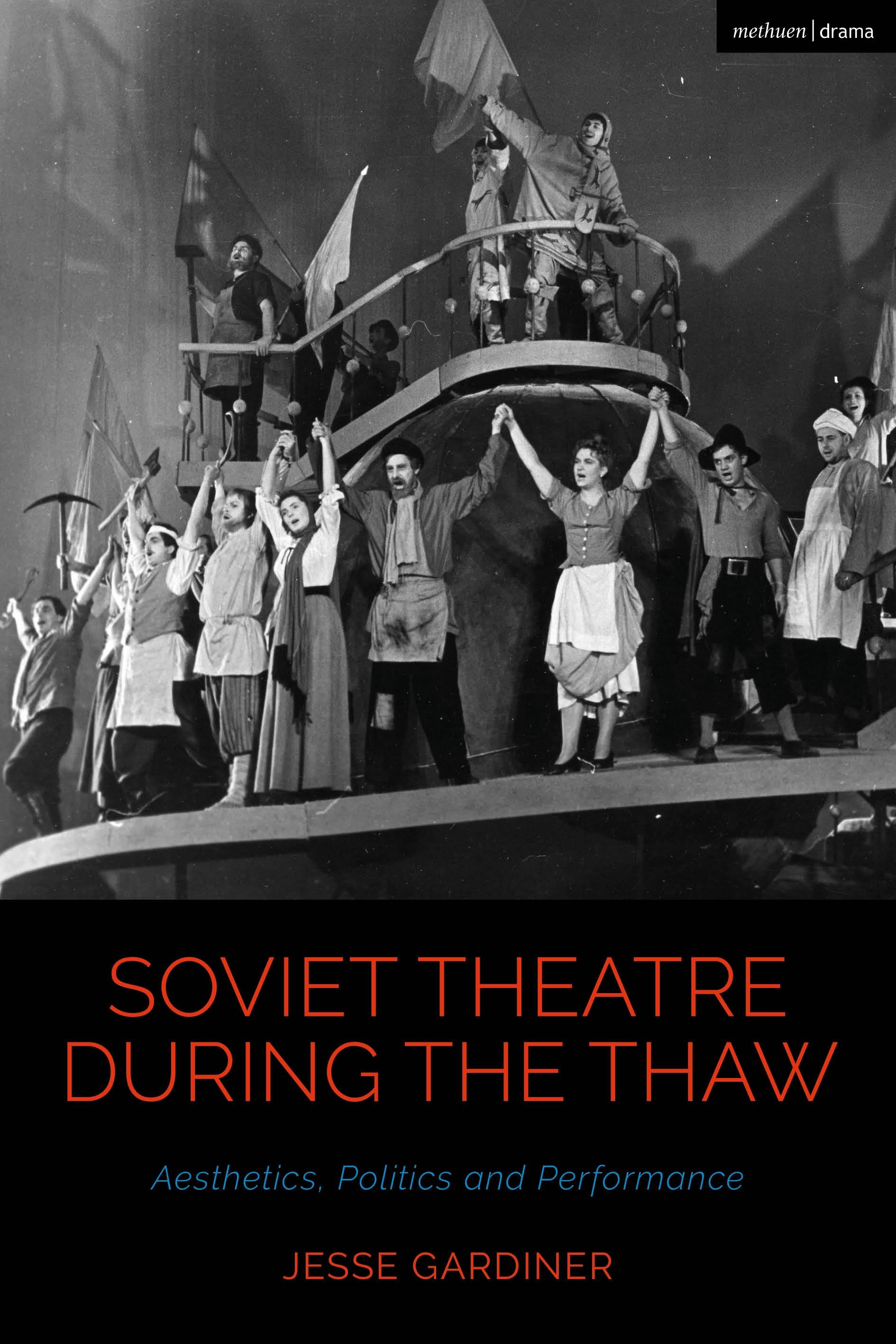
The era known as the Thaw (1953-64) was a crucial period in the history of the Soviet Union. It was a time when the legacies of Stalinism began to unravel and when brief moments of liberalisation saw dramatic changes to society. By exploring theatre productions, plays and cultural debates during the Thaw, this book sheds light on a society in flux, in which the cultural norms, values and hierarchies of the previous era were being rethought.
Jesse Gardiner demonstrates that the revival of avant-garde theatre during the Thaw was part of a broader re-engagement with cultural forms that had been banned under Stalin. Plays and productions that had fallen victim to the censor were revived or reinvented, and their authors and directors rehabilitated alongside waves of others who had been repressed during the Stalinist purges. At the same time, new theatre companies and practitioners emerged who reinterpreted the stylized techniques of the avant-garde for a post-war generation. This book argues that the revival of avant-garde theatre was vital in allowing the Soviet public to reimagine its relationship to state power, the West and its own past. It permitted the rethinking of attitudes and prejudices, and led to calls for greater cultural diversity across society. Playwrights, directors and actors began to work in innovative ways, seeking out the theatre of the future by re-engaging with the proscribed forms of the past.
Jesse Gardiner demonstrates that the revival of avant-garde theatre during the Thaw was part of a broader re-engagement with cultural forms that had been banned under Stalin. Plays and productions that had fallen victim to the censor were revived or reinvented, and their authors and directors rehabilitated alongside waves of others who had been repressed during the Stalinist purges. At the same time, new theatre companies and practitioners emerged who reinterpreted the stylized techniques of the avant-garde for a post-war generation. This book argues that the revival of avant-garde theatre was vital in allowing the Soviet public to reimagine its relationship to state power, the West and its own past. It permitted the rethinking of attitudes and prejudices, and led to calls for greater cultural diversity across society. Playwrights, directors and actors began to work in innovative ways, seeking out the theatre of the future by re-engaging with the proscribed forms of the past.
Páginas: 240
Categoría: Drama, Teater & Scenkonst
e-ISBN: 9781350150638
Peso de envío: 1.2 kg
Envío en: 1-2 días
Paga fácilmente con tarjeta, Klarna, Apple Pay o Google Pay. ¿No estás contento? Siempre tienes 14 días de garantía de devolución. Lee más en nuestros términos. Si tienes preguntas, escríbenos a hello@memmo.org.
Memmo hace que estudiar sea más fácil, estés donde estés. Aquí tienes tus libros de texto y herramientas de estudio inteligentes en un solo lugar: resúmenes, quizzes, podcasts y flashcards. Y también a Ted, tu compañero de estudio que responde a todo lo que te preguntes. Más de 50 000 estudiantes ya estudian aquí. Está hecho para que aprendas más rápido y te estreses menos.