
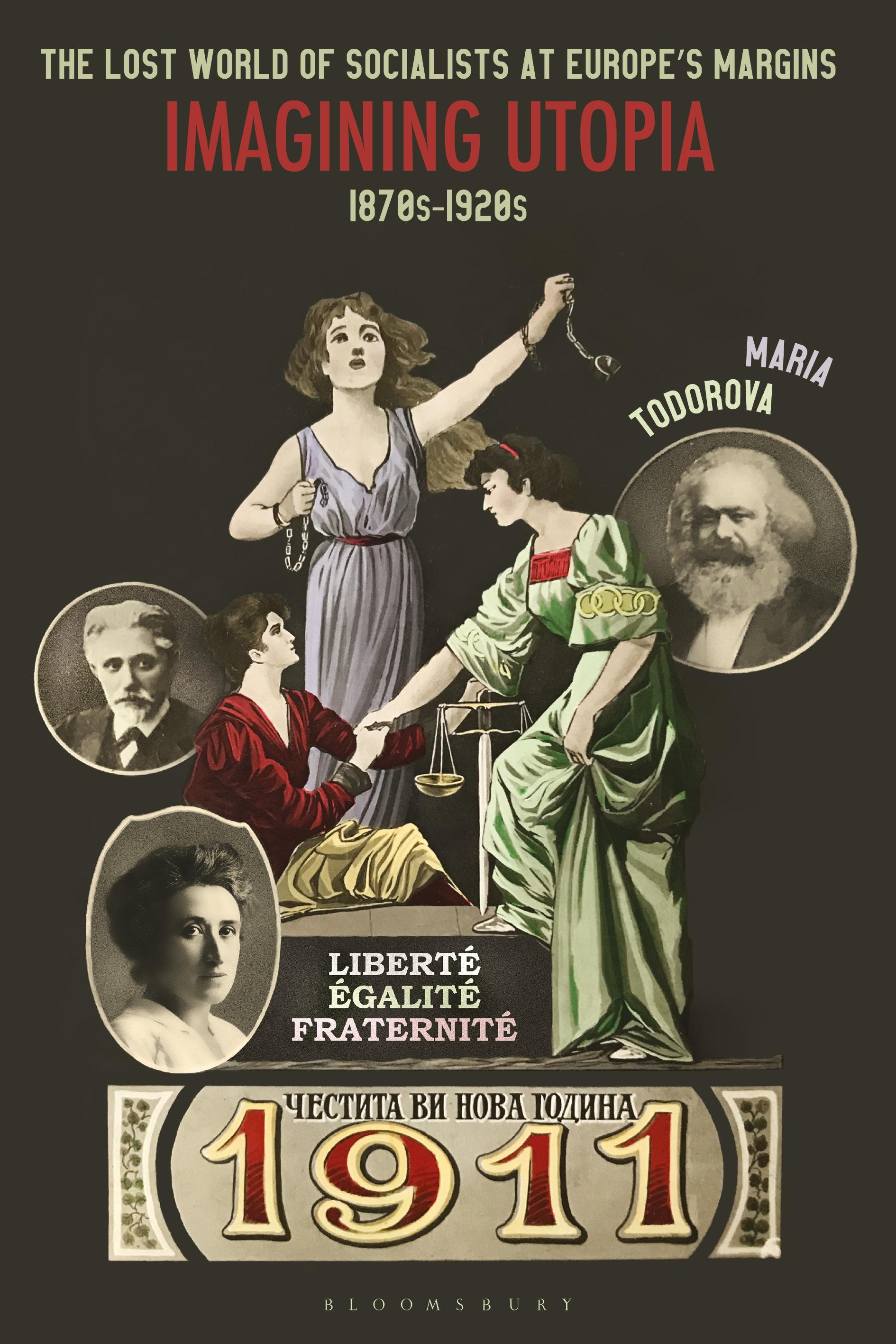
Maria Todorova's book is devoted to the 'golden age' of the socialist idea, broadly surveying the period in and around the time of the Second International. It critically examines the promise for an alternative socialist utopia from 1870 to the 1920s. Todorova brings in the experience of the periphery in a comparative context in the belief that the margins can often elucidate better the character of a phenomenon, and de-provincialize it from essentialist notions. In doing so, The Lost World of Socialists at Europe's Margins moves beyond the traditional historiographical emphasis on ideology by looking at different intersections or entanglements of spaces, generations, genders, ideas and feelings, and different flows of historical time.
The study provides a social and cultural history of early socialism in Eastern Europe with an emphasis on Bulgaria, arguably the country with the earliest and strongest socialist movement in Southeast Europe, and one that had a unique relationship to both German and Russian social democracy. Based on a rich prosopographical database of around 3500 biographies of people born in the 19th century, the book addresses the interplay of several generations of leftists, looking at the specifics of how ideas were generated, received, transferred and transformed. Finally, the work investigates the intersection between subjectivity and memory as reflected in a unique cache of archival materials containing over 4000 documentary sources including diaries, oral interviews, and unpublished memoirs. A microhistorical approach to this material allows the reconstruction of 'structures of feeling' that inspired an exceptional group of individuals.
The study provides a social and cultural history of early socialism in Eastern Europe with an emphasis on Bulgaria, arguably the country with the earliest and strongest socialist movement in Southeast Europe, and one that had a unique relationship to both German and Russian social democracy. Based on a rich prosopographical database of around 3500 biographies of people born in the 19th century, the book addresses the interplay of several generations of leftists, looking at the specifics of how ideas were generated, received, transferred and transformed. Finally, the work investigates the intersection between subjectivity and memory as reflected in a unique cache of archival materials containing over 4000 documentary sources including diaries, oral interviews, and unpublished memoirs. A microhistorical approach to this material allows the reconstruction of 'structures of feeling' that inspired an exceptional group of individuals.
Paga fácilmente con tarjeta, Klarna, Apple Pay o Google Pay. ¿No estás contento? Siempre tienes 14 días de garantía de devolución. Lee más en nuestros términos. Si tienes preguntas, escríbenos a hello@memmo.org.
Memmo hace que estudiar sea más fácil, estés donde estés. Aquí tienes tus libros de texto y herramientas de estudio inteligentes en un solo lugar: resúmenes, quizzes, podcasts y flashcards. Y también a Ted, tu compañero de estudio que responde a todo lo que te preguntes. Más de 50 000 estudiantes ya estudian aquí. Está hecho para que aprendas más rápido y te estreses menos.