
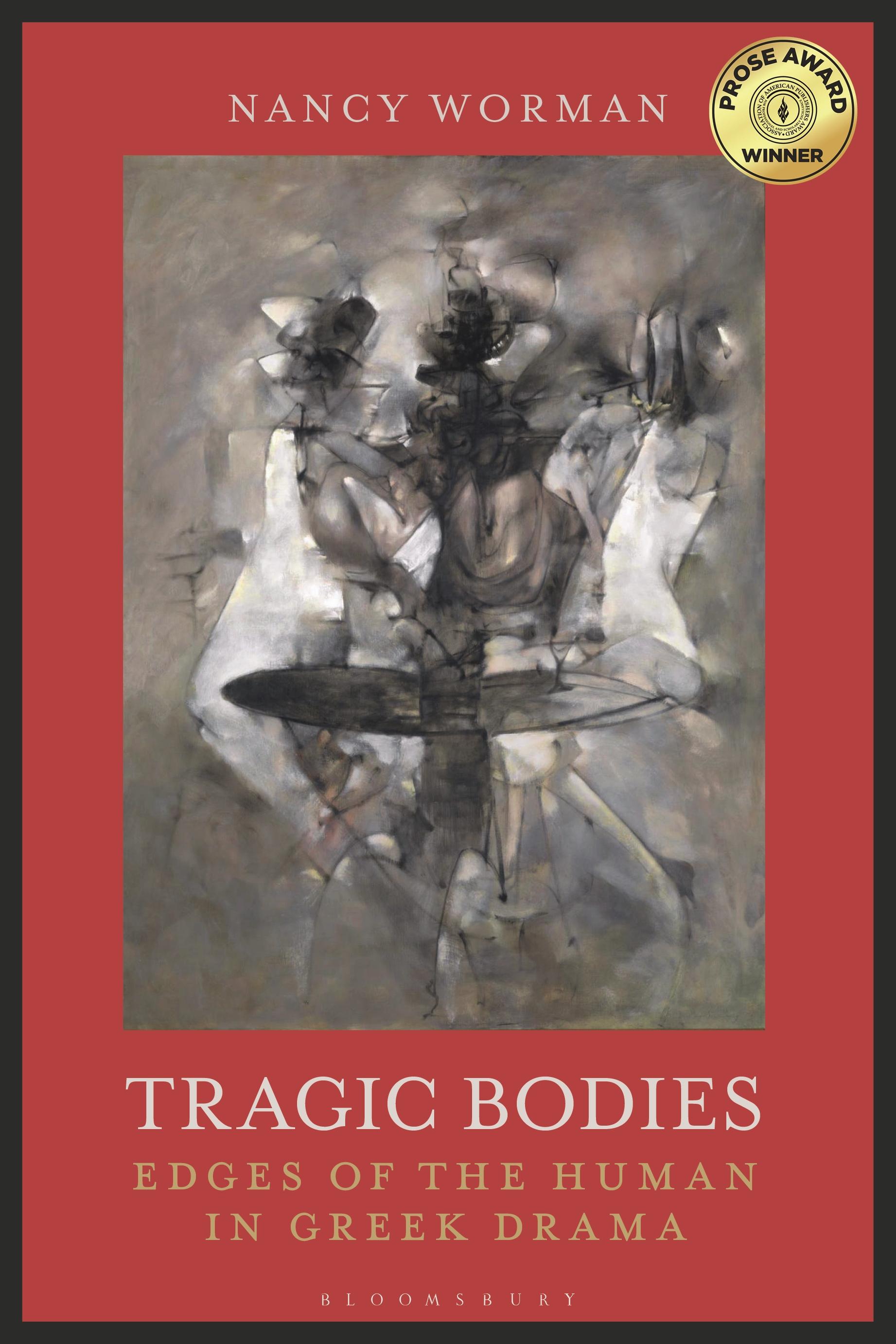
Winner of the PROSE Award (2022) for Classics
This book argues for a new way of reading tragedy that attends to how bodies in the ancient plays pivot between subject and object, person and thing, living and dead, and so serve as vehicles for confronting the edges of the human. At the same time, it explores the ways in which Greek tragedy pulls up close to human bodies, examining their physical edges, their surfaces and parts, their coverings or nakedness, and their postures and orientations. Drawing on and advancing the latest interplays of posthumanism and materialism in relation to classical literature, Nancy Worman shows how this tragic enactment may seem to emphasize the human body, but in effect does something quite different. Greek drama instead often treats the body as a thing that has the status and implications associated with other objects, such as a cloak, an urn, or a toy for a dog.
Tragic Bodies urges attention to key scenes in Greek tragedy that foreground bodily identifiers as semiotic materializing. This occurs when signs with weighty symbolic resonance distil out on the dramatic stage as concrete sites for contention and conflation orchestrated through proximity, contact, and sensory dynamics. Reading the dramatic script in this way pursues the felt knowledge at the body's edges that tragic representation affords, a consideration attuned to how bodies register at tragedy's unique intersections – where directive and figurative language combine to highlight visual, tactile, and aural details.
This book argues for a new way of reading tragedy that attends to how bodies in the ancient plays pivot between subject and object, person and thing, living and dead, and so serve as vehicles for confronting the edges of the human. At the same time, it explores the ways in which Greek tragedy pulls up close to human bodies, examining their physical edges, their surfaces and parts, their coverings or nakedness, and their postures and orientations. Drawing on and advancing the latest interplays of posthumanism and materialism in relation to classical literature, Nancy Worman shows how this tragic enactment may seem to emphasize the human body, but in effect does something quite different. Greek drama instead often treats the body as a thing that has the status and implications associated with other objects, such as a cloak, an urn, or a toy for a dog.
Tragic Bodies urges attention to key scenes in Greek tragedy that foreground bodily identifiers as semiotic materializing. This occurs when signs with weighty symbolic resonance distil out on the dramatic stage as concrete sites for contention and conflation orchestrated through proximity, contact, and sensory dynamics. Reading the dramatic script in this way pursues the felt knowledge at the body's edges that tragic representation affords, a consideration attuned to how bodies register at tragedy's unique intersections – where directive and figurative language combine to highlight visual, tactile, and aural details.
Paga fácilmente con tarjeta, Klarna, Apple Pay o Google Pay. ¿No estás contento? Siempre tienes 14 días de garantía de devolución. Lee más en nuestros términos. Si tienes preguntas, escríbenos a hello@memmo.org.
Memmo hace que estudiar sea más fácil, estés donde estés. Aquí tienes tus libros de texto y herramientas de estudio inteligentes en un solo lugar: resúmenes, quizzes, podcasts y flashcards. Y también a Ted, tu compañero de estudio que responde a todo lo que te preguntes. Más de 50 000 estudiantes ya estudian aquí. Está hecho para que aprendas más rápido y te estreses menos.