
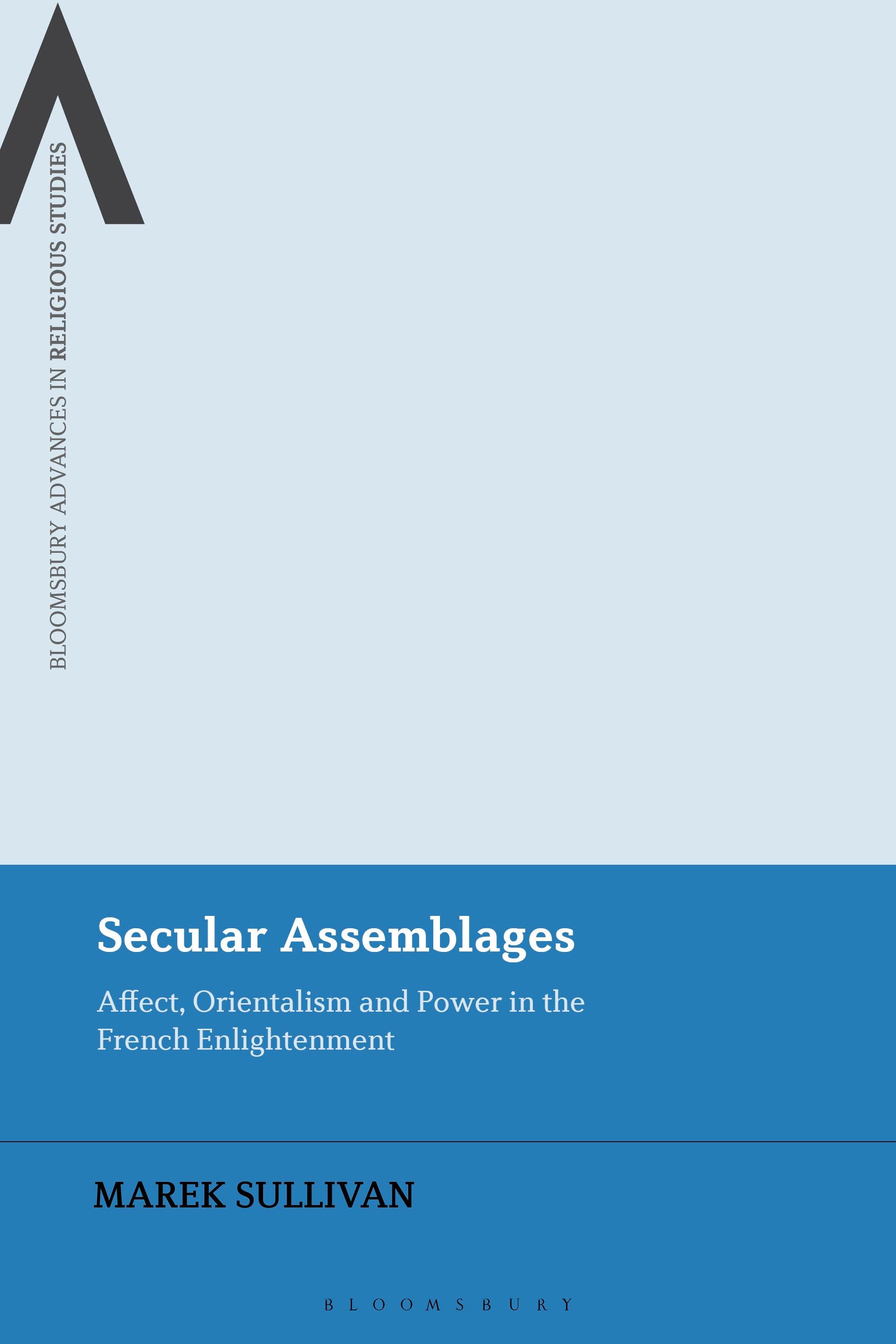
In this book, Marek Sullivan challenges a widespread consensus linking secularization to rationalization, and argues for a more sensual genealogy of secularity connected to affect, race and power. While existing works of secular intellectual history, especially Charles Taylor's A Secular Age (2007), tend to rely on rationalistic conceptions of Enlightenment thought, Sullivan offers an alternative perspective on key thinkers such as Descartes, Montesquieu and Diderot, asserting that these figures sought to reinstate emotion against the rationalistic tendencies of the past. From Descartes's last work Les Passions de l'Âme (1649) to Baron d'Holbach's System of Nature (1770), the French Enlightenment demonstrated an acute understanding of the limits of reason, with crucial implications for our current 'postsecular' and 'postliberal' moment.
Sullivan also emphasizes the importance of Western constructions of Oriental religions for the history of the secular, identifying a distinctively secular-yet impassioned-form of Orientalism that emerged in the 18th century. Mahomet's racial profile in Voltaire's Le Fanatisme, ou Mahomet (1741), for example, functioned as a polemic device calibrated for emotional impact, in line with Enlightenment efforts to generate an affective body of anti-Catholic propaganda that simultaneously shored up people's sense of national belonging. By exposing the Enlightenment as a nationalistic and affective movement that resorted to racist, Orientalist and emotional tropes from the outset, Sullivan ultimately undermines modern nationalist appeals to the Enlightenment as a mark of European distinction.
Sullivan also emphasizes the importance of Western constructions of Oriental religions for the history of the secular, identifying a distinctively secular-yet impassioned-form of Orientalism that emerged in the 18th century. Mahomet's racial profile in Voltaire's Le Fanatisme, ou Mahomet (1741), for example, functioned as a polemic device calibrated for emotional impact, in line with Enlightenment efforts to generate an affective body of anti-Catholic propaganda that simultaneously shored up people's sense of national belonging. By exposing the Enlightenment as a nationalistic and affective movement that resorted to racist, Orientalist and emotional tropes from the outset, Sullivan ultimately undermines modern nationalist appeals to the Enlightenment as a mark of European distinction.
Páginas: 264
Categoría: Religion & Teologi
e-ISBN: 9781350123694
Peso de envío: 1.2 kg
Envío en: 1-2 días
Paga fácilmente con tarjeta, Klarna, Apple Pay o Google Pay. ¿No estás contento? Siempre tienes 14 días de garantía de devolución. Lee más en nuestros términos. Si tienes preguntas, escríbenos a hello@memmo.org.
Memmo hace que estudiar sea más fácil, estés donde estés. Aquí tienes tus libros de texto y herramientas de estudio inteligentes en un solo lugar: resúmenes, quizzes, podcasts y flashcards. Y también a Ted, tu compañero de estudio que responde a todo lo que te preguntes. Más de 50 000 estudiantes ya estudian aquí. Está hecho para que aprendas más rápido y te estreses menos.