
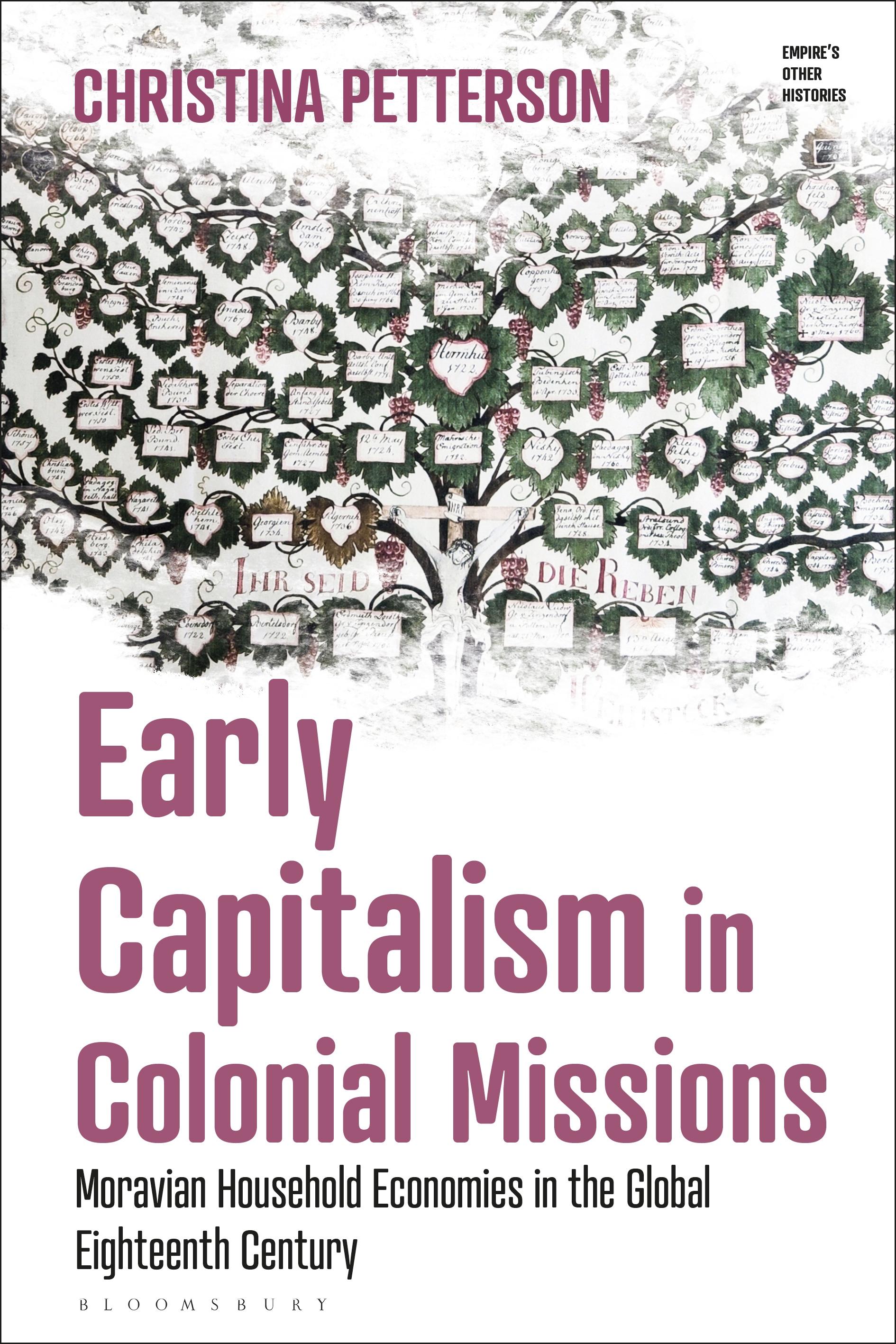
Drawing on unpublished archival material, this volume compares Moravian economic practice in three different mission-settings, to demonstrate how Moravian practices evolved during the 18th century as part of a globalizing world and economy. Delivering in-depth analysis of the far-reaching and deep seated effects of missionary activity on indigenous communities and social relations, it explores how different economic contexts had an impact on the missionaries' relations with Indigenous and slave-populations in empire.
Petterson provides an insight how the missionaries worked, lived among various non-European peoples, and how they organised themselves and their surroundings at a time of changing identities and socio economic change. Analysing how missionary practice developed over this period, it also demonstrates how the Moravian leadership's priorities and how this affected attitudes to non-European peoples on the ground. Standing outside of national and imperial boundaries, and ambivalent about the political notion of imperialism as well as colonisation itself, Moravian missionaries nonetheless functioned in parallel with colonial structures, and were part of a broadly culturally colonial mission. So, even on the outskirts of imperial organisation, they were often a crucial part of colonial practice and took part in normalising capitalist relations in many-but not all-settings, as this book demonstrates.
Petterson provides an insight how the missionaries worked, lived among various non-European peoples, and how they organised themselves and their surroundings at a time of changing identities and socio economic change. Analysing how missionary practice developed over this period, it also demonstrates how the Moravian leadership's priorities and how this affected attitudes to non-European peoples on the ground. Standing outside of national and imperial boundaries, and ambivalent about the political notion of imperialism as well as colonisation itself, Moravian missionaries nonetheless functioned in parallel with colonial structures, and were part of a broadly culturally colonial mission. So, even on the outskirts of imperial organisation, they were often a crucial part of colonial practice and took part in normalising capitalist relations in many-but not all-settings, as this book demonstrates.
Páginas: 232
Categoría: Kultur-, Genus- & Postkoloniala studier
e-ISBN: 9781350122109
Peso de envío: 1.2 kg
Envío en: 1-2 días
Paga fácilmente con tarjeta, Klarna, Apple Pay o Google Pay. ¿No estás contento? Siempre tienes 14 días de garantía de devolución. Lee más en nuestros términos. Si tienes preguntas, escríbenos a hello@memmo.org.
Memmo hace que estudiar sea más fácil, estés donde estés. Aquí tienes tus libros de texto y herramientas de estudio inteligentes en un solo lugar: resúmenes, quizzes, podcasts y flashcards. Y también a Ted, tu compañero de estudio que responde a todo lo que te preguntes. Más de 50 000 estudiantes ya estudian aquí. Está hecho para que aprendas más rápido y te estreses menos.