
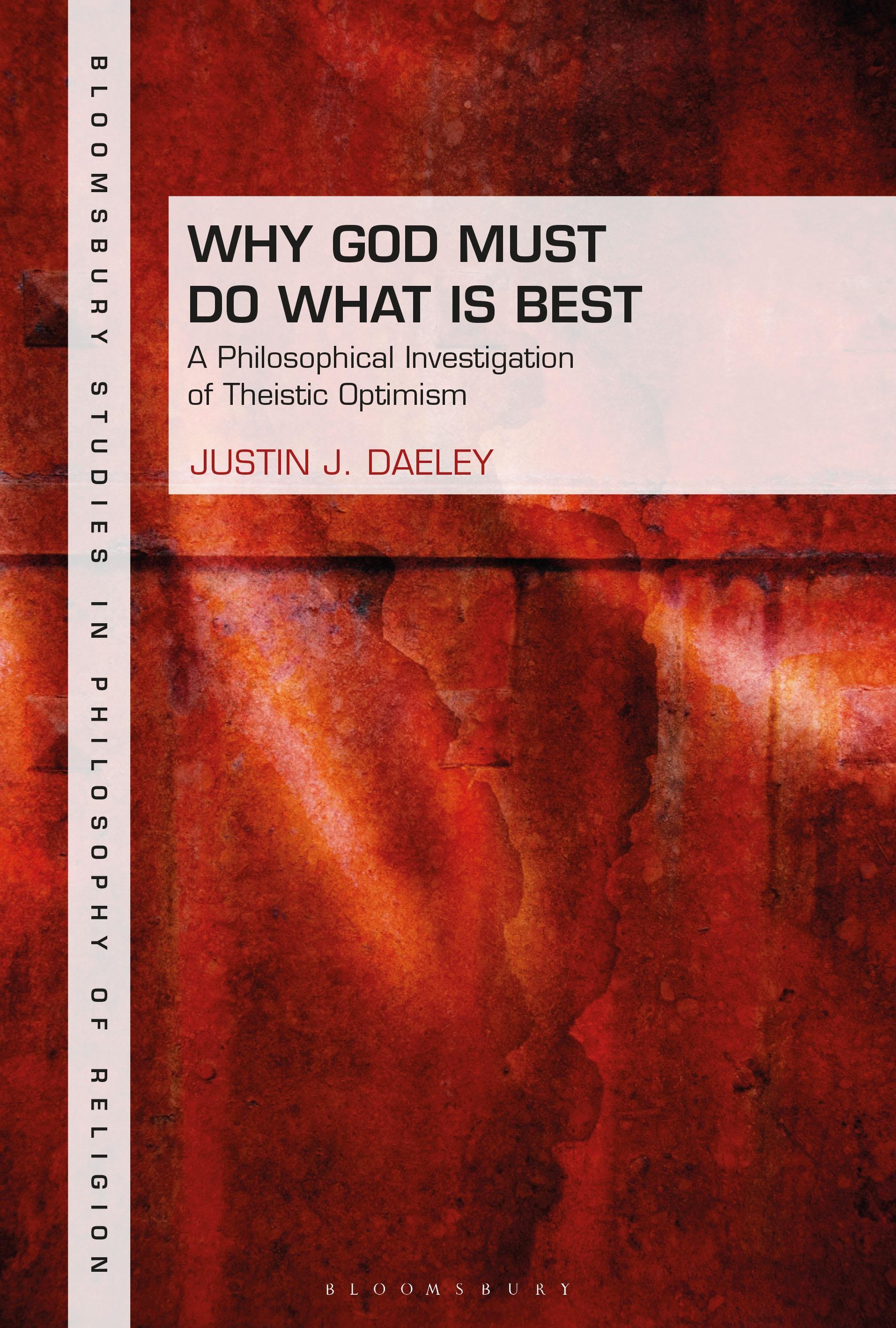
The idea that God, understood as the most perfect being, must create the best possible world is often underacknowledged by contemporary theologians and philosophers of religion. This book clearly demonstrates the rationale for what Justin J. Daeley calls Theistic Optimism and interacts with the existing literature in order to highlight its limitations. While locating Theistic Optimism in the thought of Gottfried Leibniz, Daeley argues that Theistic Optimism is consistent with divine freedom, aseity, gratitude, and our typical modal intuitions. By offering plausible solutions to each of the criticisms levelled against Theistic Optimism, he also provides a vigorous and original defence against the charge that it deviates from the Christian tradition.
Engaging with both the Christian tradition and contemporary theologians and philosophers, Why God Must Do What is Best positions the idea of Theistic Optimism firmly within the language of contemporary philosophy of religion.
Engaging with both the Christian tradition and contemporary theologians and philosophers, Why God Must Do What is Best positions the idea of Theistic Optimism firmly within the language of contemporary philosophy of religion.
Paga fácilmente con tarjeta, Klarna, Apple Pay o Google Pay. ¿No estás contento? Siempre tienes 14 días de garantía de devolución. Lee más en nuestros términos. Si tienes preguntas, escríbenos a hello@memmo.org.
Memmo hace que estudiar sea más fácil, estés donde estés. Aquí tienes tus libros de texto y herramientas de estudio inteligentes en un solo lugar: resúmenes, quizzes, podcasts y flashcards. Y también a Ted, tu compañero de estudio que responde a todo lo que te preguntes. Más de 50 000 estudiantes ya estudian aquí. Está hecho para que aprendas más rápido y te estreses menos.