
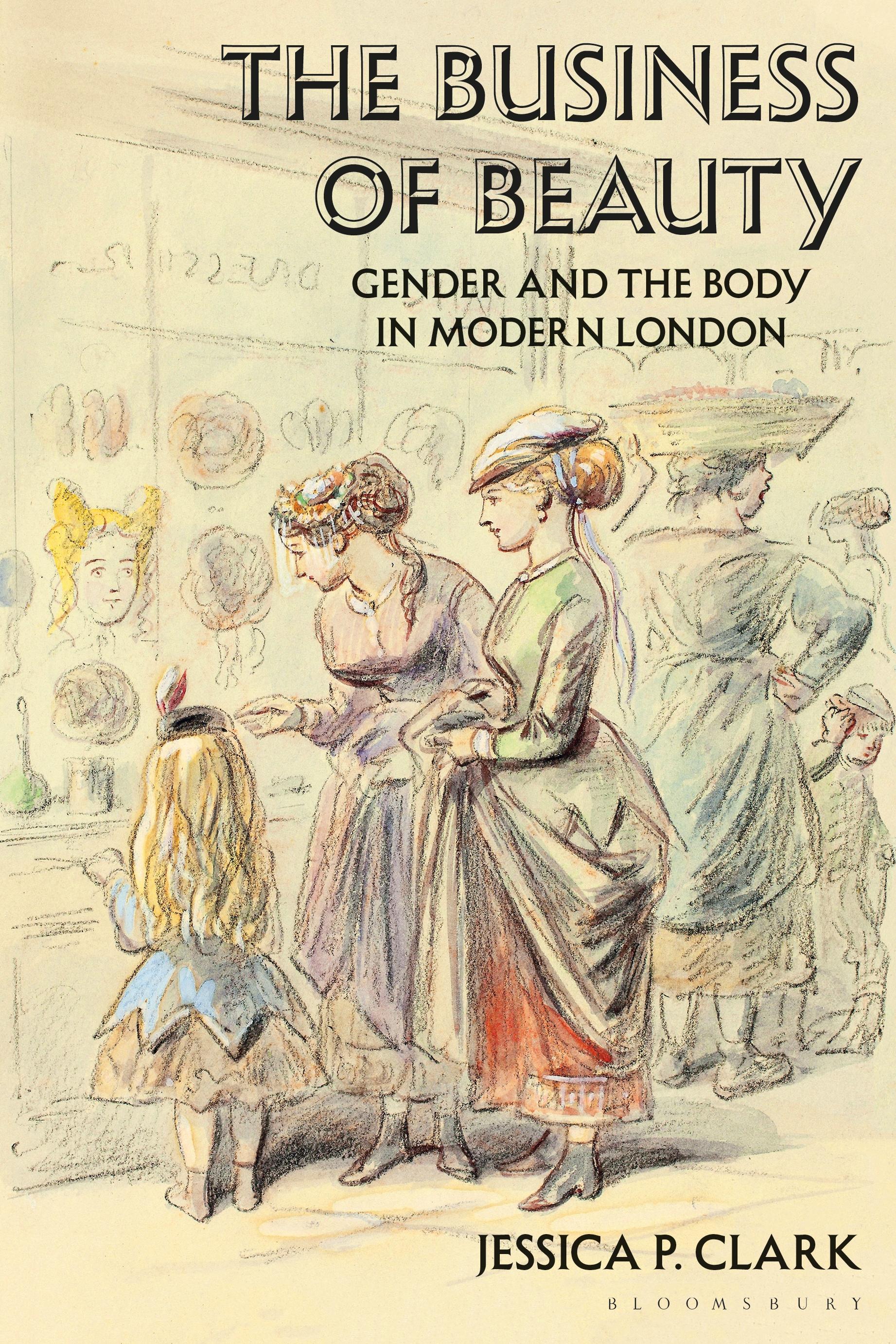
The Business of Beauty is a unique exploration of the history of beauty, consumption, and business in Victorian and Edwardian London. Illuminating national and cultural contingencies specific to London as a global metropolis, it makes an important intervention by challenging the view of those who-like their historical contemporaries-perceive the 19th and early 20th centuries as devoid of beauty praxis, let alone a commercial beauty culture.
Contrary to this perception, The Business of Beauty reveals that Victorian and Edwardian women and men developed a number of tacit strategies to transform their looks including the purchase of new goods and services from a heterogeneous group of urban entrepreneurs: hairdressers, barbers, perfumers, wigmakers, complexion specialists, hair-restorers, manicurists, and beauty “culturists.” Mining trade journals, census data, periodical print, and advice literature, Jessica P. Clark takes us on a journey through Victorian and Edwardian London's beauty businesses, from the shady back parlors of Sarah “Madame Rachel” Leverson to the elegant showrooms of Eugène Rimmel into the first Mayfair salon of Mrs. Helena Titus, aka Helena Rubinstein.
By revealing these stories, Jessica P. Clark revises traditional chronologies of British beauty consumption and provides the historical background to 20th-century developments led by Rubinstein and others. Weaving together histories of gender, fashion, and business to investigate the ways that Victorian critiques of self-fashioning and beautification defined both the buying and selling of beauty goods, this is a revealing resource for scholars, students, fashion followers, and beauty enthusiasts alike.
Contrary to this perception, The Business of Beauty reveals that Victorian and Edwardian women and men developed a number of tacit strategies to transform their looks including the purchase of new goods and services from a heterogeneous group of urban entrepreneurs: hairdressers, barbers, perfumers, wigmakers, complexion specialists, hair-restorers, manicurists, and beauty “culturists.” Mining trade journals, census data, periodical print, and advice literature, Jessica P. Clark takes us on a journey through Victorian and Edwardian London's beauty businesses, from the shady back parlors of Sarah “Madame Rachel” Leverson to the elegant showrooms of Eugène Rimmel into the first Mayfair salon of Mrs. Helena Titus, aka Helena Rubinstein.
By revealing these stories, Jessica P. Clark revises traditional chronologies of British beauty consumption and provides the historical background to 20th-century developments led by Rubinstein and others. Weaving together histories of gender, fashion, and business to investigate the ways that Victorian critiques of self-fashioning and beautification defined both the buying and selling of beauty goods, this is a revealing resource for scholars, students, fashion followers, and beauty enthusiasts alike.
Paga fácilmente con tarjeta, Klarna, Apple Pay o Google Pay. ¿No estás contento? Siempre tienes 14 días de garantía de devolución. Lee más en nuestros términos. Si tienes preguntas, escríbenos a hello@memmo.org.
Memmo hace que estudiar sea más fácil, estés donde estés. Aquí tienes tus libros de texto y herramientas de estudio inteligentes en un solo lugar: resúmenes, quizzes, podcasts y flashcards. Y también a Ted, tu compañero de estudio que responde a todo lo que te preguntes. Más de 50 000 estudiantes ya estudian aquí. Está hecho para que aprendas más rápido y te estreses menos.