
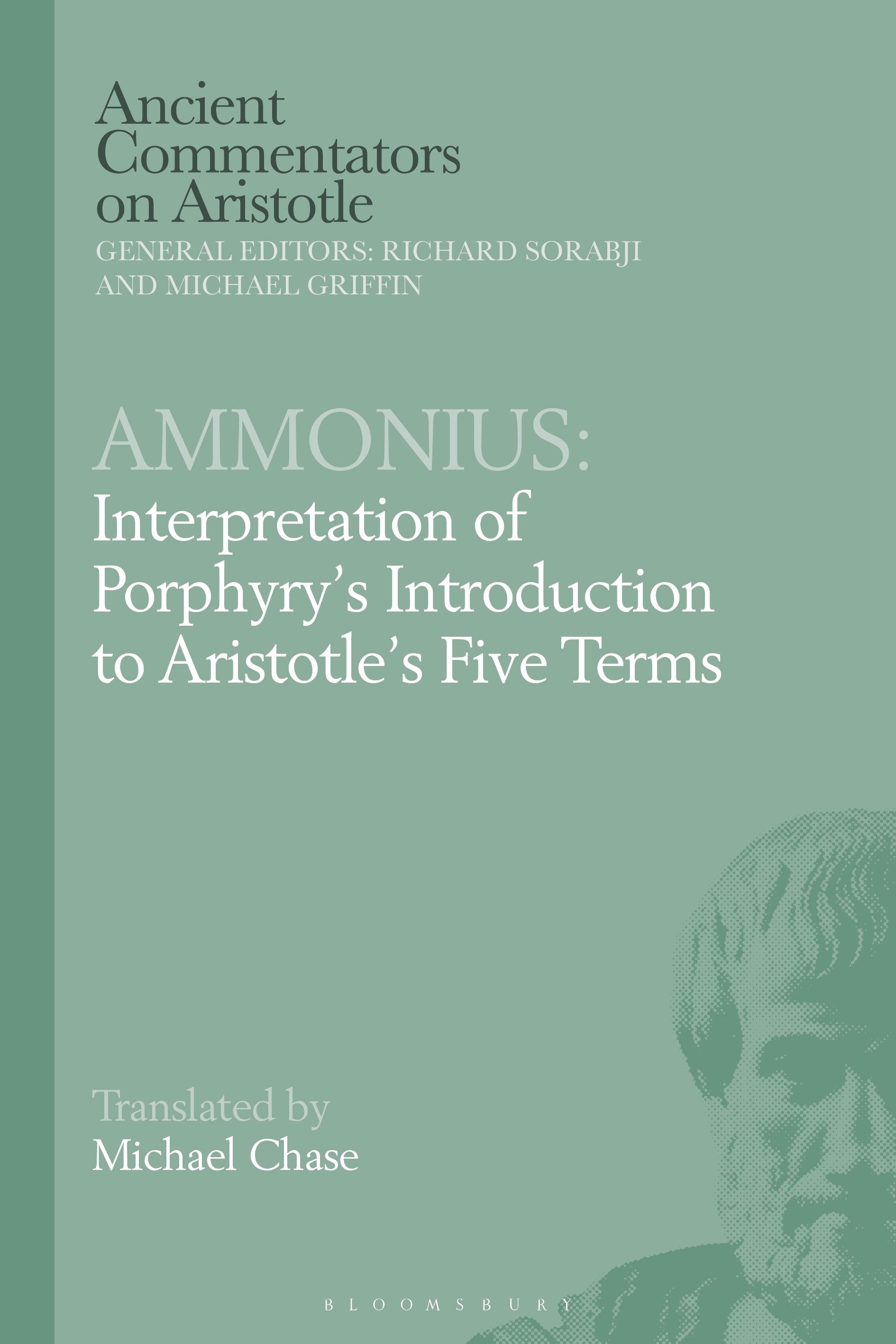
One of his six introductions to philosophy, widely used by students in Alexandria, Ammonius' lecture on Porphyry was recorded in writing by his students in the commentary translated here. Along with five other types of introductions (three of which are translated in the Ancient Commentators on Aristotle volume Elias and David: Introductions to Philosophy with Olympiodorus: Introduction to Logic) it made Greek philosophy more accessible to other cultures. These introductions became standard in Ammonius' school and included a popular set of five or more definitions of philosophy, some of them drawn from commentaries on quite different works.
Ammonius' lecture expounded the most celebrated and discussed previous introduction written by Porphyry 200 years earlier, which was devoted to five main technical terms of Aristotle's logic. Ammonius was sympathetic to Porphyry because they both sought to harmonise the views of Plato and Aristotle with each other, arguing in different ways that the two philosophers did not disagree about the nature of universals. Porphyry's introduction was a hugely influential work for centuries after its composition, and this commentary by Ammonius served to maintain its position at the centre of later schools of philosophy.
This English translation of Ammonius' work is the latest volume in the Ancient Commentators on Aristotle series and makes this philosophical work accessible to a modern readership. The translation is accompanied by an introduction, comprehensive commentary notes, bibliography, glossary of translated terms and a subject index.
Ammonius' lecture expounded the most celebrated and discussed previous introduction written by Porphyry 200 years earlier, which was devoted to five main technical terms of Aristotle's logic. Ammonius was sympathetic to Porphyry because they both sought to harmonise the views of Plato and Aristotle with each other, arguing in different ways that the two philosophers did not disagree about the nature of universals. Porphyry's introduction was a hugely influential work for centuries after its composition, and this commentary by Ammonius served to maintain its position at the centre of later schools of philosophy.
This English translation of Ammonius' work is the latest volume in the Ancient Commentators on Aristotle series and makes this philosophical work accessible to a modern readership. The translation is accompanied by an introduction, comprehensive commentary notes, bibliography, glossary of translated terms and a subject index.
Paga fácilmente con tarjeta, Klarna, Apple Pay o Google Pay. ¿No estás contento? Siempre tienes 14 días de garantía de devolución. Lee más en nuestros términos. Si tienes preguntas, escríbenos a hello@memmo.org.
Memmo hace que estudiar sea más fácil, estés donde estés. Aquí tienes tus libros de texto y herramientas de estudio inteligentes en un solo lugar: resúmenes, quizzes, podcasts y flashcards. Y también a Ted, tu compañero de estudio que responde a todo lo que te preguntes. Más de 50 000 estudiantes ya estudian aquí. Está hecho para que aprendas más rápido y te estreses menos.