
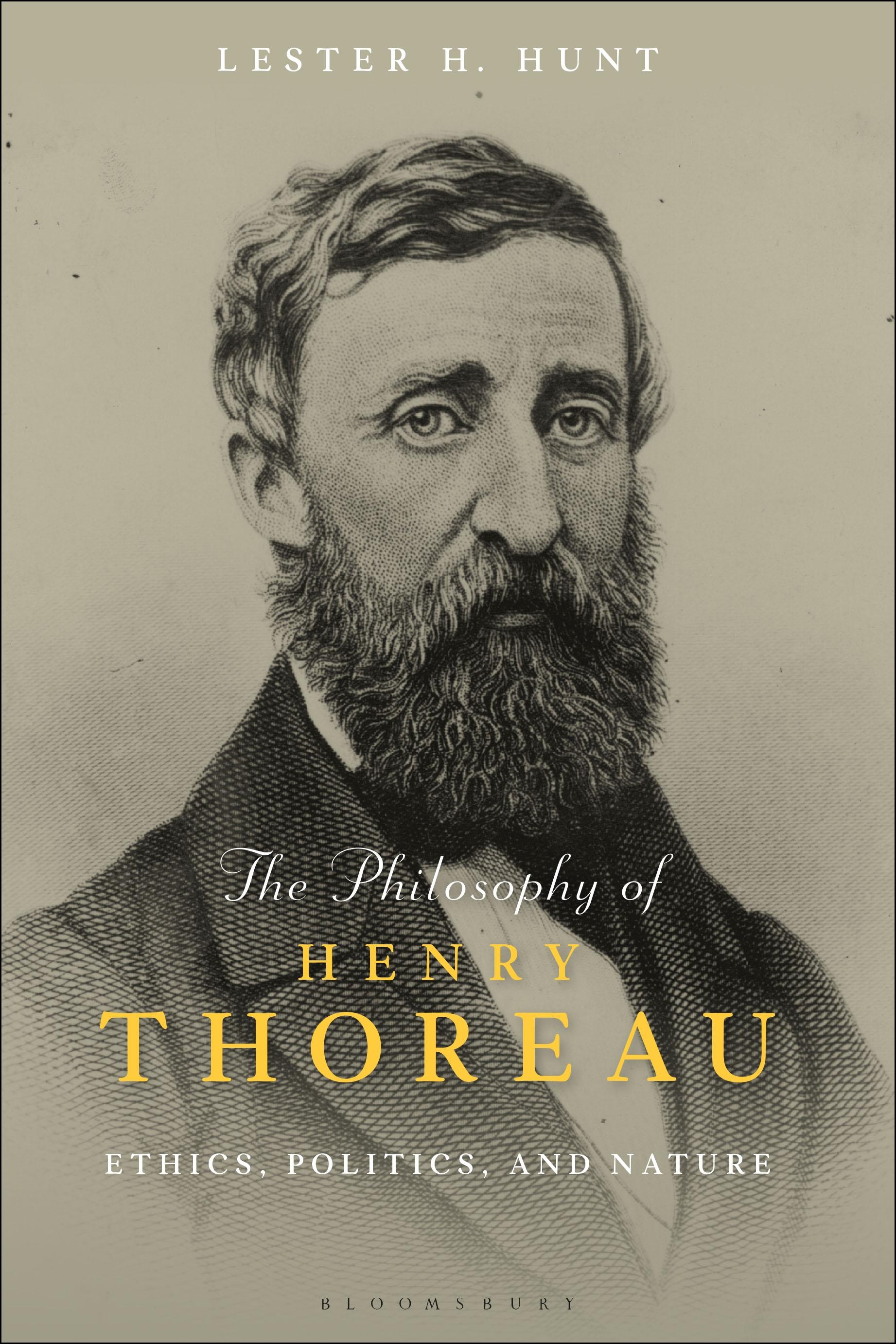
Henry Thoreau is widely considered to be one of the greatest nature writers, among whose best-known works are Walden and Walking. In this book, Lester Hunt shows that his writings have a compelling philosophical dimension as well.
Thoreau seldom argues for his ideas the way other philosophers do. Rather than setting up proofs designed to trap the reader into agreeing with him, he challenges the reader – by means of narratives, jokes, questions, and paradoxes -- to recognize possibilities previously unknown and unexplored.
Thoreau's own explorations led him to several distinctively philosophical theories: an intuitionist metaethics, an ethics based on virtue and self-realization, a politics that is fundamentally individualist and anarchist, and a secular religion in which nature is pre-eminent.
Thoreau seldom argues for his ideas the way other philosophers do. Rather than setting up proofs designed to trap the reader into agreeing with him, he challenges the reader – by means of narratives, jokes, questions, and paradoxes -- to recognize possibilities previously unknown and unexplored.
Thoreau's own explorations led him to several distinctively philosophical theories: an intuitionist metaethics, an ethics based on virtue and self-realization, a politics that is fundamentally individualist and anarchist, and a secular religion in which nature is pre-eminent.
Paga fácilmente con tarjeta, Klarna, Apple Pay o Google Pay. ¿No estás contento? Siempre tienes 14 días de garantía de devolución. Lee más en nuestros términos. Si tienes preguntas, escríbenos a hello@memmo.org.
Memmo hace que estudiar sea más fácil, estés donde estés. Aquí tienes tus libros de texto y herramientas de estudio inteligentes en un solo lugar: resúmenes, quizzes, podcasts y flashcards. Y también a Ted, tu compañero de estudio que responde a todo lo que te preguntes. Más de 50 000 estudiantes ya estudian aquí. Está hecho para que aprendas más rápido y te estreses menos.