
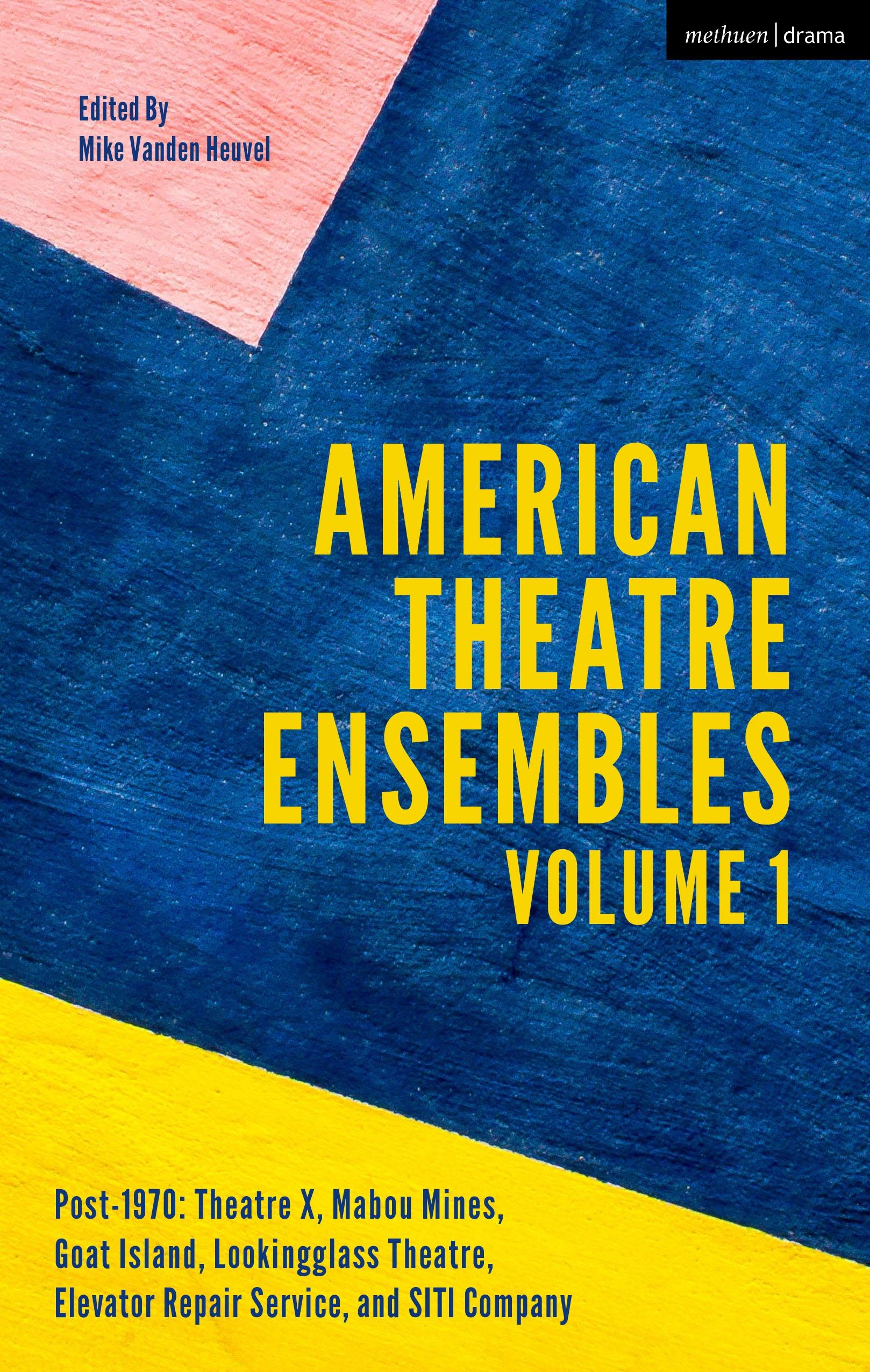
Across two volumes, Mike Vanden Heuvel and a strong roster of contributors present the history, processes, and achievements of American theatre companies renowned for their use of collective and/or ensemble-based techniques to generate new work. This first study considers theatre companies that were working between 1970 and 1995: it traces the rise and eventual diversification of activist-based companies that emerged to serve particular constituencies from the countercultural politics of the 1960s, and examines the shift in the 1980s that gave rise to the next generation of company-based work, rooted in a new interest in form and the more mediated and dispersed forms of politics. Ensembles examined are Mabou Mines, Theatre X, Goat Island, Lookingglass, Elevator Repair Service, and SITI Company.
Preliminary chapters provide a sweeping overview of ensemble-based creation within the general historical and cultural contexts of the period, followed by a detailed study of the evolution of ensemble-based work. The case studies consider factors such as influence, funding, production, and legacies, as well as the forms of collective devising and creation, while surveying the continuing work of significant long-running companies.
Contributors provide detailed case studies of the 6 companies from the period and cover:
* A chronicle of development and methods
* Key productions and projects
* Critical reception and legacy
* A chronological overview of significant productions
From the long history of collective theatre creation, with its sources in social crises, urgent aesthetic experimentation and utopian dreaming, American ensemble-based theatre has emerged at several key points in history to challenge the primacy of author-based and director-produced theatre. As the volume demonstrates, US ensemble companies have collectively revolutionized the form and content of contemporary performance, influencing experimental, as well as mainstream practice.
Preliminary chapters provide a sweeping overview of ensemble-based creation within the general historical and cultural contexts of the period, followed by a detailed study of the evolution of ensemble-based work. The case studies consider factors such as influence, funding, production, and legacies, as well as the forms of collective devising and creation, while surveying the continuing work of significant long-running companies.
Contributors provide detailed case studies of the 6 companies from the period and cover:
* A chronicle of development and methods
* Key productions and projects
* Critical reception and legacy
* A chronological overview of significant productions
From the long history of collective theatre creation, with its sources in social crises, urgent aesthetic experimentation and utopian dreaming, American ensemble-based theatre has emerged at several key points in history to challenge the primacy of author-based and director-produced theatre. As the volume demonstrates, US ensemble companies have collectively revolutionized the form and content of contemporary performance, influencing experimental, as well as mainstream practice.
Paga fácilmente con tarjeta, Klarna, Apple Pay o Google Pay. ¿No estás contento? Siempre tienes 14 días de garantía de devolución. Lee más en nuestros términos. Si tienes preguntas, escríbenos a hello@memmo.org.
Memmo hace que estudiar sea más fácil, estés donde estés. Aquí tienes tus libros de texto y herramientas de estudio inteligentes en un solo lugar: resúmenes, quizzes, podcasts y flashcards. Y también a Ted, tu compañero de estudio que responde a todo lo que te preguntes. Más de 50 000 estudiantes ya estudian aquí. Está hecho para que aprendas más rápido y te estreses menos.