
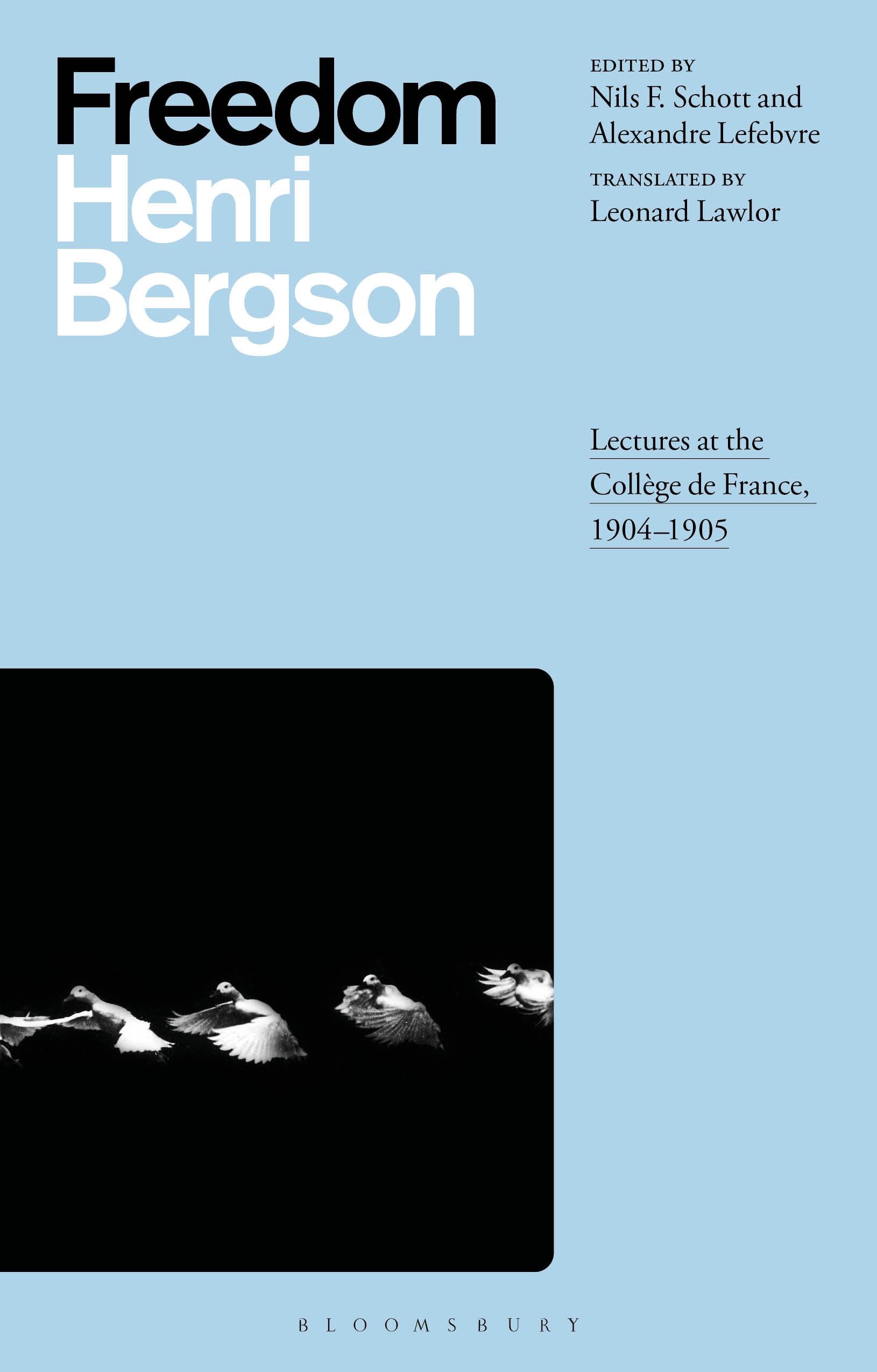
For 15 years, Henri Bergson, the most important French philosopher of the early 20th-century, taught at the Collège de France. Speaking without notes, most of his classes are now lost to history, but records of a handful of courses fortuitously survived thanks to stenographic transcripts. Conveying Bergson's very voice, these extraordinary documents are finally presented here in English.
The 1904–1905 lectures are dedicated to the topic of freedom, or as Bergson put it, “the evolution of the problem of freedom.” Building on the philosophy of freedom from his first book, Time and Free Will, he proposes that freedom is not only a fundamental human experience but characteristic of all life as such. By retracing how ancient and modern philosophers have dealt with the delicate question of freedom, Bergson demonstrates the necessity, and also the radically new character, of his own theory of freedom.
Bergson's lectures are a feast for many audiences. For philosophers, they give a fuller picture of his thought and contain deep reflections on many core topics in philosophy today, from the nature of time to the difference between brain and mind, the relation between memory and perception, and the vindication of freedom over determinism. For intellectual historians, the lectures are a treasure trove: as a slice of the living thought of a great thinker; as an extended analysis of the natural and human sciences of his day; and as a rich commentary on the history of ancient and modern philosophy. Finally, for cultural historians and literary scholars, the lectures were the cultural capital of Belle Époque France, consumed by elites and a vast educated public. They are also part of an exceedingly rare genre in modern philosophy: spoken, not written, lectures and expressed as a veritable stream of philosophical consciousness that is remarkably structured and analytically lucid.
The 1904–1905 lectures are dedicated to the topic of freedom, or as Bergson put it, “the evolution of the problem of freedom.” Building on the philosophy of freedom from his first book, Time and Free Will, he proposes that freedom is not only a fundamental human experience but characteristic of all life as such. By retracing how ancient and modern philosophers have dealt with the delicate question of freedom, Bergson demonstrates the necessity, and also the radically new character, of his own theory of freedom.
Bergson's lectures are a feast for many audiences. For philosophers, they give a fuller picture of his thought and contain deep reflections on many core topics in philosophy today, from the nature of time to the difference between brain and mind, the relation between memory and perception, and the vindication of freedom over determinism. For intellectual historians, the lectures are a treasure trove: as a slice of the living thought of a great thinker; as an extended analysis of the natural and human sciences of his day; and as a rich commentary on the history of ancient and modern philosophy. Finally, for cultural historians and literary scholars, the lectures were the cultural capital of Belle Époque France, consumed by elites and a vast educated public. They are also part of an exceedingly rare genre in modern philosophy: spoken, not written, lectures and expressed as a veritable stream of philosophical consciousness that is remarkably structured and analytically lucid.
Paga fácilmente con tarjeta, Klarna, Apple Pay o Google Pay. ¿No estás contento? Siempre tienes 14 días de garantía de devolución. Lee más en nuestros términos. Si tienes preguntas, escríbenos a hello@memmo.org.
Memmo hace que estudiar sea más fácil, estés donde estés. Aquí tienes tus libros de texto y herramientas de estudio inteligentes en un solo lugar: resúmenes, quizzes, podcasts y flashcards. Y también a Ted, tu compañero de estudio que responde a todo lo que te preguntes. Más de 50 000 estudiantes ya estudian aquí. Está hecho para que aprendas más rápido y te estreses menos.