
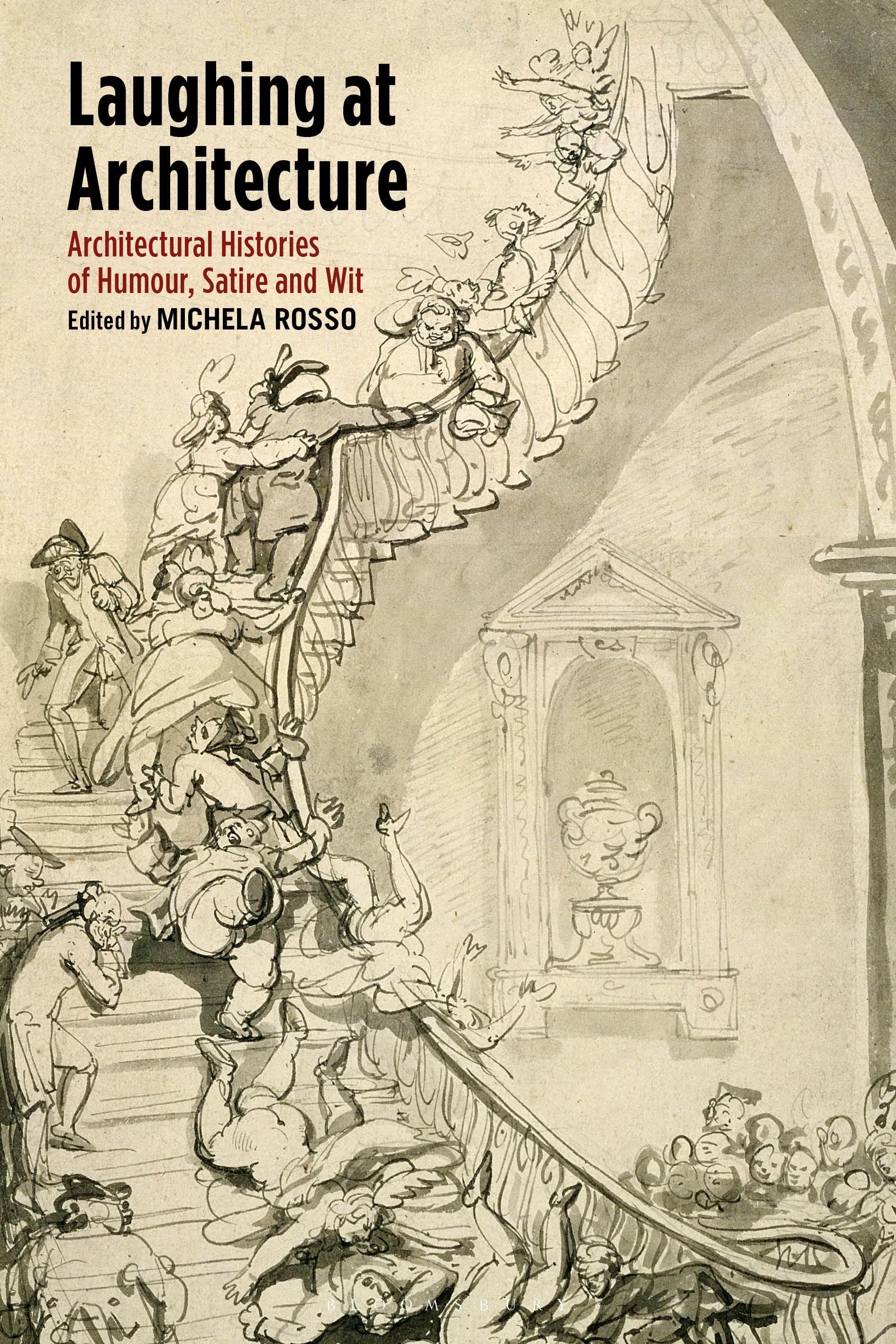
In a media-saturated world, humour stands out as a form of social communication that is especially effective in re-appropriating and questioning architectural and urban culture. Whether illuminating the ambivalences of metropolitan life or exposing the shock of modernisation, cartoons, caricature, and parody have long been potent agents of architectural criticism, protest and opposition.
In a novel contribution to the field of architectural history, this book outlines a survey of visual and textual humour as applied to architecture, its artefacts and leading professionals. Employing a wide variety of visual and literary sources (prints, the illustrated press, advertisements, theatrical representations, cinema and TV), thirteen essays explore an array of historical subjects concerning the critical reception of projects, buildings and cities through the means of caricature and parody. Subjects range from 1750 to the present, and from Europe and the USA to contemporary China. From William Hogarth and George Cruikshank to Osbert Lancaster, Adolf Loos' satire, and Saul Steinberg's celebrated cartoons of New York City, graphic and descriptive humour is shown to be an enormously fruitful, yet largely unexplored terrain of investigation for the architectural and urban historian.
In a novel contribution to the field of architectural history, this book outlines a survey of visual and textual humour as applied to architecture, its artefacts and leading professionals. Employing a wide variety of visual and literary sources (prints, the illustrated press, advertisements, theatrical representations, cinema and TV), thirteen essays explore an array of historical subjects concerning the critical reception of projects, buildings and cities through the means of caricature and parody. Subjects range from 1750 to the present, and from Europe and the USA to contemporary China. From William Hogarth and George Cruikshank to Osbert Lancaster, Adolf Loos' satire, and Saul Steinberg's celebrated cartoons of New York City, graphic and descriptive humour is shown to be an enormously fruitful, yet largely unexplored terrain of investigation for the architectural and urban historian.
Páginas: 288
Categoría: Arkitektur & Stadsplanering
e-ISBN: 9781350022768
Peso de envío: 1.2 kg
Envío en: 1-2 días
Paga fácilmente con tarjeta, Klarna, Apple Pay o Google Pay. ¿No estás contento? Siempre tienes 14 días de garantía de devolución. Lee más en nuestros términos. Si tienes preguntas, escríbenos a hello@memmo.org.
Memmo hace que estudiar sea más fácil, estés donde estés. Aquí tienes tus libros de texto y herramientas de estudio inteligentes en un solo lugar: resúmenes, quizzes, podcasts y flashcards. Y también a Ted, tu compañero de estudio que responde a todo lo que te preguntes. Más de 50 000 estudiantes ya estudian aquí. Está hecho para que aprendas más rápido y te estreses menos.