
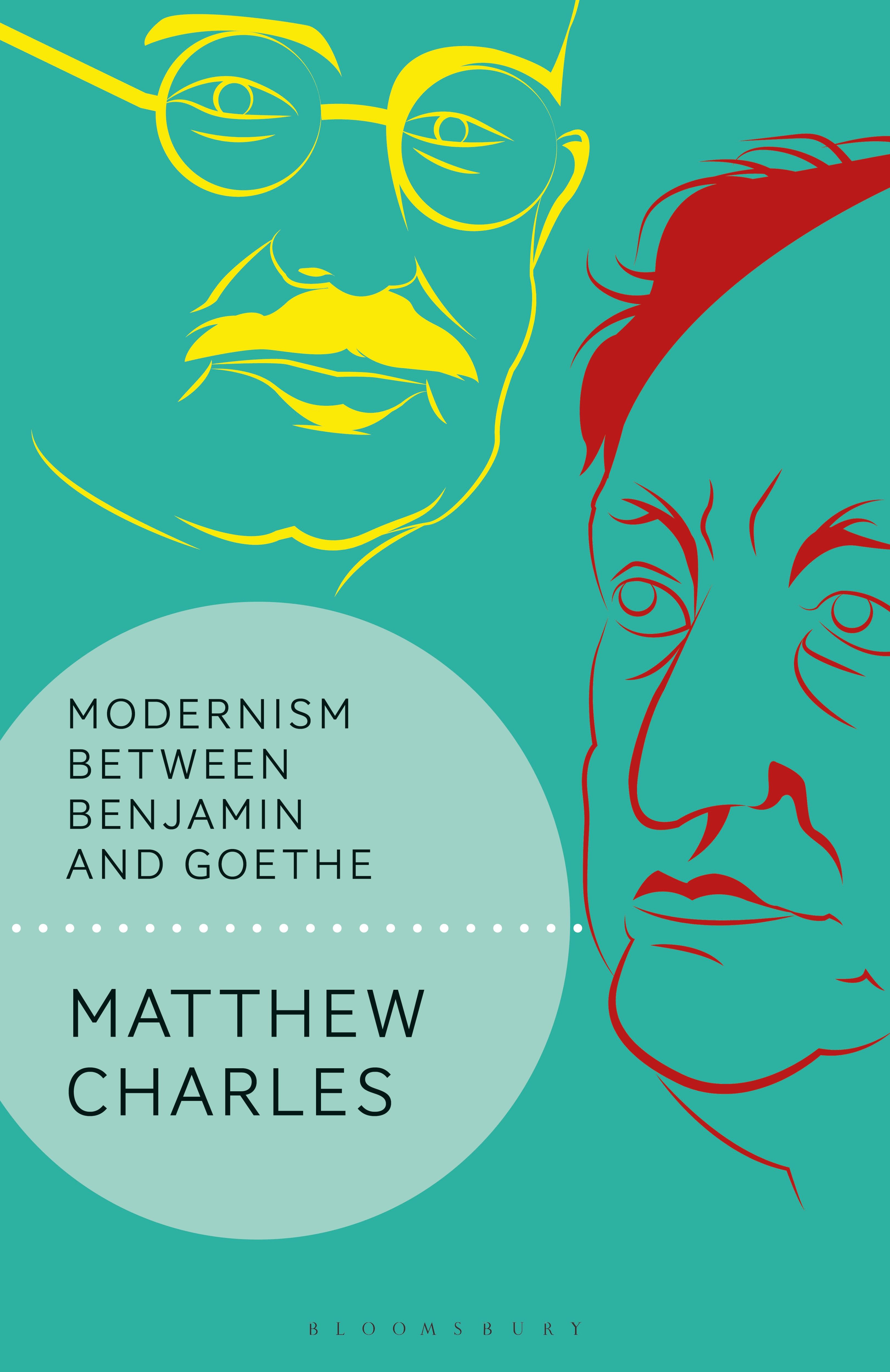
Widely regarded as one of the foremost cultural critics of the last century, Walter Benjamin's relation to Modernism has largely been understood in the context of his reception of the aesthetic theories of Early German Romanticism and his associated interest in avant-garde Surrealism. But this Romantic understanding only gives half the picture.
Running through Benjamin's thought is also a critique of Romanticism, developed in conjunction with a positive engagement with the philosophical, artistic and historical writings of J. W. von Goethe. In demonstrating the significance of these Goethean elements, this book challenges the dominant understanding of Benjamin's philosophy as essentially Romantic and instead proposes that Goethe's Classicism, conceived as the counterpoint to Romanticism, permits a corrective to the latter's deficiencies. Benjamin's Modernist concept of criticism, it is argued, is constituted in the movement between these polarities of Romanticism and Classicism.
Conversely, placing Goethe's Classicism in relation to Benjamin's practice of literary criticism reveals historical tensions with Romanticism that constitute the untimely – indeed, it will be argued, cinematic – Modernism of his work. Adopting a transcritical approach, this book alternates between Benjamin and Goethe in relation to the experiences of colour, language and technology, assembling a constellation of philosophical and artistic figures between them, including the writings of Kant, Nietzsche, Cohen, Deleuze, Koselleck, Klages, and the work of Grünewald, Marées, Klee, Turner, Hulme, Eisenstein, Tretyakov, and Murnau.
Running through Benjamin's thought is also a critique of Romanticism, developed in conjunction with a positive engagement with the philosophical, artistic and historical writings of J. W. von Goethe. In demonstrating the significance of these Goethean elements, this book challenges the dominant understanding of Benjamin's philosophy as essentially Romantic and instead proposes that Goethe's Classicism, conceived as the counterpoint to Romanticism, permits a corrective to the latter's deficiencies. Benjamin's Modernist concept of criticism, it is argued, is constituted in the movement between these polarities of Romanticism and Classicism.
Conversely, placing Goethe's Classicism in relation to Benjamin's practice of literary criticism reveals historical tensions with Romanticism that constitute the untimely – indeed, it will be argued, cinematic – Modernism of his work. Adopting a transcritical approach, this book alternates between Benjamin and Goethe in relation to the experiences of colour, language and technology, assembling a constellation of philosophical and artistic figures between them, including the writings of Kant, Nietzsche, Cohen, Deleuze, Koselleck, Klages, and the work of Grünewald, Marées, Klee, Turner, Hulme, Eisenstein, Tretyakov, and Murnau.
Páginas: 240
Categoría: Litteraturvetenskap & Teori
e-ISBN: 9781350013957
Peso de envío: 1.2 kg
Envío en: 1-2 días
Paga fácilmente con tarjeta, Klarna, Apple Pay o Google Pay. ¿No estás contento? Siempre tienes 14 días de garantía de devolución. Lee más en nuestros términos. Si tienes preguntas, escríbenos a hello@memmo.org.
Memmo hace que estudiar sea más fácil, estés donde estés. Aquí tienes tus libros de texto y herramientas de estudio inteligentes en un solo lugar: resúmenes, quizzes, podcasts y flashcards. Y también a Ted, tu compañero de estudio que responde a todo lo que te preguntes. Más de 50 000 estudiantes ya estudian aquí. Está hecho para que aprendas más rápido y te estreses menos.