
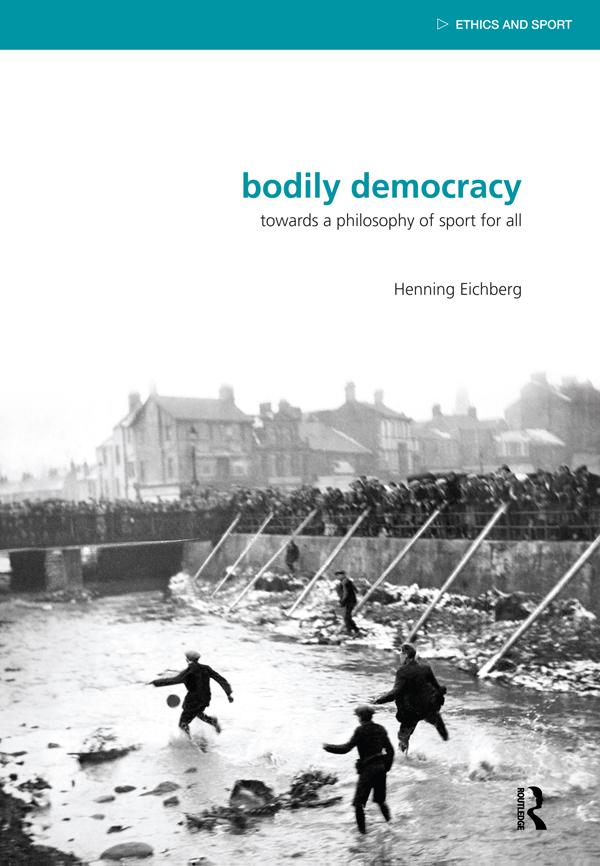
Sport has gained increasing importance for welfare society. In this process, however, the term of ‘sport’ has become less and less clear. Larger parts of what nowadays is called ‘sport for all’ are non-competitive and derived from traditions of gymnastics, dance, festivity, games, outdoor activities, and physical training rather than from classical modern elite sports. This requires new philosophical approaches, as the philosophy of sport, so far, has been dominated by topics of elite sports.
Based on Scandinavian experiences, the book presents studies about festivities of sport, outdoor activities, song and movement, and play and game. The engagement of elderly people challenges sports. Games get political significance in international cooperation, for peace culture and as means against poverty (in Africa). The empirical studies result in philosophical analyses on the recognition of folk practice in education and on relations between identity and recognition.
The study of ‘sport for all’ opens up for new ways of phenomenological knowledge, moving bottom-up from sport to the philosophy of "the individual", of event, of nature, and of human energy. Popular sports give inspiration to a philosophy of practice as well as to a phenomenological understanding of ‘the people’, of civil society and the ‘demos’ of democracy – as folk in movement.
This book was published as a special issue in Sport, Ethics and Philosophy.
Paga fácilmente con tarjeta, Klarna, Apple Pay o Google Pay. ¿No estás contento? Siempre tienes 14 días de garantía de devolución. Lee más en nuestros términos. Si tienes preguntas, escríbenos a hello@memmo.org.
Memmo hace que estudiar sea más fácil, estés donde estés. Aquí tienes tus libros de texto y herramientas de estudio inteligentes en un solo lugar: resúmenes, quizzes, podcasts y flashcards. Y también a Ted, tu compañero de estudio que responde a todo lo que te preguntes. Más de 50 000 estudiantes ya estudian aquí. Está hecho para que aprendas más rápido y te estreses menos.