
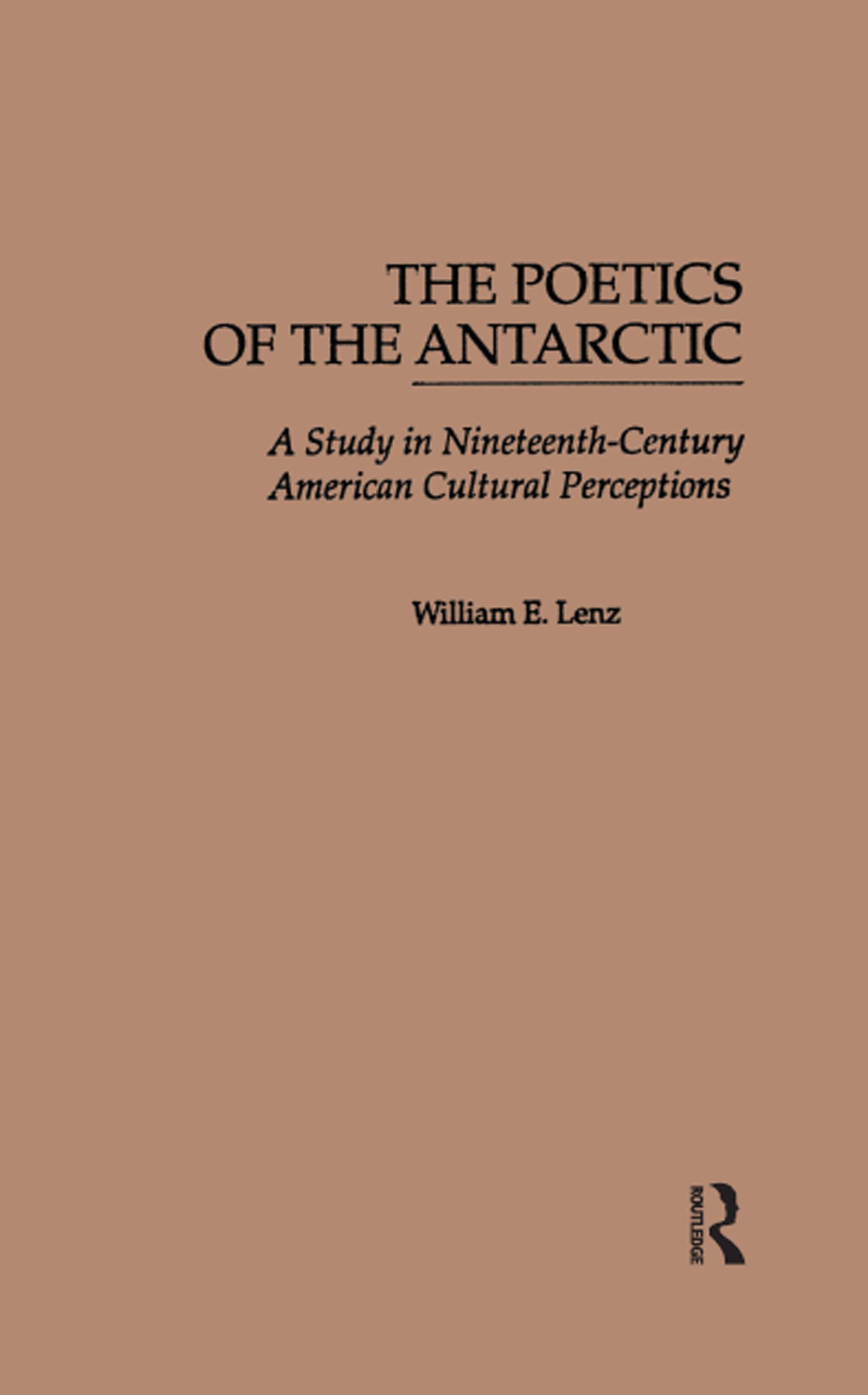
The thesis of this book is that the 19th-century interest in the Antarctic functions for modern scholars as an important index to American self-discovery and self-definition from the 1830s onward. According to the author, American hopes for confirming identity came to be focused on an unlikely goal, the discovery of the illusive Antarctic continent. By examining in detail one literary product of the U.S. Exploring Expedition (1838-1842) to Antarctica, James Croxall Palmer's epic poem Thulia: A Tale of the Antarctic (1843), and its revision, The Antarctic Mariner's Song (1868), and by locating these works within their cultural context, Lenz reveals the significance and changing meaning of exploration to emerging American concepts of nationhood. The volume also considers the tradition of American sea fiction in the works of such writers as James Fenimore Cooper, Edgar Allan Poe, and Herman Melville, arguing that for these writers the Antarctic was a locus of symbolic meaning while for Palmer it was a process of individual and collective perception. The 1868 version of the Palmer poem is attached here as an appendix. A useful bibliography follows that appendix.
Paga fácilmente con tarjeta, Klarna, Apple Pay o Google Pay. ¿No estás contento? Siempre tienes 14 días de garantía de devolución. Lee más en nuestros términos. Si tienes preguntas, escríbenos a hello@memmo.org.
Memmo hace que estudiar sea más fácil, estés donde estés. Aquí tienes tus libros de texto y herramientas de estudio inteligentes en un solo lugar: resúmenes, quizzes, podcasts y flashcards. Y también a Ted, tu compañero de estudio que responde a todo lo que te preguntes. Más de 50 000 estudiantes ya estudian aquí. Está hecho para que aprendas más rápido y te estreses menos.