
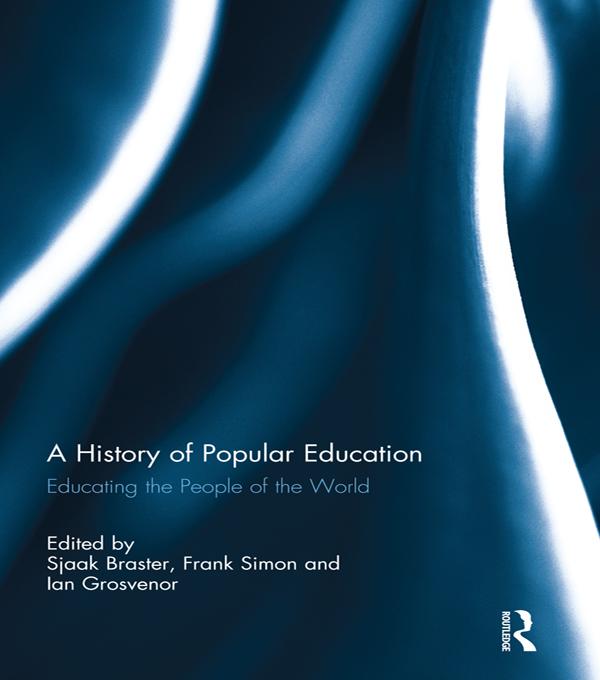
Popular Education is a concept with many meanings. With the rise of national systems of education at the beginning of the nineteenth-century, it was related to the socially inclusive concept of citizenship coined by privileged members with vested interests in the urban society that could only be achieved by educating the common people, or in other words, the uncontrollable masses that had nothing to lose. In the twentieth-century, Popular Education became another word for initiatives taken by religious and socialist groups for educating working-class adults, and women. However, in the course of the twentieth-century, the meaning of the term shifted towards empowerment and the education of the oppressed. This book explores the several ways in which Popular Education has been theoretically and empirically defined, in several regions of the world, over the last three centuries. It is the result of work by scholars from Europe and the Americas during the 31st session of the International Standing Conference on the History of Education (ISCHE) that was organised at Utrecht University, the Netherlands in August 2009.
This book was originally published as a special issue of Paedagogica Historica.
Paga fácilmente con tarjeta, Klarna, Apple Pay o Google Pay. ¿No estás contento? Siempre tienes 14 días de garantía de devolución. Lee más en nuestros términos. Si tienes preguntas, escríbenos a hello@memmo.org.
Memmo hace que estudiar sea más fácil, estés donde estés. Aquí tienes tus libros de texto y herramientas de estudio inteligentes en un solo lugar: resúmenes, quizzes, podcasts y flashcards. Y también a Ted, tu compañero de estudio que responde a todo lo que te preguntes. Más de 50 000 estudiantes ya estudian aquí. Está hecho para que aprendas más rápido y te estreses menos.