
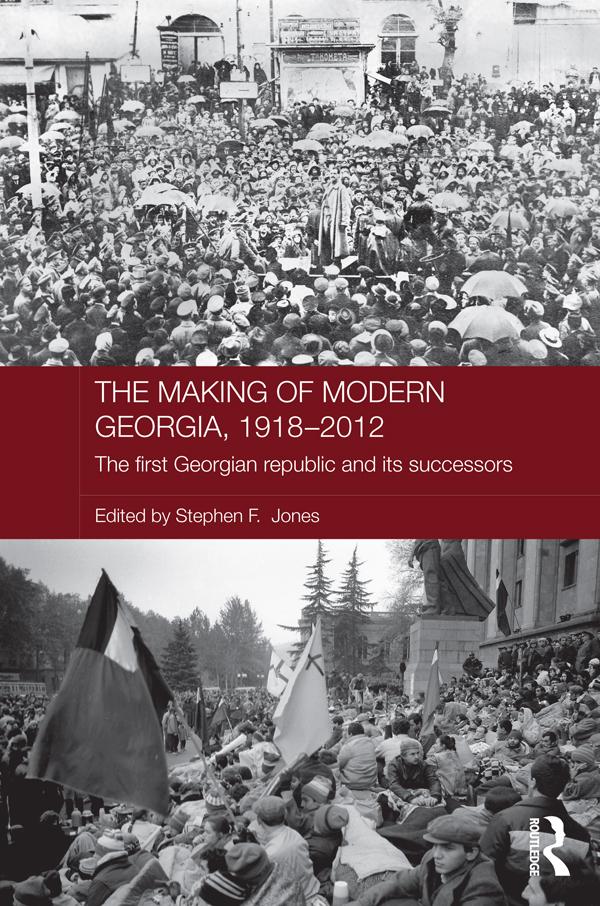
When most of Eastern Europe was struggling with dictatorships of one kind or another, the Democratic Republic of Georgia (1918-1921) established a constitution, a parliamentary system with national elections, an active opposition, and a free press. Like the Democratic Republic of Georgia in 1918, its successors emerged after 1991 from a bankrupt empire, and faced, yet again, the task of establishing a new economic, political and social system from scratch. In both 1918 and 1991, Georgia was confronted with a hostile Russia and followed a pro-Western and pro-democratic course. The top regional experts in this book explore the domestic and external parallels between the Georgian post-colonial governments of the early twentieth and twenty-first centuries. How did the inexperienced Georgian leaders in both eras deal with the challenge of secessionism, what were their state building strategies, and what did democracy mean to them? What did their electoral systems look like, why were their economic strategies so different, and how did they negotiate with the international community neighbouring threats. These are the central challenges of transitional governments around the world today. Georgia’s experience over one hundred years suggests that both history and contemporary political analysis offer the best (and most interesting) explanation of the often ambivalent outcomes.
Paga fácilmente con tarjeta, Klarna, Apple Pay o Google Pay. ¿No estás contento? Siempre tienes 14 días de garantía de devolución. Lee más en nuestros términos. Si tienes preguntas, escríbenos a hello@memmo.org.
Memmo hace que estudiar sea más fácil, estés donde estés. Aquí tienes tus libros de texto y herramientas de estudio inteligentes en un solo lugar: resúmenes, quizzes, podcasts y flashcards. Y también a Ted, tu compañero de estudio que responde a todo lo que te preguntes. Más de 50 000 estudiantes ya estudian aquí. Está hecho para que aprendas más rápido y te estreses menos.