
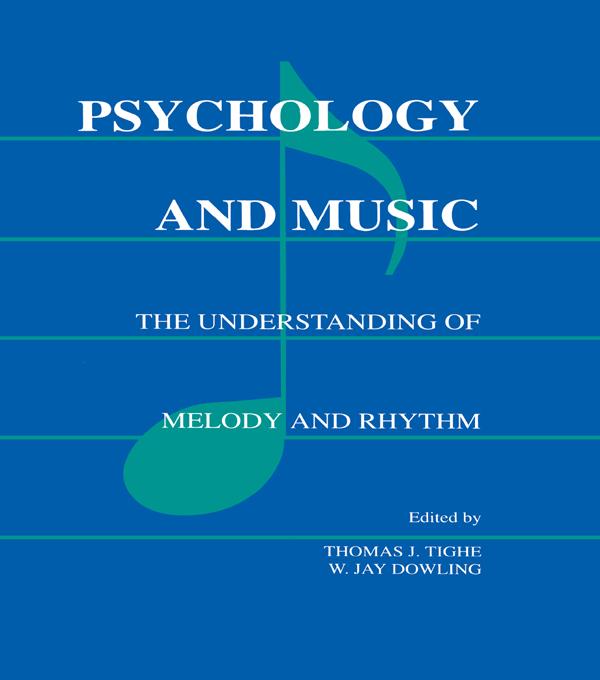
This book deals with the complex cognitive processes involved in understanding two "horizontal" aspects of music perception, melody and rhythm, both separately and together. Focusing on the tonal framework for pitch material in melodies, the first section provides evidence that mere exposure to music organized in a particular way is sufficient to induce the auditory system to prepare itself to receive further input conforming to the patterns already experienced. Its chapters also offer evidence concerning elaborations of those basic schemes that come about through specialized training in music. Continuing themes from the first section -- such as the hypothesis that melodies must be treated as integral wholes and not mere collections of elements -- the second section discusses the integration of melody and rhythm. In these chapters there is an underlying concern for clarifying the relation -- central to aesthetic questions -- between physical patterns of sound energy in the world and our psychological experience of them. The chapters in the third section provide excellent examples of the new, scientific literature that attempts to objectively study early musical abilities. Their data establish that infants and young children are far more perceptive and skilled appreciators of music than was thought a decade ago.
Paga fácilmente con tarjeta, Klarna, Apple Pay o Google Pay. ¿No estás contento? Siempre tienes 14 días de garantía de devolución. Lee más en nuestros términos. Si tienes preguntas, escríbenos a hello@memmo.org.
Memmo hace que estudiar sea más fácil, estés donde estés. Aquí tienes tus libros de texto y herramientas de estudio inteligentes en un solo lugar: resúmenes, quizzes, podcasts y flashcards. Y también a Ted, tu compañero de estudio que responde a todo lo que te preguntes. Más de 50 000 estudiantes ya estudian aquí. Está hecho para que aprendas más rápido y te estreses menos.