
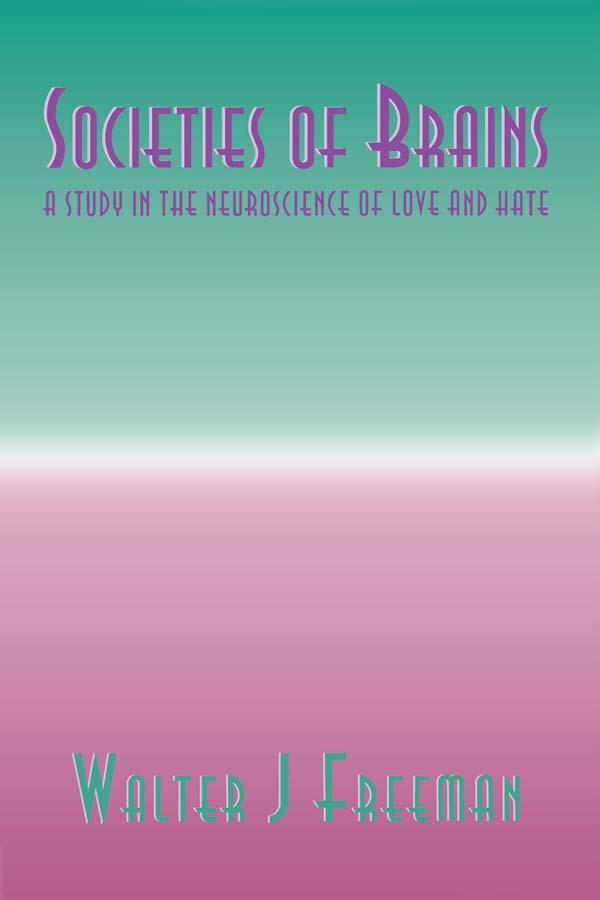
This monograph from a leading neuroscientist and neural networks researcher investigates and offers a fresh approach to the perplexing scientific and philosophical problems of minds and brains. It explains how brains have evolved from our earliest vertebrate ancestors. It details how brains provide the basis for successful comprehension of the environment, for the formulation of actions and prediction of their consequences, and for cooperating or competing with other beings that have brains. The book also offers observations regarding such issues as:
* how and why people fall in and out of love;
* the biological basis for experiencing feelings of love and hate; and
* how music and dance have provided the ancestral technology for forming social groups such as tribes and clans.
The author reviews the history of the mind-brain problem, and demonstrates how the new sciences of behavioral electrophysiology and nonlinear dynamics -- combined with the latest computer technology -- have made it possible for us to observe brains in action. He also provides an answer to the question: What happens to a stimulus after it enters the brain? The answer: The stimulus triggers the construction of a percept and is then washed away. All that we know is what our brains construct for us by neurodynamics. Brains are not logical devices that process information. They are dynamical systems that create meaning through interactions with the environment -- and each other.
The book shows how the learning process by which brains construct meaning tends to isolate brains into self-centered worlds, and how nature has provided a remedy -- first appearing in mammals as a mechanism for pair-bonding -- to ensure reproduction of the young dependent on parents. The remedy is based in the neurochemistry of sex which serves to dissolve belief structures in order to open the way for new patterns of understanding and behavior. Individuals experience these changes in various ways, such as falling in love, collegiate indoctrination, tribal bonding, brain washing, political or religious conversions, and related types of socialization. The highest forms of meaning for humans come through these social attachments.
Paga fácilmente con tarjeta, Klarna, Apple Pay o Google Pay. ¿No estás contento? Siempre tienes 14 días de garantía de devolución. Lee más en nuestros términos. Si tienes preguntas, escríbenos a hello@memmo.org.
Memmo hace que estudiar sea más fácil, estés donde estés. Aquí tienes tus libros de texto y herramientas de estudio inteligentes en un solo lugar: resúmenes, quizzes, podcasts y flashcards. Y también a Ted, tu compañero de estudio que responde a todo lo que te preguntes. Más de 50 000 estudiantes ya estudian aquí. Está hecho para que aprendas más rápido y te estreses menos.