
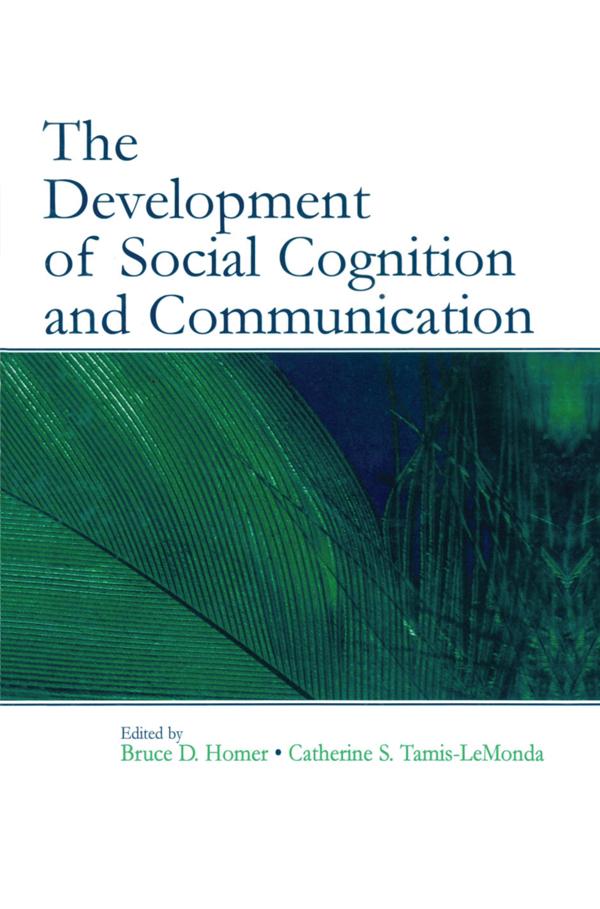
For young children, two of the most important tasks they face are learning how to communicate and learning how to think about themselves and the social world around them. The premise of this book is that these two tasks are inherently linked. The communicative routines and language that children learn enable new modes of cognition, which in turn allow for more complex social interactions. The model of early child development that emerges is one in which equal importance is given to the socio-cultural context in which children are developing, and to the role played by children in actively constructing their own knowledge.
The book is organized into four thematic sections, each introduced by an integrative overview. The first section, "Language and Cognition," examines the function of language in young children's lives. The second section, "Intentionality and Communication," explores young children's understanding of intentions and their verbal and non-verbal communication. The third section, "Theory of Mind and Pedagogy," examines the ways in which developments in cognitive and communicative skills transform children's participation in the process of teaching and learning. The final section, "Narrative and Autobiographical Memory," looks at the effects of narrative on young children's understanding of themselves and their world. This book will be of great interest to anyone concerned with young children's learning and development.
Paga fácilmente con tarjeta, Klarna, Apple Pay o Google Pay. ¿No estás contento? Siempre tienes 14 días de garantía de devolución. Lee más en nuestros términos. Si tienes preguntas, escríbenos a hello@memmo.org.
Memmo hace que estudiar sea más fácil, estés donde estés. Aquí tienes tus libros de texto y herramientas de estudio inteligentes en un solo lugar: resúmenes, quizzes, podcasts y flashcards. Y también a Ted, tu compañero de estudio que responde a todo lo que te preguntes. Más de 50 000 estudiantes ya estudian aquí. Está hecho para que aprendas más rápido y te estreses menos.