
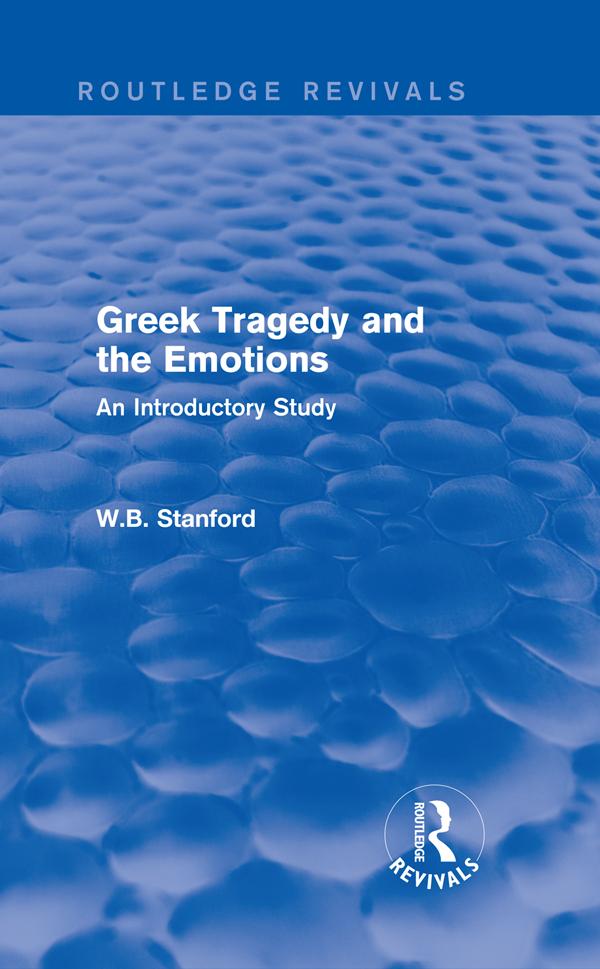
According to Aristotle the main purpose of tragedy is the manipulation of emotions, and yet there are relatively few accessible studies of the precise dynamics of emotion in the Athenian theatre.
In Greek Tragedy and the Emotions, first published in 1993, W.B. Stanford reviews the evidence for ‘emotionalism’ – as the great Attic playwrights presented it, as the actors and choruses expressed it, and as their audiences reacted to it. Sociological aspects of the issue are considered, and the whole range of emotions, not just ‘pity and fear’, is discussed. The aural, visual and stylistic methods of inciting emotion are analysed, and Aeschylus’ Oresteia is examined exclusively in terms of the emotions that it exploits. Finally, Stanford’s conclusions are contrasted with the accepted theories of tragic ‘catharsis’.
Greek terms are transliterated and all quotations are in translation, so Greek Tragedy and the Emotions will appeal particularly to those unfamiliar with Classical Greek.
Paga fácilmente con tarjeta, Klarna, Apple Pay o Google Pay. ¿No estás contento? Siempre tienes 14 días de garantía de devolución. Lee más en nuestros términos. Si tienes preguntas, escríbenos a hello@memmo.org.
Memmo hace que estudiar sea más fácil, estés donde estés. Aquí tienes tus libros de texto y herramientas de estudio inteligentes en un solo lugar: resúmenes, quizzes, podcasts y flashcards. Y también a Ted, tu compañero de estudio que responde a todo lo que te preguntes. Más de 50 000 estudiantes ya estudian aquí. Está hecho para que aprendas más rápido y te estreses menos.