
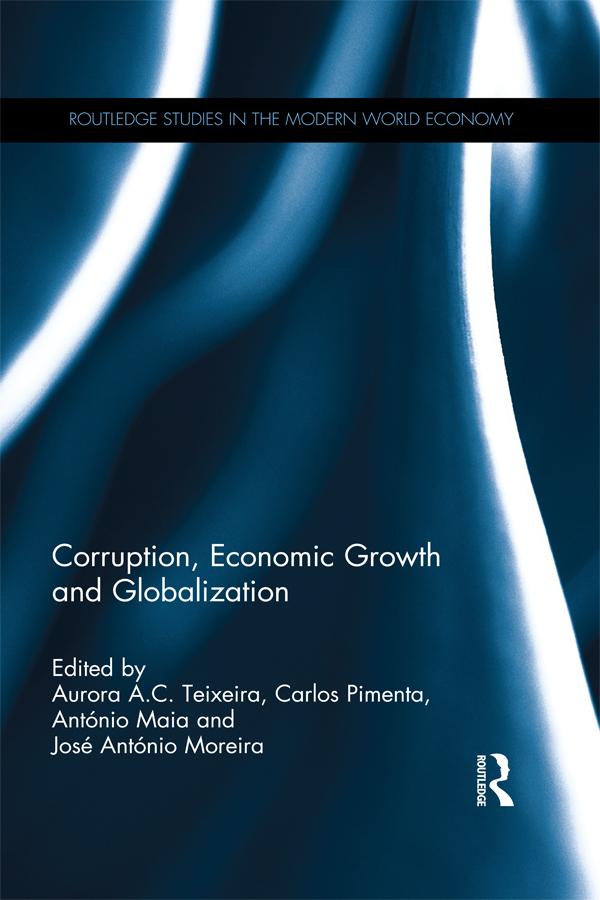
Corruption is increasingly placed on top of the agenda of national governments and supra national institutions, such as the OECD, UN or the World Bank. A necessary condition for promoting sustainable economic growth is the pre-existence of a stable political system which is able to control corruption. Corruption, however, is a very complex issue, associated with institutional and cultural specificities, personality traits related to individualistic values, and criminal personalities. In this book the social, political and economic realities that prevail in particular settings are viewed from an interdisciplinary, multidimensional, and a multi country perspective.
This book is divided into three parts. The first part presents a comprehensive, theoretical and empirical framework of corruption with an overview of literature on economic growth and corruption. Part two, encompasses the in-depth analysis of several countries, ranging from middle corrupted contexts like Portugal, to highly corrupted countries including Serbia, Russia, Thailand and China- the latter viewed from the perspective of firms from a very low corruption country such as Finland. The final part explores the prevention and control of corruption, looking at the public sector in Thailand and fighting corruption with different strategies.
This volume is of the interest of those who study international economics, development economics or organised crime.
Paga fácilmente con tarjeta, Klarna, Apple Pay o Google Pay. ¿No estás contento? Siempre tienes 14 días de garantía de devolución. Lee más en nuestros términos. Si tienes preguntas, escríbenos a hello@memmo.org.
Memmo hace que estudiar sea más fácil, estés donde estés. Aquí tienes tus libros de texto y herramientas de estudio inteligentes en un solo lugar: resúmenes, quizzes, podcasts y flashcards. Y también a Ted, tu compañero de estudio que responde a todo lo que te preguntes. Más de 50 000 estudiantes ya estudian aquí. Está hecho para que aprendas más rápido y te estreses menos.