
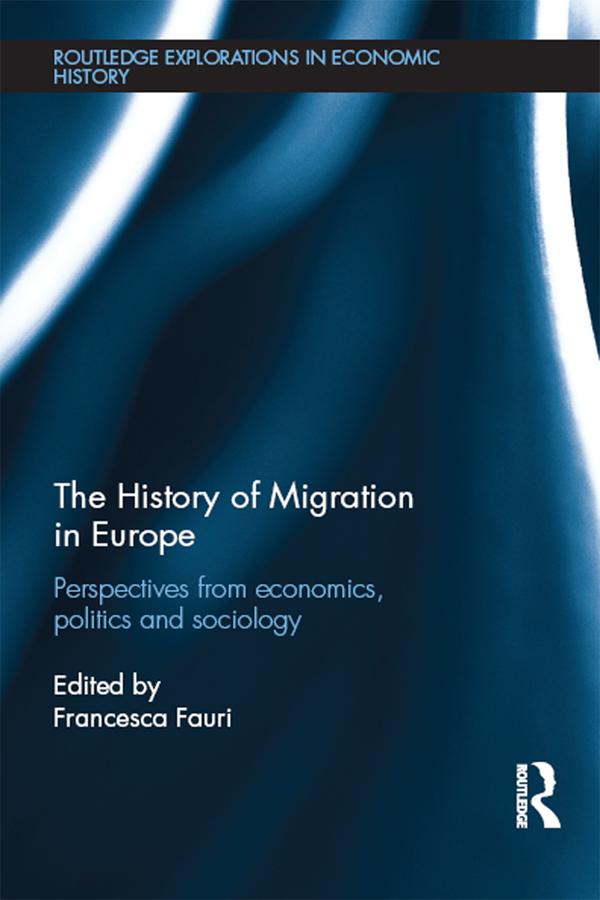
The History of Migration in Europe belies several myths by arguing, for example, that immobility has not been the "normal" condition of people before the modern era. Migration (far from being an income-maximizing choice taken by lone individuals) is often a household strategy, and local wages benefit from migration. This book shows how ssuccesses arise when governments liberalize and accompany the international movements of people with appropriate legislation, while failures take place when the legislation enacted is insufficient, belated or ill shaped.
Part I of this book addresses mainly methodological issues. Past and present migration is basically defined as a cross-cultural movement; cultural boundaries need prolonged residence and active integrationist policies to allow cross-fertilization of cultures among migrants and non-migrants. Part II collects chapters that examine the role of public bodies with reference to migratory movements, depicting a series of successes and failures in the migration policies through examples drawn from the European Union or single countries. Part III deals with challenges immigrants face once they have settled in their new countries: Do immigrants seek "integration" in their host culture? Through which channels is such integration achieved, and what roles are played by citizenship and political participation? What is the "identity" of migrants and their children born in the host countries?
This text's originality stems from the fact that it explains the complex nature of migratory movements by incorporating a variety of perspectives and using a multi-disciplinary approach, including economic, political and sociological contributions.
Paga fácilmente con tarjeta, Klarna, Apple Pay o Google Pay. ¿No estás contento? Siempre tienes 14 días de garantía de devolución. Lee más en nuestros términos. Si tienes preguntas, escríbenos a hello@memmo.org.
Memmo hace que estudiar sea más fácil, estés donde estés. Aquí tienes tus libros de texto y herramientas de estudio inteligentes en un solo lugar: resúmenes, quizzes, podcasts y flashcards. Y también a Ted, tu compañero de estudio que responde a todo lo que te preguntes. Más de 50 000 estudiantes ya estudian aquí. Está hecho para que aprendas más rápido y te estreses menos.