
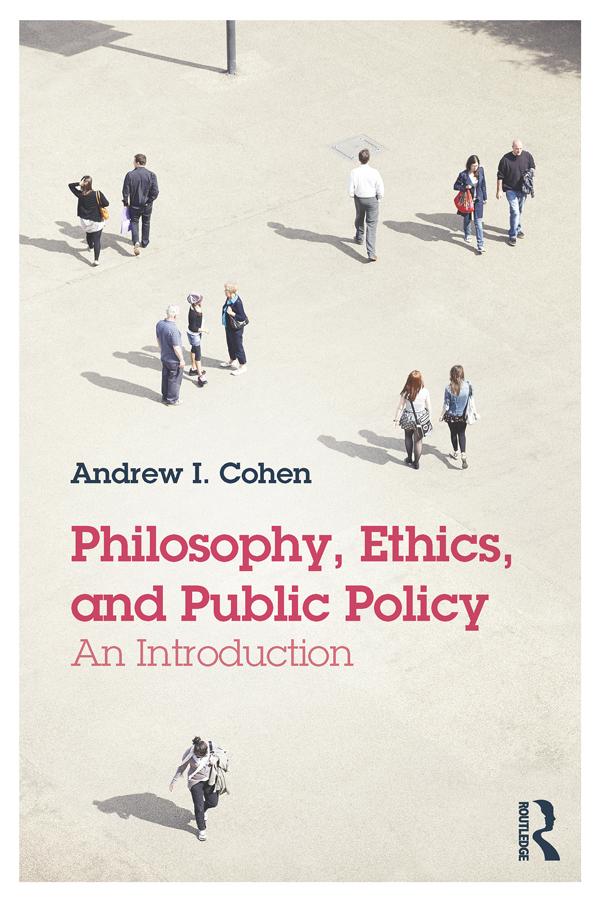
What makes a policy work? What should policies attempt to do, and what ought they not do? These questions are at the heart of both policy-making and ethics. Philosophy, Ethics and Public Policy: An Introduction examines these questions and more. Andrew I. Cohen uses contemporary examples and controversies, mainly drawn from policy in a North American context, to illustrate important flashpoints in ethics and public policy, such as:
- public policy and globalization: sweatshops; medicine and the developing world; immigration
- marriage, family and education: same-sex marriage; women and the family; education and Intelligent Design
- justifying and responding to state coercion: torture; reparations and restorative justice
- the ethics of the body and commodification: the human organ trade, and factory farming of animals.
Each chapter illustrates how ethics offers ways of prioritizing some policy alternatives and imagining new ones. Reflecting on various themes in globalization, markets, and privacy, the chapters are windows to enduring significant debates about what states may do to shape our behavior. Overall, the book will help readers understand how ethics can frame policymaking, while also suggesting that sometimes the best policy is no policy. Including annotated further reading, this is an excellent introduction to a fast-growing subject for students in Philosophy, Public Policy, and related disciplines.
Paga fácilmente con tarjeta, Klarna, Apple Pay o Google Pay. ¿No estás contento? Siempre tienes 14 días de garantía de devolución. Lee más en nuestros términos. Si tienes preguntas, escríbenos a hello@memmo.org.
Memmo hace que estudiar sea más fácil, estés donde estés. Aquí tienes tus libros de texto y herramientas de estudio inteligentes en un solo lugar: resúmenes, quizzes, podcasts y flashcards. Y también a Ted, tu compañero de estudio que responde a todo lo que te preguntes. Más de 50 000 estudiantes ya estudian aquí. Está hecho para que aprendas más rápido y te estreses menos.