
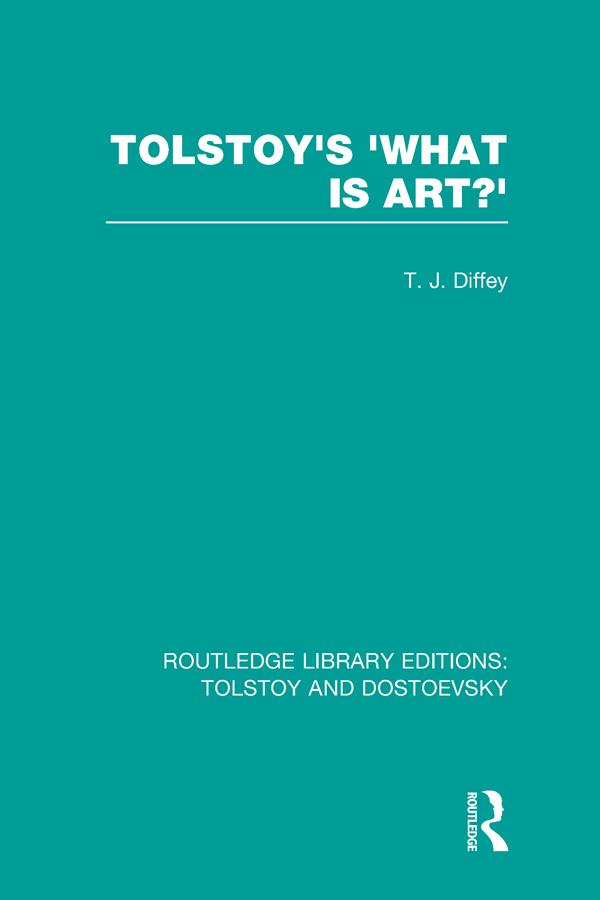
With its demand that works of art be judged according to the their morally didactic content, Tolstoy’s reviled aesthetics has seemed to exclude from the canon far too many works widely accepted as masterpieces, including Shakespeare and Beethoven.
This book, first published in 1985, argues that these are not mere oversights on the part of Tolstoy: he knew full well the consequences of his line of reasoning. The author contends that, even if we disagree with and eventually reject much of what Tolstoy concludes, his account of the nature and purpose of art is nevertheless worth consideration.
Diffey’s argument by no means accepts all of ‘What is Art?’, but by suggesting that the work is best interpreted as a counterpoint to the amoral aestheticism prevalent in Russia at the time, he does much to restore it to a status deserving attention, particularly in today’s climate of extreme relativism.
Paga fácilmente con tarjeta, Klarna, Apple Pay o Google Pay. ¿No estás contento? Siempre tienes 14 días de garantía de devolución. Lee más en nuestros términos. Si tienes preguntas, escríbenos a hello@memmo.org.
Memmo hace que estudiar sea más fácil, estés donde estés. Aquí tienes tus libros de texto y herramientas de estudio inteligentes en un solo lugar: resúmenes, quizzes, podcasts y flashcards. Y también a Ted, tu compañero de estudio que responde a todo lo que te preguntes. Más de 50 000 estudiantes ya estudian aquí. Está hecho para que aprendas más rápido y te estreses menos.