
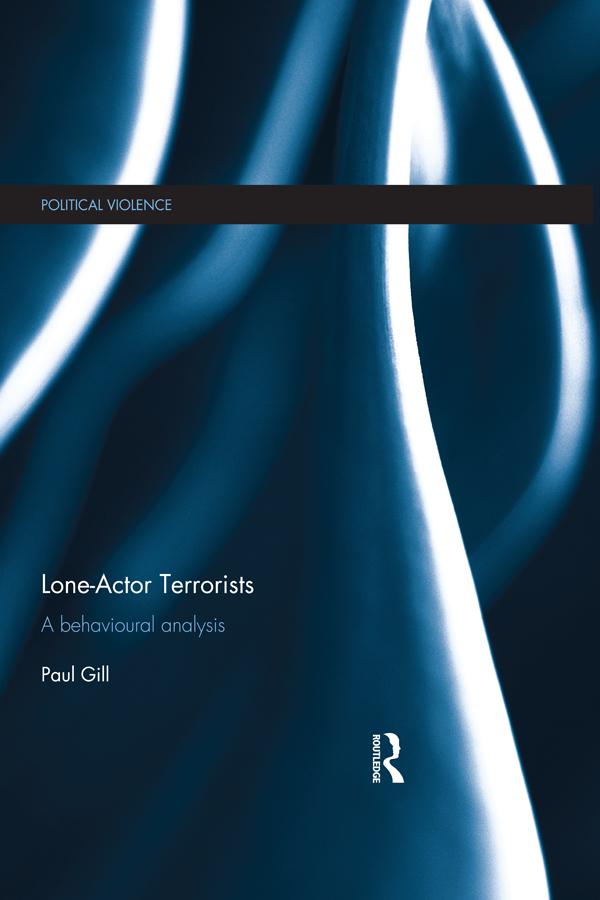
This book provides the first empirical analysis of lone-actor terrorist behaviour.
Based upon a unique dataset of 111 lone actors that catalogues the life span of the individual’s development, the book contains important insights into what an analysis of their behaviours might imply for practical interventions aimed at disrupting or even preventing attacks. It adopts insights and methodologies from criminology and forensic psychology to provide a holistic analysis of the behavioural underpinnings of lone-actor terrorism.
By focusing upon the behavioural aspects of each offender and by analysing a variety of case studies, including Anders Breivik, Ted Kaczynski, Timothy McVeigh and David Copeland, this work marks a pointed departure from previous research in the field. It seeks to answer the following key questions:
- Is there a lone-actor terrorist profile and how do they differ?
- What behaviours did the lone-actor terrorist engage in prior to his/her attack and is there a common behavioural trajectory into lone-actor terrorism?
- How ‘lone’ do lone-actor terrorists tend to be?
- What role, if any, does the internet play?
- What role, if any, does mental illness play?
This book will be of much interest to students of terrorism/counter-terrorism studies, political violence, criminology, forensic psychology and security studies in general.
Paga fácilmente con tarjeta, Klarna, Apple Pay o Google Pay. ¿No estás contento? Siempre tienes 14 días de garantía de devolución. Lee más en nuestros términos. Si tienes preguntas, escríbenos a hello@memmo.org.
Memmo hace que estudiar sea más fácil, estés donde estés. Aquí tienes tus libros de texto y herramientas de estudio inteligentes en un solo lugar: resúmenes, quizzes, podcasts y flashcards. Y también a Ted, tu compañero de estudio que responde a todo lo que te preguntes. Más de 50 000 estudiantes ya estudian aquí. Está hecho para que aprendas más rápido y te estreses menos.