
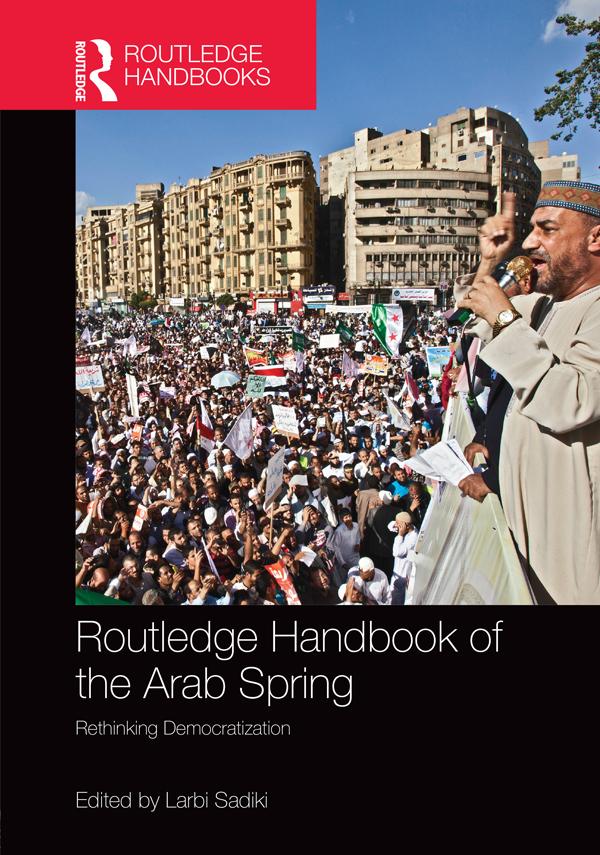
The self-immolation of Mohammed Bouazizi in Tunisia in December 2010 heralded the arrival of the ‘Arab Spring,’ a startling, yet not unprecedented, era of profound social and political upheaval.
The meme of the Arab Spring is characterised by bottom-up change, or the lack thereof, and its effects are still unfurling today. The Routledge Handbook of the Arab Spring seeks to provide a departure point for ongoing discussion of a fluid phenomenon on a plethora of topics, including:
- Contexts and contests of democratisation
- The sweep of the Arab Spring
- Egypt
- Women and the Arab Spring
- Agents of change and the technology of protest
- Impact of the Arab Spring in the wider Middle East and further afield
Collating a wide array of viewpoints, specialisms, biases, and degrees of proximity and distance from events that shook the Arab world to its core, the Handbook is written with the reader in mind, to provide students, practitioners, diplomats, policy-makers and lay readers with contextualization and knowledge, and to set the stage for further discussion of the Arab Spring.
Paga fácilmente con tarjeta, Klarna, Apple Pay o Google Pay. ¿No estás contento? Siempre tienes 14 días de garantía de devolución. Lee más en nuestros términos. Si tienes preguntas, escríbenos a hello@memmo.org.
Memmo hace que estudiar sea más fácil, estés donde estés. Aquí tienes tus libros de texto y herramientas de estudio inteligentes en un solo lugar: resúmenes, quizzes, podcasts y flashcards. Y también a Ted, tu compañero de estudio que responde a todo lo que te preguntes. Más de 50 000 estudiantes ya estudian aquí. Está hecho para que aprendas más rápido y te estreses menos.