
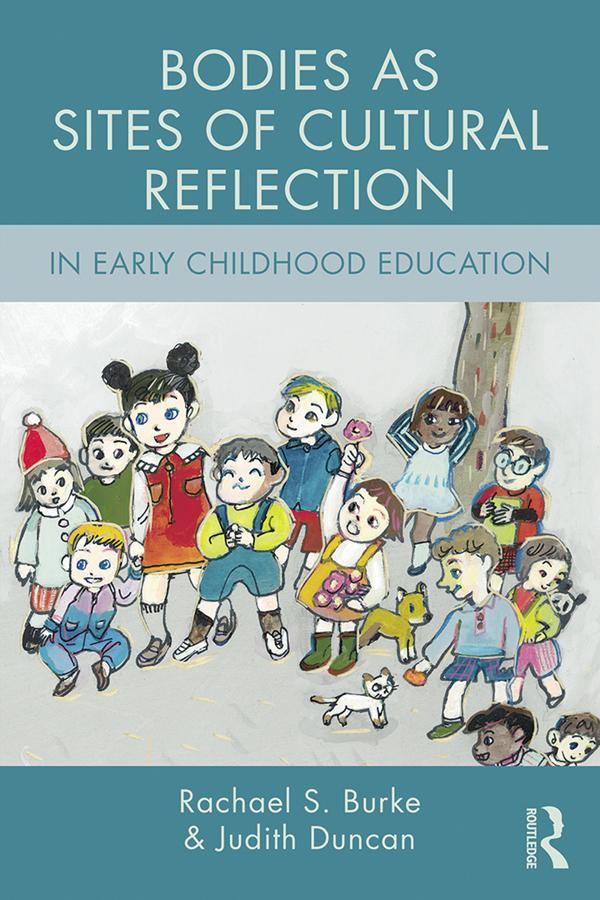
Taking the body as a locus for discussion, Rachael S. Burke and Judith Duncan argue not only that implicit cultural practices shape most of the interactions taking place in early childhood curricula and pedagogy but that many of these practices often go unnoticed or unrecognized as being pedagogy. Current scholars, inspired by Foucault, acknowledge that the body is socially and culturally produced and historically situated—it is simultaneously a part of nature and society as well as a representation of the way that nature and society can be conceived. Every natural symbol originating from the body contains and conveys a social meaning, and every culture selects its own meaning from the myriad of potential body symbolisms.
Bodies as Sites of Cultural Reflection in Early Childhood Education uses empirical examples from qualitative fieldwork conducted in New Zealand and Japan to explore these theories and discuss the ways in which children’s bodies represent a central focus in teachers’ pedagogical discussions and create contexts for the embodiment of children’s experiences in the early years.
Paga fácilmente con tarjeta, Klarna, Apple Pay o Google Pay. ¿No estás contento? Siempre tienes 14 días de garantía de devolución. Lee más en nuestros términos. Si tienes preguntas, escríbenos a hello@memmo.org.
Memmo hace que estudiar sea más fácil, estés donde estés. Aquí tienes tus libros de texto y herramientas de estudio inteligentes en un solo lugar: resúmenes, quizzes, podcasts y flashcards. Y también a Ted, tu compañero de estudio que responde a todo lo que te preguntes. Más de 50 000 estudiantes ya estudian aquí. Está hecho para que aprendas más rápido y te estreses menos.