
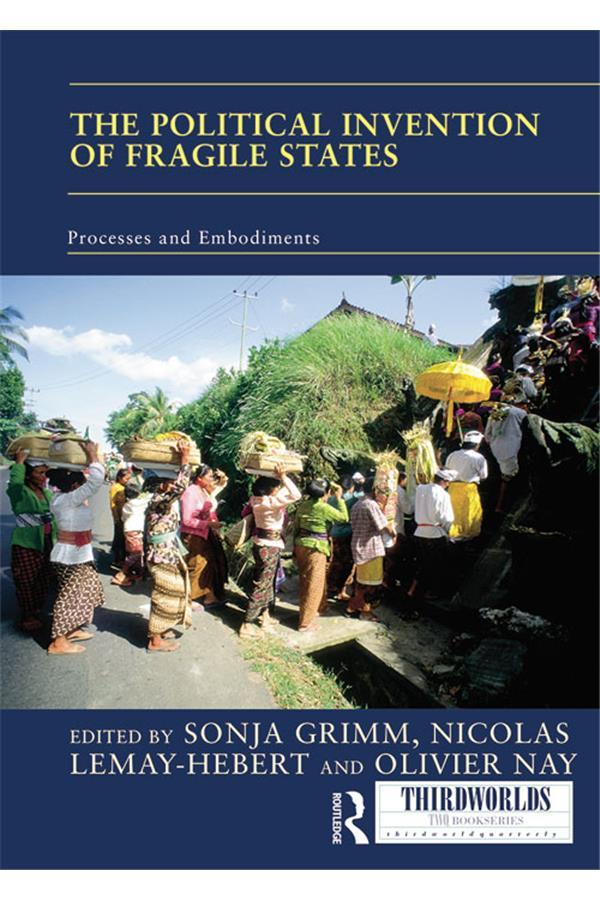
This book investigates the emergence, the dissemination and the reception of the notion of ‘state fragility’. It analyses the process of conceptualisation, examining how the ‘fragile states’ concept was framed by policy makers to describe reality in accordance with their priorities in the fields of development and security. Contributors investigate the instrumental use of the ‘state fragility’ label in the legitimisation of Western policy interventions in countries facing violence and profound poverty. They also emphasise the agency of actors ‘on the receiving end’, describing how the elites and governments in so-called ‘fragile states’ have incorporated and reinterpreted the concept to fit their own political agendas. A first set of articles examines the role played by the World Bank, the OECD, the European Union and the G7+ in the transnational diffusion of the concept, which is understood as a critical element in the new discourse on international aid and security. A second set of papers employs three case studies (Sudan, Indonesia and Uganda) to explore the processes of appropriation, reinterpretation and the strategic use of the ‘fragile state’ concept.
This book was originally published as a special issue of Third World Quarterly.
Paga fácilmente con tarjeta, Klarna, Apple Pay o Google Pay. ¿No estás contento? Siempre tienes 14 días de garantía de devolución. Lee más en nuestros términos. Si tienes preguntas, escríbenos a hello@memmo.org.
Memmo hace que estudiar sea más fácil, estés donde estés. Aquí tienes tus libros de texto y herramientas de estudio inteligentes en un solo lugar: resúmenes, quizzes, podcasts y flashcards. Y también a Ted, tu compañero de estudio que responde a todo lo que te preguntes. Más de 50 000 estudiantes ya estudian aquí. Está hecho para que aprendas más rápido y te estreses menos.