
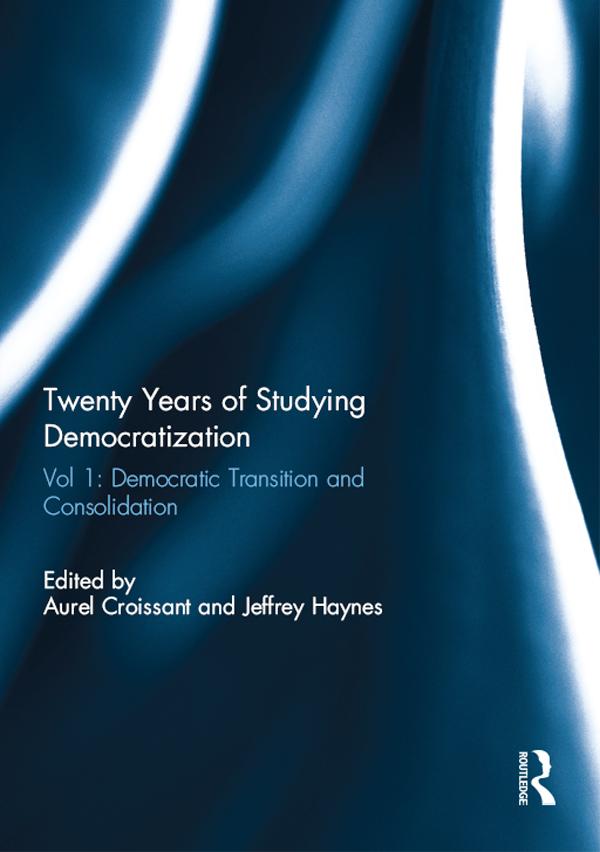
Democratization emerged at a time of epochal change in global politics: the twin impacts of the end of the Soviet Union and the speeding up and deepening of globalisation in the early 1990s meant a whole new ball game in terms of global political developments. The journal’s first issue appeared in early 1994. Over time, the editorial position has been consistently to focus on ‘the third wave of democracy’ and its aftermath. The third wave is the most recent exemplar of a long-term, historical trend towards more democratically viable regimes and away from authoritarian systems and leaders. In short, the journal wants to promote a better understanding of democratization – defined as the way democratic norms, institutions and practices evolve and are disseminated both within and across national and cultural boundaries.
Over the years, the many excellent articles that we have featured in the journal have shared our focus on democratization, viewed as a process. The journal has sought – and continues to seek – to build on the enduring scholarly and of course popular interest in democracy, how and why it emerges, develops and becomes consolidated. Our emphasis over the last 20 years has been contemporary and the approach comparative, with a strong desire to be both topical and authoritative.
We include special reference to democratization in the developing world and in post-communist societies. In sum, just as 20 years ago, the journal today aims to encourage debate on the many aspects of democratization that are of interest to policy-makers, administrators and journalists, aid and development personnel, those involved in education, and, perhaps above all, the tens of millions of ordinary people around the world who do not (yet) enjoy the benefits of living under democratic rule. The two dozen articles collected in this ‘virtual’ special issue are emphatic proof of the power of the written word to induce debate, uncertainty, and ultimately progress towards better forms of politics, focused on the achievement of the democratic aspirations of men and women everywhere.
Paga fácilmente con tarjeta, Klarna, Apple Pay o Google Pay. ¿No estás contento? Siempre tienes 14 días de garantía de devolución. Lee más en nuestros términos. Si tienes preguntas, escríbenos a hello@memmo.org.
Memmo hace que estudiar sea más fácil, estés donde estés. Aquí tienes tus libros de texto y herramientas de estudio inteligentes en un solo lugar: resúmenes, quizzes, podcasts y flashcards. Y también a Ted, tu compañero de estudio que responde a todo lo que te preguntes. Más de 50 000 estudiantes ya estudian aquí. Está hecho para que aprendas más rápido y te estreses menos.