
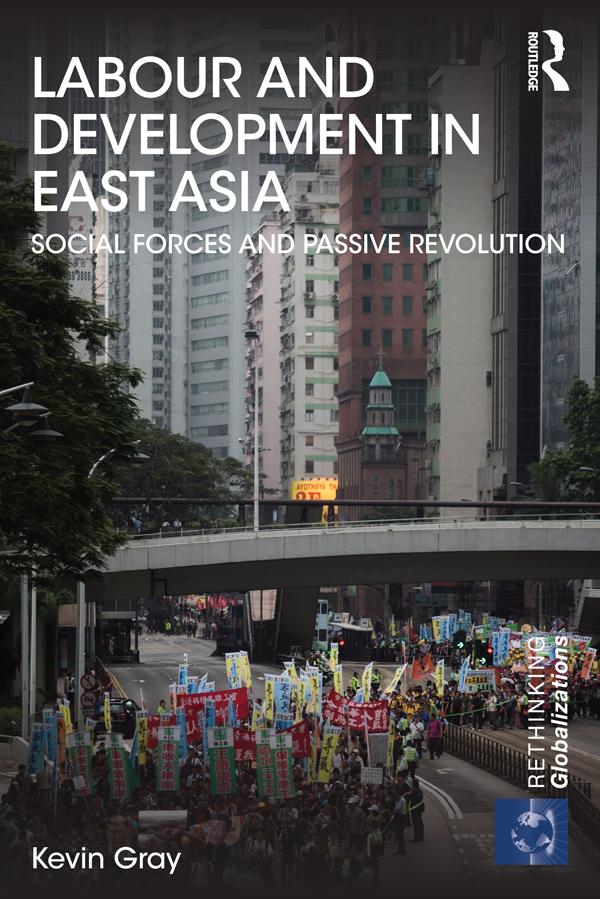
The Chinese Communist Party’s response to the wave of factory strikes in the early summer of 2010 has raised important questions about the role that labour plays in the transformation of world orders. In contrast to previous policies of repression towards labour unrest, these recent disputes centring round wages and working conditions have been met with a more permissive response on the part of the state, as the CCP ostensibly seeks to facilitate a transition away from a model of political economy based on ‘low-road’ labour relations and export dependence.
Labour and Development in East Asia shows that such inter-linkages between labour, geopolitical transformations, and states’ developmental strategies have been much more central to East Asia’s development than has commonly been recognised. By adopting an explanatory framework of the labour-geopolitics-development nexus, the book theorises and provides an historical analysis of the formation and transformation of the East Asian regional political economy from the end of the Second World War to the present, with particular reference to Japan, South Korea, Taiwan and China.
This book will be required reading for students and scholars of international relations, development studies and comparative politics.
Paga fácilmente con tarjeta, Klarna, Apple Pay o Google Pay. ¿No estás contento? Siempre tienes 14 días de garantía de devolución. Lee más en nuestros términos. Si tienes preguntas, escríbenos a hello@memmo.org.
Memmo hace que estudiar sea más fácil, estés donde estés. Aquí tienes tus libros de texto y herramientas de estudio inteligentes en un solo lugar: resúmenes, quizzes, podcasts y flashcards. Y también a Ted, tu compañero de estudio que responde a todo lo que te preguntes. Más de 50 000 estudiantes ya estudian aquí. Está hecho para que aprendas más rápido y te estreses menos.