
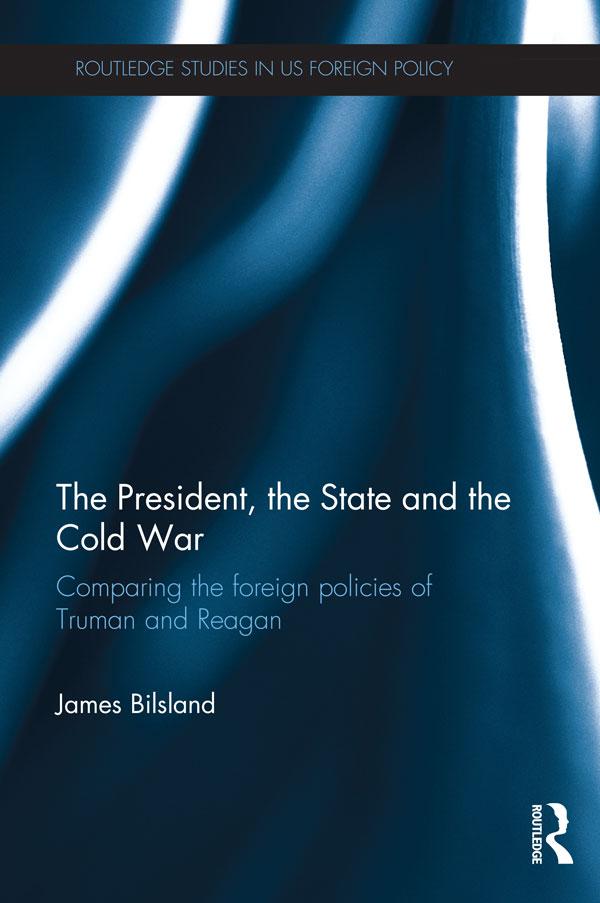
US foreign policy during the Cold War has been analysed from a number of perspectives, generating large bodies of literature attempting to explain its origins, its development and its conclusion. However, there are still many questions left only partially explained. In large part this is because these accounts restrict themselves to a single level of analysis, either the international system, or the structure of the state and society. The first level of analysis, focusing on the role of individuals, has largely been excluded.
This book argues that structural theories, and any approach that limits itself to one level of analysis, are inadequate to explain the development of US foreign policy. Instead, it is necessary to incorporate the first level of analysis in order to bring human agency back and provide a more detailed explanation of US foreign policy. Bilsland proposes an analytical framework which incorporates presidential agency into a multi-level analysis of US foreign policy during the Cold War, constructing a multi-level case study comparison of the foreign policies of Presidents Truman and Reagan. He argues that the worldview of the president is central to agenda setting in US foreign policy making and that the management style of the president influences both decision-making and the implementation of US foreign policy. Evidence to support this is drawn from detailed empirical analysis of Truman’s foreign policy of containment in Korea and Reagan’s foreign policy of rollback in Nicaragua.
This work will be of interest to students and scholars of US Foreign Policy, US History and International Relations
Paga fácilmente con tarjeta, Klarna, Apple Pay o Google Pay. ¿No estás contento? Siempre tienes 14 días de garantía de devolución. Lee más en nuestros términos. Si tienes preguntas, escríbenos a hello@memmo.org.
Memmo hace que estudiar sea más fácil, estés donde estés. Aquí tienes tus libros de texto y herramientas de estudio inteligentes en un solo lugar: resúmenes, quizzes, podcasts y flashcards. Y también a Ted, tu compañero de estudio que responde a todo lo que te preguntes. Más de 50 000 estudiantes ya estudian aquí. Está hecho para que aprendas más rápido y te estreses menos.