
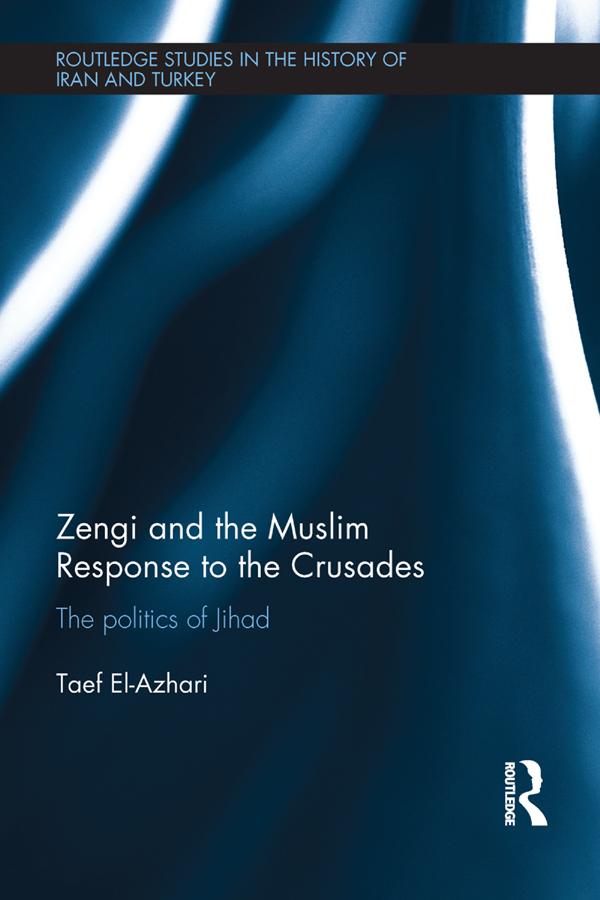
Zengi gained his legacy as the precursor to Saladin. While Zengi captured Edessa, Saladin would capture Jerusalem, and both leaders fought to establish their own realms. However, Zengi cannot be fully understood without an examination of his other policies and warfare and an appreciation of his Turkmen background, all of which influenced his fight against the Crusades.
Zengi and the Muslim Response to the Crusades: The politics of Jihad, provides a full and rich picture of Zengi’s career: his personality and motives; his power and ambition; his background and his foundation of a dynasty and its contribution, along with other dynasties, to a wider, deeper Turkification of the Middle East; his tools and methods; his vision, calamities and achievements; and how he was perceived by his contemporaries and modern scholars. Examining primary Muslim and non-Muslim sources, this book’s extensive translations of original source material provides new insight into the complexities of Zengi’s rule, and the politics of jihad that he led and orchestrated during the Crusades.
Providing deeper understanding of Islamic history through a close examination of one of its key figures, this book will be a valuable resource for students and scholars interested in Muslim history and the Crusades in general.
Paga fácilmente con tarjeta, Klarna, Apple Pay o Google Pay. ¿No estás contento? Siempre tienes 14 días de garantía de devolución. Lee más en nuestros términos. Si tienes preguntas, escríbenos a hello@memmo.org.
Memmo hace que estudiar sea más fácil, estés donde estés. Aquí tienes tus libros de texto y herramientas de estudio inteligentes en un solo lugar: resúmenes, quizzes, podcasts y flashcards. Y también a Ted, tu compañero de estudio que responde a todo lo que te preguntes. Más de 50 000 estudiantes ya estudian aquí. Está hecho para que aprendas más rápido y te estreses menos.