
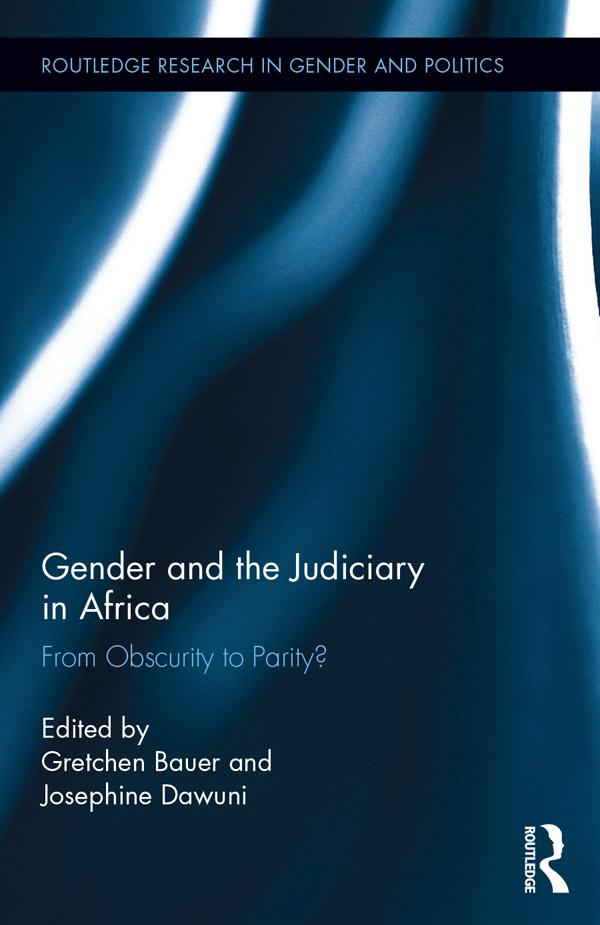
Between 2000 and 2015, women ascended to the top of judiciaries across Africa, most notably as chief justices of supreme courts in common law countries like Ghana, Nigeria, Sierra Leone, Gambia, Malawi, Lesotho and Zambia, but also as presidents of constitutional courts in civil law countries such as Benin, Burundi, Gabon, Niger and Senegal. Most of these appointments was a "first" in terms of the gender of the chief justice. At the same time, women are being appointed in record numbers as magistrates, judges and justices across the continent. While women’s increasing numbers and roles in African executives and legislatures have been addressed in a burgeoning scholarly literature, very little work has focused on women in judiciaries. This book addresses the important issue of the increasing numbers and varied roles of women judges and justices, as judiciaries evolve across the continent.
Scholars of law, gender politics and African politics provide overviews of recent developments in gender and the judiciary in nine African countries that represent north, east, southern and west Africa as well as a range of colonial experiences, postcolonial trajectories and legal systems, including mixes of common, civil, customary, or sharia law. In the process, each chapter seeks to address the following questions:
- What has been the historical experience of the judicial system in a given country, from before colonialism until the present?
- What is the current court structure and where are the women judges, justices, magistrates and other women located?
- What are the selection or appointment processes for joining the bench and in what ways may these help or hinder women to gain access to the courts as judges and justices?
- Once they become judges, do women on the bench promote the rights of women through their judicial powers?
- What are the challenges and obstacles facing women judges and justices in Africa?
Timely and relevant in this era in which governmental accountability and transparency are essential to the consolidation of democracy in Africa and when women are accessing significant leadership positions across the continent, this book considers the substantive and symbolic representation of women’s interests by women judges and the wider implications of their presence for changing institutional norms and advancing the rule of law and human rights.
Paga fácilmente con tarjeta, Klarna, Apple Pay o Google Pay. ¿No estás contento? Siempre tienes 14 días de garantía de devolución. Lee más en nuestros términos. Si tienes preguntas, escríbenos a hello@memmo.org.
Memmo hace que estudiar sea más fácil, estés donde estés. Aquí tienes tus libros de texto y herramientas de estudio inteligentes en un solo lugar: resúmenes, quizzes, podcasts y flashcards. Y también a Ted, tu compañero de estudio que responde a todo lo que te preguntes. Más de 50 000 estudiantes ya estudian aquí. Está hecho para que aprendas más rápido y te estreses menos.