
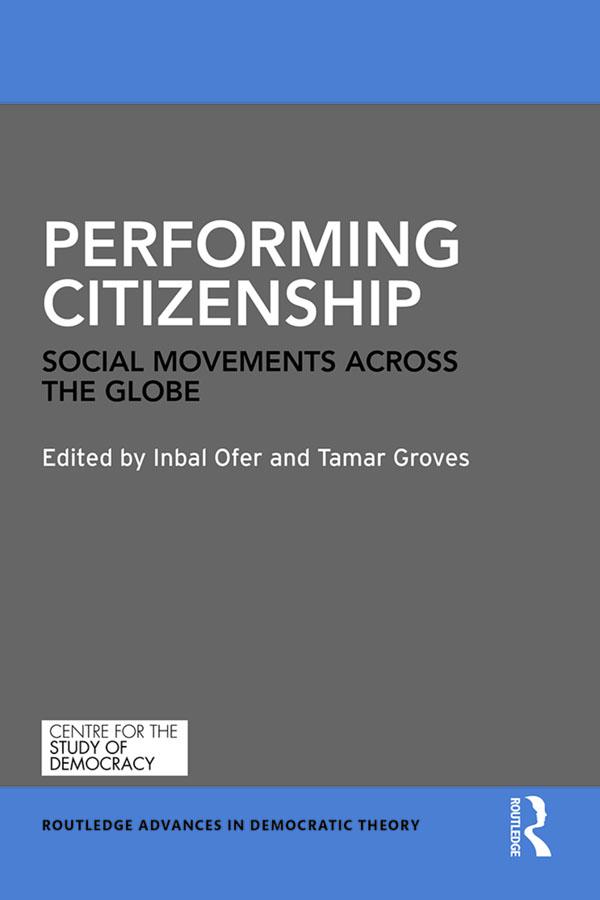
In this book, Tamar Groves and Inbal Ofer explore the effects of social movements' activism on the changing practices and conceptions of citizenship. Presenting empirically rich case studies from Latin America, Asia and Europe, leading experts analyze the ways in which the shifting balance of power between nation-state, economy and civil society over the past half century affected social movements in their choice of addressees and repertoires of action. Divided into two parts, the first part focuses on citizenship as a form of political and cultural participation. The three case studies that make up this section look into the ways in which social movements' activism prompted a critical re-evaluation of two central questions: Who can be considered a citizen? And what forms of political and cultural participation effectively enable citizens to exercise their rights? The second section focuses on citizenship as a form of community building. The three case studies that are included in this section address the ways in which activism fosters new forms of advocacy and communication, leading to the emergence of new communities and assigning qualities of fraternity to the status of citizenship.
Throughout most of the 20th century social movements' literature focused on the challenges these entities posed to the state, since it was the state that had the capacity and willingness to grant social and economic concessions. This situation started to shift in the late 1960s. By the 1980s the existing configuration between the state, civil society and the economy was increasingly challenged by market penetration. Accordingly, we witness a proliferation of social movements that no longer target state institutions, or do so only partially. Their repertoires of action interact continuously with everyday practices, re-shaping demands within specific organizational, legislative and political contexts. As a result, such activism expands the understanding of the concept of citizenship so as to include demands relating to livelihood; division of resources; the production and dissemination of knowledge; and forms of civic participation and solidarity.
Written for scholars who study social movements, citizenship and the relationship between the state and civil society over the past half century, this book provides a fresh insight on the nature of citizenship; increasingly framing the condition of being a citizen in terms of performance and on-going practices, rather than simply in relation to the attainment of a formal status.
Paga fácilmente con tarjeta, Klarna, Apple Pay o Google Pay. ¿No estás contento? Siempre tienes 14 días de garantía de devolución. Lee más en nuestros términos. Si tienes preguntas, escríbenos a hello@memmo.org.
Memmo hace que estudiar sea más fácil, estés donde estés. Aquí tienes tus libros de texto y herramientas de estudio inteligentes en un solo lugar: resúmenes, quizzes, podcasts y flashcards. Y también a Ted, tu compañero de estudio que responde a todo lo que te preguntes. Más de 50 000 estudiantes ya estudian aquí. Está hecho para que aprendas más rápido y te estreses menos.