
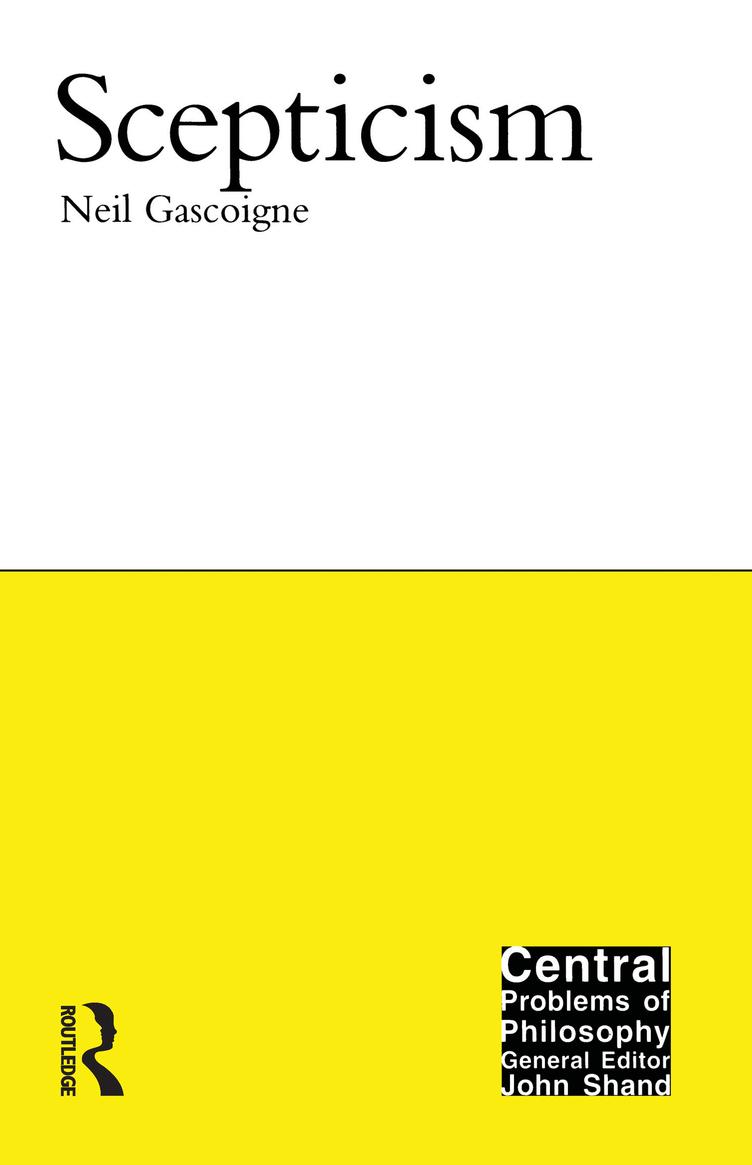
The history of scepticism is assumed by many to be the history of failed responses to a problem first raised by Descartes. While the thought of the ancient sceptics is acknowledged, their principle concern with how to live a good life is regarded as bearing little, if any, relation to the work of contemporary epistemologists. In "Scepticism" Neil Gascoigne engages with the work of canonical philosophers from Descartes, Hume and Kant through to Moore, Austin, and Wittgenstein to show how themes that first emerged in the Hellenistic period are inextricably bound up with the historical development of scepticism. Foremost amongst these is the view that scepticism relates not to the possibility of empirical knowledge but to the possibility of epistemological theory. This challenge to epistemology itself is explored and two contemporary trends are considered: the turn against foundationalist epistemology and towards more naturalistic conceptions of inquiry, and the resistance to this on the part of non-naturalistically inclined philosophers. In contextualizing the debate in this way Gascoigne equips students with a better appreciation of the methodological importance of sceptical reasoning, an analytic understanding of the structure of sceptical arguments, and an awareness of the significance of scepticism to the nature of philosophical inquiry.
Paga fácilmente con tarjeta, Klarna, Apple Pay o Google Pay. ¿No estás contento? Siempre tienes 14 días de garantía de devolución. Lee más en nuestros términos. Si tienes preguntas, escríbenos a hello@memmo.org.
Memmo hace que estudiar sea más fácil, estés donde estés. Aquí tienes tus libros de texto y herramientas de estudio inteligentes en un solo lugar: resúmenes, quizzes, podcasts y flashcards. Y también a Ted, tu compañero de estudio que responde a todo lo que te preguntes. Más de 50 000 estudiantes ya estudian aquí. Está hecho para que aprendas más rápido y te estreses menos.