
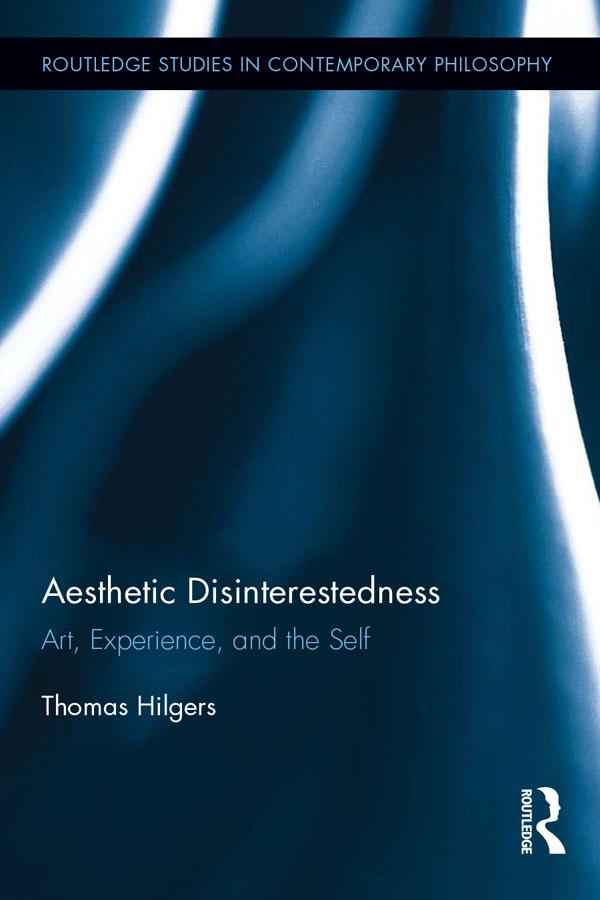
The notion of disinterestedness is often conceived of as antiquated or ideological. In spite of this, Hilgers argues that one cannot reject it if one wishes to understand the nature of art. He claims that an artwork typically asks a person to adopt a disinterested attitude towards what it shows, and that the effect of such an adoption is that it makes the person temporarily lose the sense of herself, while enabling her to gain a sense of the other. Due to an artwork’s particular wealth, multiperspectivity, and dialecticity, the engagement with it cannot culminate in the construction of world-views, but must initiate a process of self-critical thinking, which is a precondition of real self-determination. Ultimately, then, the aesthetic experience of art consists of a dynamic process of losing the sense of oneself, while gaining a sense of the other, and of achieving selfhood. In his book, Hilgers spells out the nature of this process by means of rethinking Kant’s and Schopenhauer’s aesthetic theories in light of more recent developments in philosophy–specifically in hermeneutics, critical theory, and analytic philosophy–and within the arts themselves–specifically within film and performance art.
Paga fácilmente con tarjeta, Klarna, Apple Pay o Google Pay. ¿No estás contento? Siempre tienes 14 días de garantía de devolución. Lee más en nuestros términos. Si tienes preguntas, escríbenos a hello@memmo.org.
Memmo hace que estudiar sea más fácil, estés donde estés. Aquí tienes tus libros de texto y herramientas de estudio inteligentes en un solo lugar: resúmenes, quizzes, podcasts y flashcards. Y también a Ted, tu compañero de estudio que responde a todo lo que te preguntes. Más de 50 000 estudiantes ya estudian aquí. Está hecho para que aprendas más rápido y te estreses menos.