
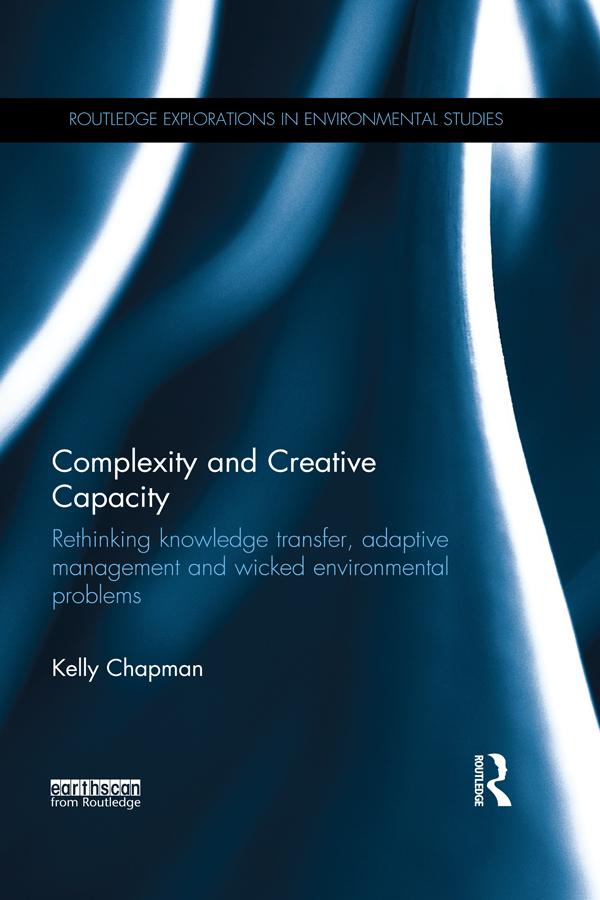
Complexity theories gained prominence in the 1990s with a focus on self-organising and complex adaptive systems. Since then, complexity theory has become one of the fastest growing topics in both the natural and social sciences, and touted as a revolutionary way of understanding the behaviour of complex systems.
This book uses complexity theory to surface and challenge the deeply held cultural assumptions that shape how we think about reality and knowledge. In doing so it shows how our traditional approaches to generating and applying knowledge may be paradoxically exacerbating some of the ‘wicked’ environmental problems we are currently facing. The author proposes an innovative and compelling argument for rejecting old constructs of knowledge transfer, adaptive management and adaptive capacity. The book also presents a distinctively coherent and comprehensive synthesis of cognition, learning, knowledge and organizing from a complexity perspective. It concludes with a reconceptualization of the problem of knowledge transfer from a complexity perspective, proposing the concept of creative capacity as an alternative to adaptive capacity as a measure of resilience in socio-ecological systems.
Although written from an environmental management perspective, it is relevant to the broader natural sciences and to a range of other disciplines, including knowledge management, organizational learning, organizational management, and the philosophy of science.
Paga fácilmente con tarjeta, Klarna, Apple Pay o Google Pay. ¿No estás contento? Siempre tienes 14 días de garantía de devolución. Lee más en nuestros términos. Si tienes preguntas, escríbenos a hello@memmo.org.
Memmo hace que estudiar sea más fácil, estés donde estés. Aquí tienes tus libros de texto y herramientas de estudio inteligentes en un solo lugar: resúmenes, quizzes, podcasts y flashcards. Y también a Ted, tu compañero de estudio que responde a todo lo que te preguntes. Más de 50 000 estudiantes ya estudian aquí. Está hecho para que aprendas más rápido y te estreses menos.