
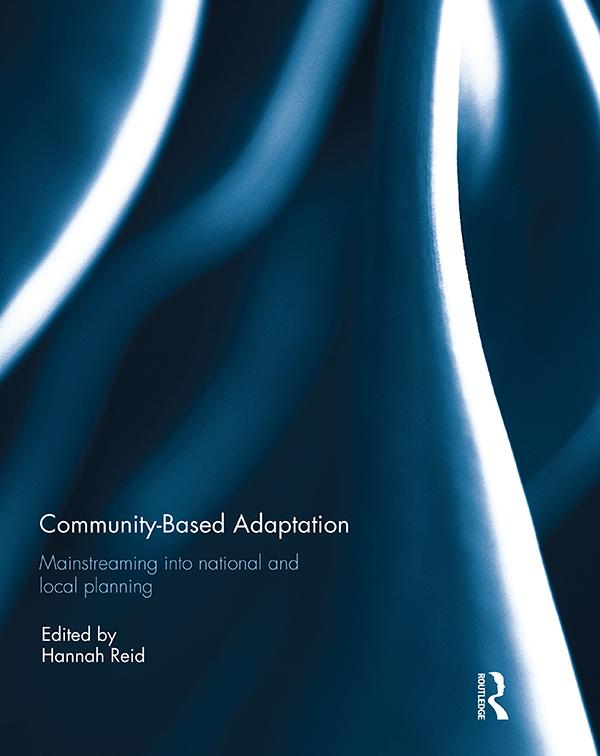
Community-based adaptation (CBA) to climate change is based on local priorities, needs, knowledge and capacities. Early CBA initiatives were generally implemented by non-government organisations (NGOs), and operated primarily at the local level. Many used ‘bottom-up’ participatory processes to identify the climate change problem and appropriate responses.
Small localised stand-alone initiatives are insufficient to address the scale of challenges climate change will bring, however. The causes of vulnerability - such as market or service access, or good governance - also often operate beyond the project level. Larger organisations and national governments have therefore started to implement broader CBA programmes, which provide opportunities to scale up responses and integrate CBA into higher levels of policy and planning.
This book shows that it is possible for CBA to remain centred on local priorities, but not necessarily limited to work implemented at the local level. Some chapters address the issue of mainstreaming CBA into government policy and planning processes or into city or sectoral level plans (e.g. on agriculture). Others look at how gender and children’s issues should be mainstreamed into adaptation planning itself, and others describe how tools can be applied, and finance delivered for effective mainstreaming.
This book was published as a special issue of Climate and Development.
Paga fácilmente con tarjeta, Klarna, Apple Pay o Google Pay. ¿No estás contento? Siempre tienes 14 días de garantía de devolución. Lee más en nuestros términos. Si tienes preguntas, escríbenos a hello@memmo.org.
Memmo hace que estudiar sea más fácil, estés donde estés. Aquí tienes tus libros de texto y herramientas de estudio inteligentes en un solo lugar: resúmenes, quizzes, podcasts y flashcards. Y también a Ted, tu compañero de estudio que responde a todo lo que te preguntes. Más de 50 000 estudiantes ya estudian aquí. Está hecho para que aprendas más rápido y te estreses menos.