
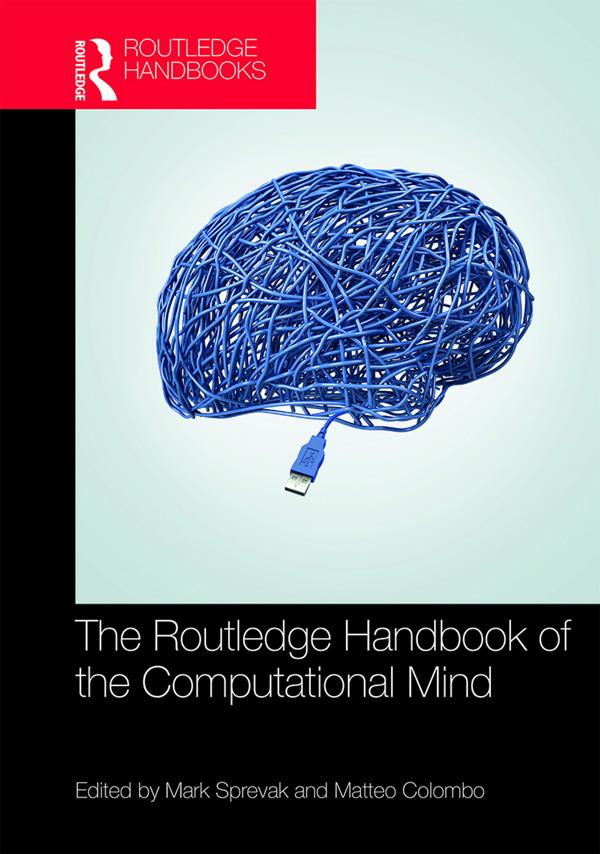
Computational approaches dominate contemporary cognitive science, promising a unified, scientific explanation of how the mind works. However, computational approaches raise major philosophical and scientific questions. In what sense is the mind computational? How do computational approaches explain perception, learning, and decision making? What kinds of challenges should computational approaches overcome to advance our understanding of mind, brain, and behaviour?
The Routledge Handbook of the Computational Mind is an outstanding overview and exploration of these issues and the first philosophical collection of its kind. Comprising thirty-five chapters by an international team of contributors from different disciplines, the Handbook is organised into four parts:
- History and future prospects of computational approaches
- Types of computational approach
- Foundations and challenges of computational approaches
- Applications to specific parts of psychology.
Essential reading for students and researchers in philosophy of mind, philosophy of psychology, and philosophy of science, The Routledge Handbook of the Computational Mind will also be of interest to those studying computational models in related subjects such as psychology, neuroscience, and computer science.
Paga fácilmente con tarjeta, Klarna, Apple Pay o Google Pay. ¿No estás contento? Siempre tienes 14 días de garantía de devolución. Lee más en nuestros términos. Si tienes preguntas, escríbenos a hello@memmo.org.
Memmo hace que estudiar sea más fácil, estés donde estés. Aquí tienes tus libros de texto y herramientas de estudio inteligentes en un solo lugar: resúmenes, quizzes, podcasts y flashcards. Y también a Ted, tu compañero de estudio que responde a todo lo que te preguntes. Más de 50 000 estudiantes ya estudian aquí. Está hecho para que aprendas más rápido y te estreses menos.