
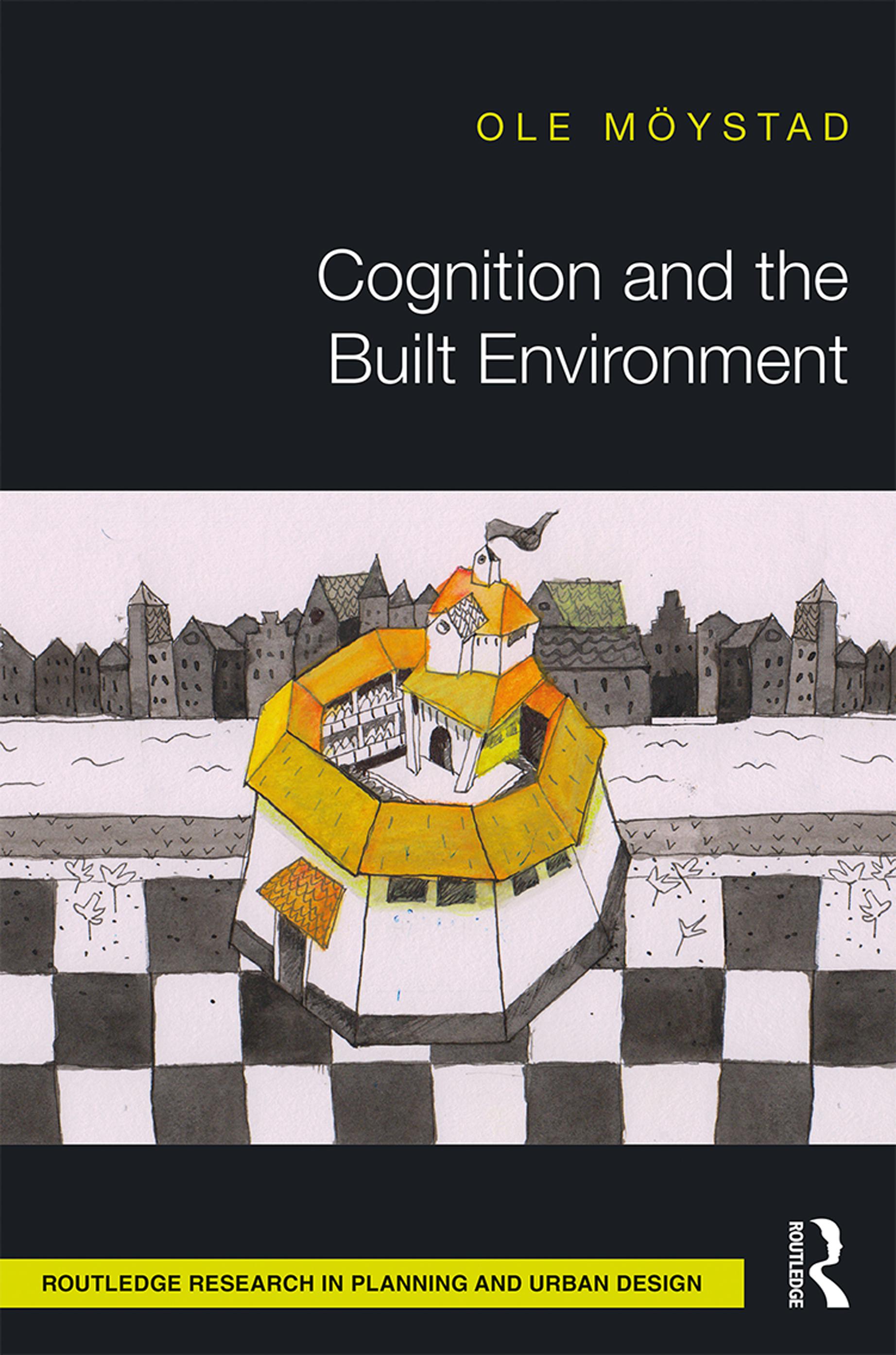
Cognition and the Built Environment argues that interacting with our built environment, as users and as architects, is a cognitive process. It claims that architecture, in its form and meaning, is a basic, embodied level of human cognition.
The assumption is that we and our built environment together form an intelligent system, a cognitive feedback loop between us and the world of which we are part. With this as a vantage point, the book discusses the meaning and intelligence of concrete architectural environments as well as the agency of the architect, of his client and of the user.
The inquiry oscillates between abstract thought, topological models and cognitive semiotics, between pragmatist philosophy and the professional practice of planning cities, developing projects and using objects. Architecture serves more complex purposes than our caves, paths and landmarks did.
Written for students and academics of urban design, urban planning and architectural theory, Cognition and the Built Environment argues that human cognition feeds on the interaction between thought, agency and built environment, and that architecture is the spatial form of this interaction.
Paga fácilmente con tarjeta, Klarna, Apple Pay o Google Pay. ¿No estás contento? Siempre tienes 14 días de garantía de devolución. Lee más en nuestros términos. Si tienes preguntas, escríbenos a hello@memmo.org.
Memmo hace que estudiar sea más fácil, estés donde estés. Aquí tienes tus libros de texto y herramientas de estudio inteligentes en un solo lugar: resúmenes, quizzes, podcasts y flashcards. Y también a Ted, tu compañero de estudio que responde a todo lo que te preguntes. Más de 50 000 estudiantes ya estudian aquí. Está hecho para que aprendas más rápido y te estreses menos.