
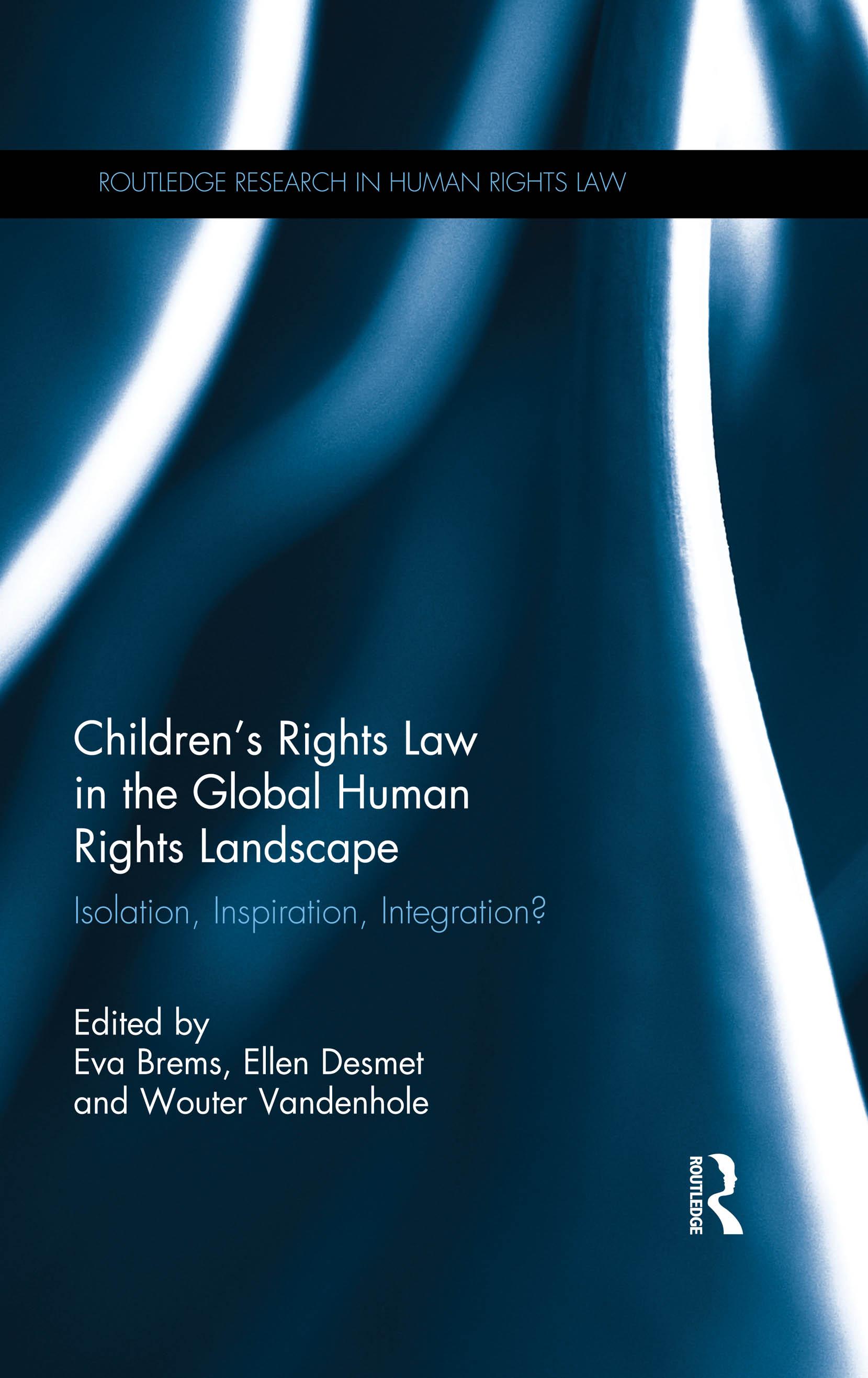
Children’s rights law is often studied and perceived in isolation from the broader field of human rights law. This volume explores the inter-relationship between children’s rights law and more general human rights law in order to see whether elements from each could successfully inform the other. Children’s rights law has a number of distinctive characteristics, such as the emphasis on the ‘best interests of the child’, the use of general principles, and the inclusion of ‘third parties’ (e.g. parents and other care-takers) in treaty provisions. The first part of this book questions whether these features could be a source of inspiration for general human rights law. In part two, the reverse question is asked: could children’s rights law draw inspiration from developments in other branches of human rights law that focus on other specific categories of rights holders, such as women, persons with disabilities, indigenous peoples, or older persons? Finally, the interaction between children’s rights law and human rights law – and the potential for their isolation, inspiration or integration – may be coloured or determined by the thematic issue under consideration. Therefore the third part of the book studies the interplay between children’s rights law and human rights law in the context of specific topics: intra-family relations, LGBTQI marginalization, migration, media, the environment and transnational human rights obligations.
Paga fácilmente con tarjeta, Klarna, Apple Pay o Google Pay. ¿No estás contento? Siempre tienes 14 días de garantía de devolución. Lee más en nuestros términos. Si tienes preguntas, escríbenos a hello@memmo.org.
Memmo hace que estudiar sea más fácil, estés donde estés. Aquí tienes tus libros de texto y herramientas de estudio inteligentes en un solo lugar: resúmenes, quizzes, podcasts y flashcards. Y también a Ted, tu compañero de estudio que responde a todo lo que te preguntes. Más de 50 000 estudiantes ya estudian aquí. Está hecho para que aprendas más rápido y te estreses menos.