
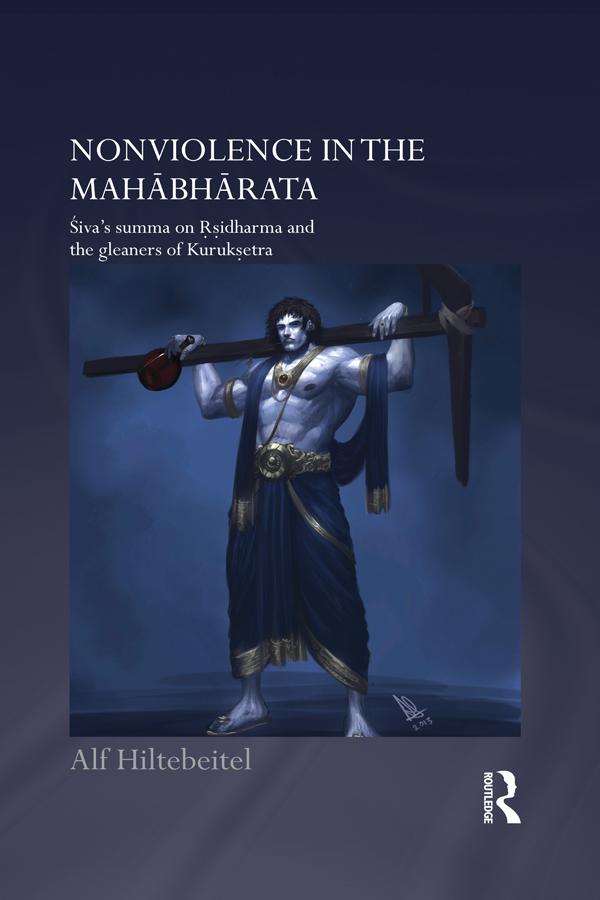
In Indian mythological texts like the Mahābhārata and Rāmāyaṇa, there are recurrent tales about gleaners. The practice of "gleaning" in India had more to do with the house-less forest life than with residential village or urban life or with gathering residual post-harvest grains from cultivated fields. Gleaning can be seen a metaphor for the Mahābhārata poets’ art: an art that could have included their manner of gleaning what they made the leftovers (what they found useful) from many preexistent texts into Vyāsa’s “entire thought”—including oral texts and possibly written ones, such as philosophical debates and stories.
This book explores the notion of non-violence in the epic Mahābhārata. In examining gleaning as an ecological and spiritual philosophy nurtured as much by hospitality codes as by eating practices, the author analyses the merits and limitations of the 9th century Kashmiri aesthetician Anandavardhana that the dominant aesthetic sentiment or rasa of the Mahābhārata is shanta (peace). Mahatma Gandhi's non-violent reading of the Mahabharata via the Bhagavad Gita are also studied.
This book by one of the leaders in Mahābhārata studies is of interest to scholars of South Asian Literary Studies, Religious Studies as well as Peace Studies, South Asian Anthropology and History.
Paga fácilmente con tarjeta, Klarna, Apple Pay o Google Pay. ¿No estás contento? Siempre tienes 14 días de garantía de devolución. Lee más en nuestros términos. Si tienes preguntas, escríbenos a hello@memmo.org.
Memmo hace que estudiar sea más fácil, estés donde estés. Aquí tienes tus libros de texto y herramientas de estudio inteligentes en un solo lugar: resúmenes, quizzes, podcasts y flashcards. Y también a Ted, tu compañero de estudio que responde a todo lo que te preguntes. Más de 50 000 estudiantes ya estudian aquí. Está hecho para que aprendas más rápido y te estreses menos.