
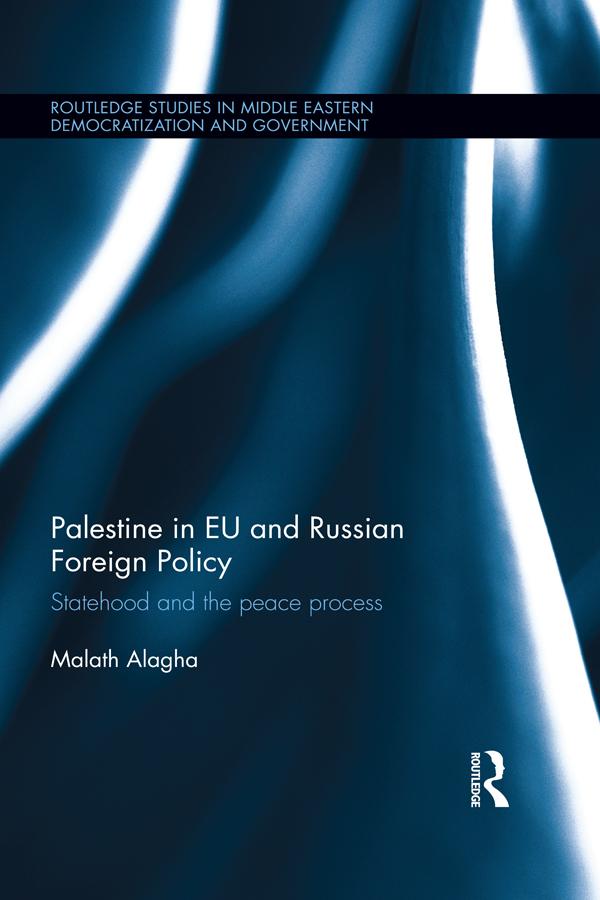
The establishment of a Palestinian state has long been a strategic objective of EU and Russian foreign policy in the Middle East. However, over a decade after the creation of the road-map, the establishment of an independent Palestinian state has still not been achieved.
Palestine in EU and Russian Foreign Policy uses the school of constructivism to provide a new understanding of EU and Russian foreign policy. It explores the failure of these global actors to speed up the process of establishing a Palestinian state, despite this being a strategic objective and top priority of their involvement in the Middle East peace process. The book then analyses the role of identity and self-other perception in the making of EU and Russian foreign policy towards the Middle East peace process. It is argued that Palestinian statehood provides a telling empirical example of how, and to what extent, the search for global actorness, as a matter of international identity, informs foreign policy-making by global actors. The book then proceeds to discuss why the EU and Russia are so eager to be involved in initiating a peace settlement.
Offering a new understanding of foreign policy-making by global players in Middle Eastern politics, this book will appeal to students, scholars and policymakers working in International Relations and European, Russian and Middle Eastern studies.
Paga fácilmente con tarjeta, Klarna, Apple Pay o Google Pay. ¿No estás contento? Siempre tienes 14 días de garantía de devolución. Lee más en nuestros términos. Si tienes preguntas, escríbenos a hello@memmo.org.
Memmo hace que estudiar sea más fácil, estés donde estés. Aquí tienes tus libros de texto y herramientas de estudio inteligentes en un solo lugar: resúmenes, quizzes, podcasts y flashcards. Y también a Ted, tu compañero de estudio que responde a todo lo que te preguntes. Más de 50 000 estudiantes ya estudian aquí. Está hecho para que aprendas más rápido y te estreses menos.