
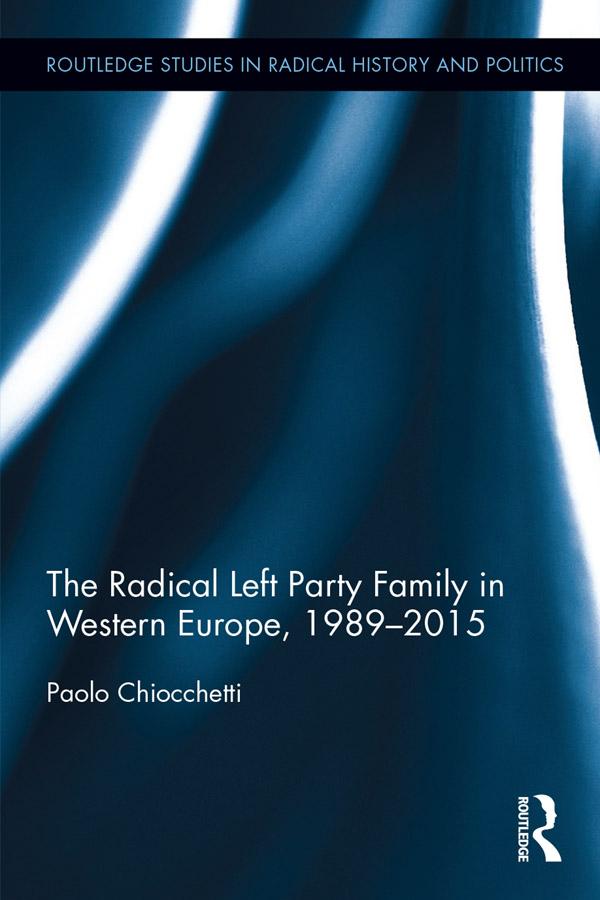
This book provides an innovative analysis and interpretation of the overall trajectory of the Western European radical left from 1989 to 2015. After the collapse of really existing communism, this party family renewed itself and embarked on a recovery path, seeking to fill the vacuum of representation of disaffected working-class and welfarist constituencies created by the progressive neoliberalisation of European societies. The radical left thus emerged as a significant factor of contemporary political life but, despite some electoral gains and a few recent breakthroughs (SYRIZA in Greece, PODEMOS in Spain), it altogether failed to embody a credible alternative to neoliberalism and to pave the way for a turn to a different developmental model.
This book investigates why this was the case, combining aggregate (17 countries), case study (Germany, Italy, and France), and comparative methods. It accurately charts the evolution of the nature, strength, cohesion, and influence of the Western European radical left, offering new insights in explaining its behaviour, success, and limits. It is essential reading for scholars, students, and activists interested in the radical left and in contemporary European politics.
Paga fácilmente con tarjeta, Klarna, Apple Pay o Google Pay. ¿No estás contento? Siempre tienes 14 días de garantía de devolución. Lee más en nuestros términos. Si tienes preguntas, escríbenos a hello@memmo.org.
Memmo hace que estudiar sea más fácil, estés donde estés. Aquí tienes tus libros de texto y herramientas de estudio inteligentes en un solo lugar: resúmenes, quizzes, podcasts y flashcards. Y también a Ted, tu compañero de estudio que responde a todo lo que te preguntes. Más de 50 000 estudiantes ya estudian aquí. Está hecho para que aprendas más rápido y te estreses menos.