
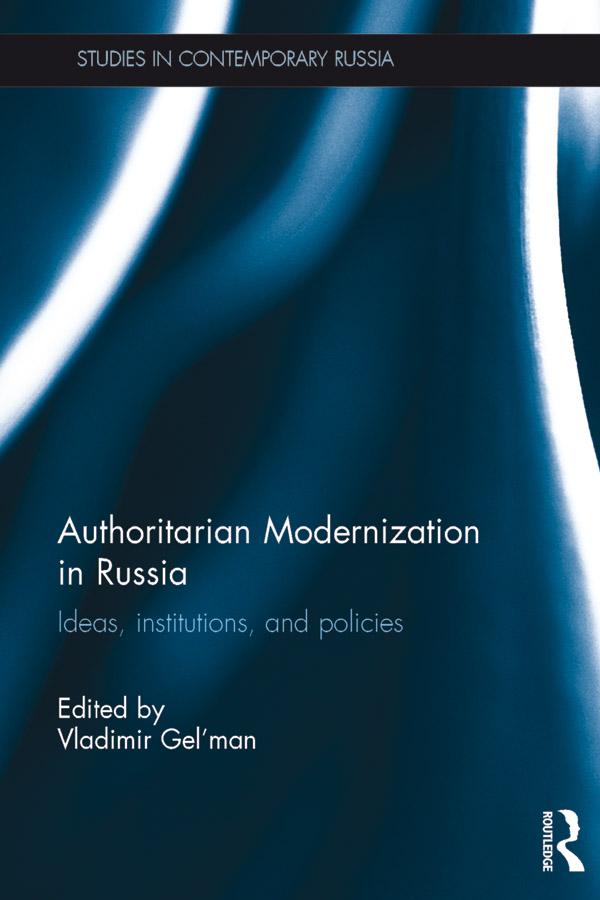
Post-Communist Russia is an instance of the phenomenon of authoritarian modernization project, which is perceived as a set of policies intended to achieve a high level of economic development, while political freedoms remain beyond the current modernization agenda or are postponed to a distant future. Why did Russia (unlike many countries of post-Communist Europe) pursue authoritarian modernization after the Soviet collapse? What is the ideational agenda behind this project and why does it dominate Russia’s post-Communist political landscape? What are the mechanisms of political governance, which maintain this project and how have they adopted and absorbed various democratic institutions and practices? Why has this project brought such diverse results in various policy arenas, and why have the consequences of certain policies become so controversial? Why, despite so many controversies, shortcomings and flaws, has this project remained attractive in the eyes of a large proportion of the Russian elite and ordinary citizens? This volume intended to place some of these questions on the research agenda and propose several answers, encouraging further discussions about the logic and mechanisms of the authoritarian modernization project in post-Communist Russia and its effects on Russia’s politics, economy, and society.
Paga fácilmente con tarjeta, Klarna, Apple Pay o Google Pay. ¿No estás contento? Siempre tienes 14 días de garantía de devolución. Lee más en nuestros términos. Si tienes preguntas, escríbenos a hello@memmo.org.
Memmo hace que estudiar sea más fácil, estés donde estés. Aquí tienes tus libros de texto y herramientas de estudio inteligentes en un solo lugar: resúmenes, quizzes, podcasts y flashcards. Y también a Ted, tu compañero de estudio que responde a todo lo que te preguntes. Más de 50 000 estudiantes ya estudian aquí. Está hecho para que aprendas más rápido y te estreses menos.