
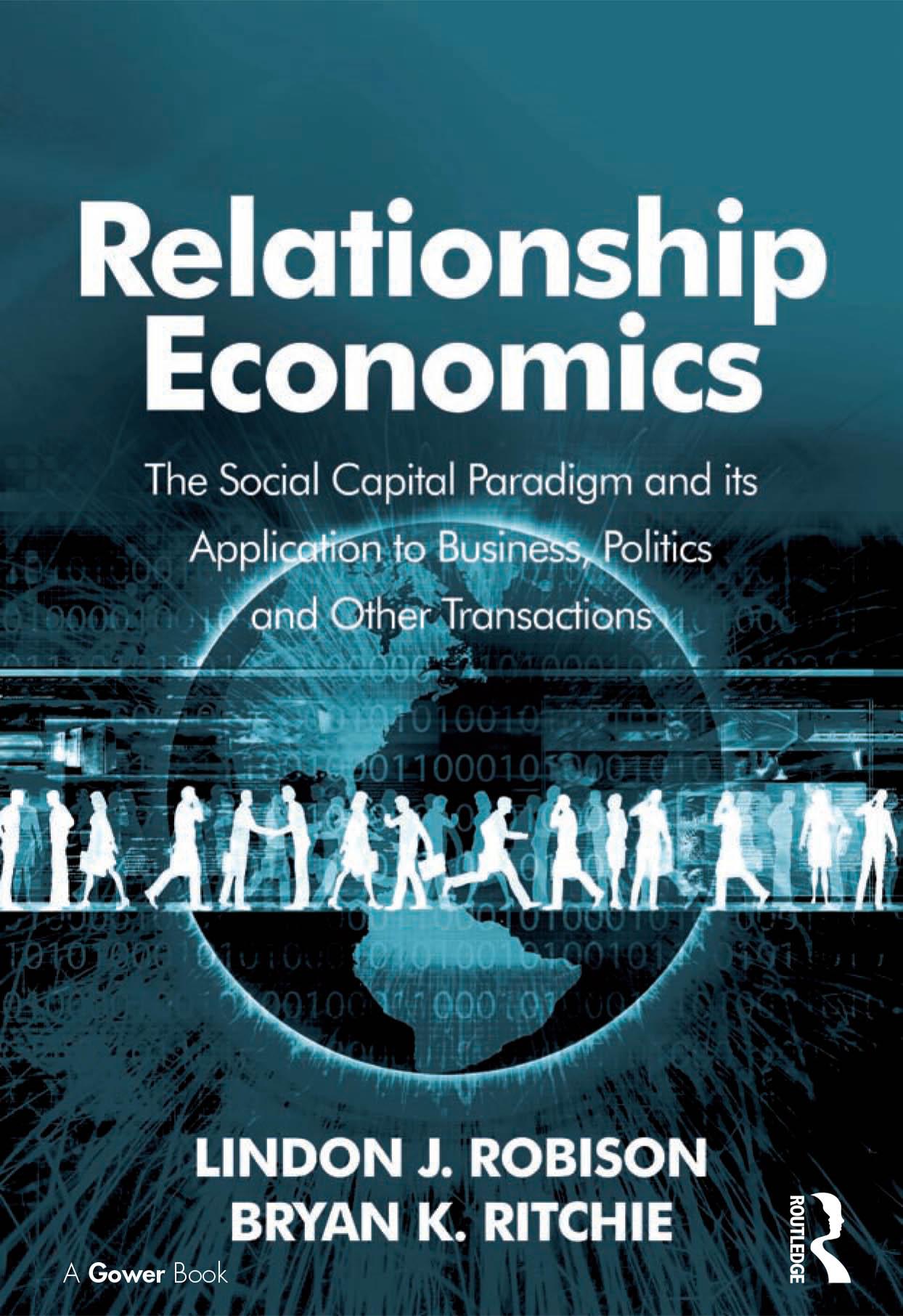
In a 24/7 world and a global economy, there is no doubt that relationships impact virtually every economic transaction. In Relationship Economics, Lindon Robison and Bryan Ritchie argue that what needs to be understood is not just whether relationships matter (which, of course, they do), but also, how much, and in what circumstances they should matter. Providing a rigorous and measurable definition of the way that relationships among individuals create a capital, social capital, that can be saved, spent, and used like other forms of capital, Robison and Ritchie use numerous examples and insightful analysis, to explain how social capital shapes our ability to reduce poverty, understand corruption, encourage democracy, facilitate income equality, and respond to globalization. The first part of the book explains how social capital can be manipulated, stored, expended, and invested. The second part explores how levels of social capital within relationships influence economic transactions both positively and negatively, which in turn shape poverty levels, economic efficiency, levels and types of political participation, and institutional structures.
Paga fácilmente con tarjeta, Klarna, Apple Pay o Google Pay. ¿No estás contento? Siempre tienes 14 días de garantía de devolución. Lee más en nuestros términos. Si tienes preguntas, escríbenos a hello@memmo.org.
Memmo hace que estudiar sea más fácil, estés donde estés. Aquí tienes tus libros de texto y herramientas de estudio inteligentes en un solo lugar: resúmenes, quizzes, podcasts y flashcards. Y también a Ted, tu compañero de estudio que responde a todo lo que te preguntes. Más de 50 000 estudiantes ya estudian aquí. Está hecho para que aprendas más rápido y te estreses menos.
También te podría gustar
Comprar el libro0